



Rescued from the rubbish by a hired pen
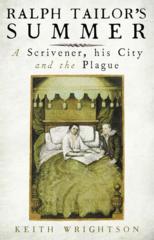 British historian Keith Wrightson describes the city of Newcastle-upon-Tyne during the devastating plague of 1636 as “a society under immense stress” at a time of larger political and religious tensions. He has created a memorable and moving book after stumbling onto a document in a local archive, a will containing the dying wishes of someone with the plague. It was time to put things in order very quickly, but this individual couldn’t write and so his family sought the help of the door-to-door document writers of that era: a scrivener. In 1636, one of many plagues hit the bustling city of Newcastle-upon-Tyne in England’s north-east. The document that caught Wrightson’s eye was the handiwork of Ralph Tailor who prepared lists of possessions and wills for 20 of the 57 plague-related victims of 1636, documents housed in the Tyneside archive.
Wrightson produces “microhistory” – something written “from below,” as he describes it. The result is a glimpse into the lives of ordinary people as they cope with extraordinarily difficult circumstances: in this case deadly plague with no known treatment. Other historians might jump to the panoramic shot and broad canvas of the first decades of the seventeenth century, a world violently divided by religion and politics. In this book Wrightson keeps the focus tight and personal.
Most of the wills he found are nuncupative, that is, sworn documents prepared for someone who is unable to write. Wrightson crafts the image of a young pen-for-hire in his first year on the job, nervous about the plague, poking his head through a window, straining to hear the failing voice of a dying client. A scrivener would “come as near [the] house as he durst.” 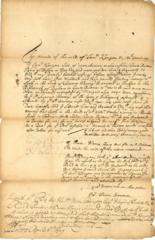
Plague was one more crisis at a deadly time, given the still unresolved conflicts of the Tudor dynasty and the new agenda of the Stuarts. Against that backdrop, scriveners were doing more than drafting binding documents when they “listened to, noted, and then wrote down these final wishes.” And they were far more than mere providers of “legal assistance in the transmission of family property, vital as that service was.” He gives them another kind of role altogether: “They were the principal professional providers of comfort to the dying. At a time of dreadful uncertainty they helped people to focus their thoughts, to affirm identities about to be extinguished, and to make a ‘good death’ in the face of conditions inimical to the achievement that powerful cultural ideal. By helping people to declare their minds, they eased them.”
But isn’t this a role of the priest? Not if you were Catholic. Many English Jesuits were in hiding, especially those trained in Europe as this had been declared treasonable. Some were still in exile because of the continuing fallout from the 1605 Gunpowder Plot to assassinate King James. Jesuits were an easy and mysterious target, offering the crown the opportunity to discredit Catholic loyalties in general. These unresolved religious tensions endured all through Ralph Tailor’s working life, an era when scriveners and courts offered people a possibly safer alternative to controversial priests.
This is Wrightson’s great skill: to take scraps of old documents and to present them as components of a much bigger story, though not the obvious one. He examines the wills and lists of possessions of sick and dying people, among others, Matthew Waddell, Robert Harisson, Ralph Emerson, Robert Moore, and Elizabeth Franklin. These individuals struggled under extremely difficult circumstances and he brings each one to life, in miniature, and captures something timeless and tragic about a mostly unrecorded life in its final moments.
After these people died, many of the wills were challenged by their survivors. Although writing about the seventeenth century, Wrightson taps into something decidedly contemporary as he describes relatives driven by “antecedent rivalries, disappointed expectations, personal animosities, or simple opportunism, and nurtured by outraged senses of entitlement and festering suspicion.”
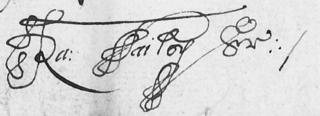 Wrightson’s principal character, the scrivener Ralph Tailor, remains relatively invisible because, despite earning a living with his pen, he left behind very little of his own writing when he died in 1669. Wrightson provides the broad strokes: Tailor was born in Durham in 1611, was orphaned by the time he was 16, and was an apprentice scrivener who entered the business the same year as the plague hit Newcastle-upon-Tyne, 1636. He married, had no children, and lived “through civil war, regicide, the Commonwealth and the Protectorate, and into the restoration. He survived several outbreaks of the plague.” He died a relatively rich widower at the age of 58. And that’s about all that’s known.
In the Epilogue, Wrightson uses a contemporary Canadian novelist to explain what drives him as a historian: “I become one of those described by Alice Munro as ‘driven to find things out’ and ‘put things together’: ‘You see them going about with notebooks, scraping the dirt of gravestones, reading microfilm, just in the hope of seeing this trickle in time, making a connection, rescuing things from the rubbish’ (Friend of My Youth, 1991).”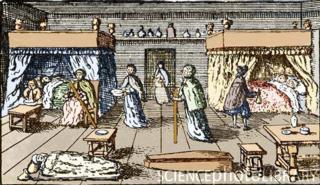
In spite of the paucity of biographical details for his main subject – a life easily overlooked because it is barely footnoted – Wrightson has magnified scraps and fragments and transformed them into a fascinating and layered exploration of vulnerability at a time of great instability. He captures something timeless: what happens when thoughtfulness and patience become of service to people struggling to cope, under great stress, their worldly affairs spinning out of control, their lives slipping away.
Tailor, his fingers stained with ink, was in the palliative care business and Wrightson has written his compassionate obituary.
*********************************************************
Keith Wrightson is the Randolph W. Townsend Jr. Professor of History Senior Essay Director, History at Yale University. His book, Ralph Tailor’s Summer: A Scrivener, his City, and the Plague is published by Yale University Press, 2011.

No Comments