



On Electing a Pope
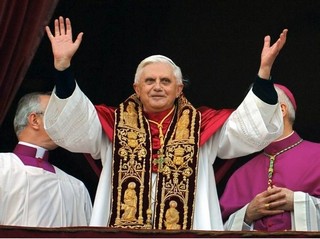 For most people, Pope Benedict’s resignation was a surprise, and not seen as a possibility. Or at least, it was a very remote one. Generally, the Church’s tradition has not favoured papal resignations, though church law provides for such a possibility. Historically to our knowledge, prior to Benedict XVI, only three popes have resigned, the last one in 1415. Thus, the pope’s resignation is all the more surprising.
Two main questions arise: Who is papabile? And what qualities should the cardinals look for in a new pope?
Speculation has already started. A Canadian cardinal’s name began appearing in European media-outlets well before the news of Pope Benedict’s resignation hit our media. Other cardinals from Africa and Latin America likewise are mentioned, along with a couple or so Europeans.
The truth is, we do not know who will be elected, and will not until it is announced. Who first observed, “He who enters the conclave as pope, leaves as a cardinal”? History tends to bear this out. Among the nine popes elected during the twentieth century, possibly five entered strongly as papabile and were elected. Most others of the nine were surprises.
Ecclesiastical politics, of course, play a part in the election, especially when cardinals enter a conclave with individuals in mind as candidates. Yet the history of conclaves also shows that each conclave takes on a life of its own, so to speak.
In the midst of all the give and take of discussions, the prayers, the voting, and the dropping off of candidate’s names, minds change, favourites lose their favour, some beg off, and new names emerge. Thus it has been for centuries, and thus it will be in the up-coming
conclave.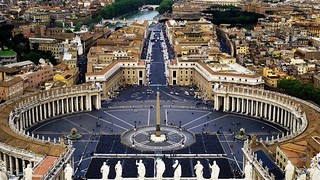
As well, and along with all that discussion and reflection and prayer, the Holy Spirit is present, guiding, and always directing the Church towards a fitting outcome. This latter point, the role and presence of the Holy Spirit in a conclave, is rarely, if ever mentioned by our public media, except usually by the Catholic media. Yet it is also essential in determining who really is papabile!
What “qualities” are needed in a new pope? This question has been repeated throughout the day, and will be until a new pope is elected. This question is no easier to answer than the first one: the responsibilities are so heavy and complex one man scarcely can carry the load.
Certainly good health and physical stamina to withstand long hours on public display are essential. Not only pastoral experience but an ability to govern well also are.
So too is an understanding of contemporary culture and society and world religions, notably outside of Europe, or at most a willing openness to these. A readiness to think and act outside the “box”, to take risks, to trust in the abilities and experiences of lay Catholics throughout the world, these too are indispensable qualities.
One could continue adding more and more qualities, depending on with whom one is speaking or what news-channel one is watching. In the end, we will have a pope who, like every other one before him, will have his strengths and weaknesses. Nonetheless, with whatever his human qualities he has, and with God’s grace, he will guide the Church!

No Comments