



Canada 150 & Me – Naming The Future
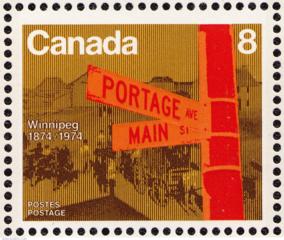
I arrived in Winnipeg in 1974, in the golden light of a hot September afternoon. I had a one-year visa stapled into my British passport. The “gig” was still in negotiation: a proposed arts education project with the Manitoba department of education supported by Brian Watkins, the head of Birmingham’s drama department, where I had been student. It could turn out to be an interlude at the conclusion of my probationary year as a high school Drama teacher in London.
The job was still being pulled out of the air. Arts pioneer, Colin Jackson had the creative tenacity; Charles Huband the political connections; and Lionel Orlikow, the deputy minister, had the rule-breaking means to make it happen. After weeks of negotiations (and a personal cheque from a remarkable public servant, Phyllis Broder, to tide me over), it happened: The Manitoba Theatre Workshop in Winnipeg, and the Classroom Arts Project for school divisions beyond the city.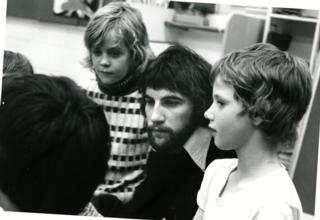
Working beside the indefatigable, Liz Coffman, we launched an experiment in creativity and teaching methods. The project was the result of people inside and outside the arts and education worlds working together to put ideas into action, in the hope that they might last.
I was a brash escapee from the limitations of rule-bound Britain and I found myself slowly turning away from the country I always imagined I would return to. This 8-month experiment became an almost-four year commitment. It ended when the Schreyer government lost the 1977 provincial election. Many of the Orlikow innovations were abandoned, but a nascent Artists in the Schools program survived.
Rather than return to England, I jumped two provinces over, another 8-month contract in my hand. This interlude lasted 12 years. I had joined the precariat, as a sessional in the Drama Department of the University of Alberta. Here, money was easier to secure, until the oil boom became a bust. David Barnet, like Colin Jackson, managed to finesse support for community based arts projects and Catalyst Theatre with its commitment to social action was born.
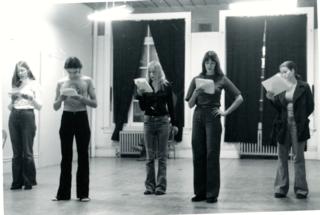 This Canadian open-to-change way of doing things was appealing. In the UK, I encountered: “That’s not how we do things here.” In Canada it was: “Let’s see what we can do, eh?” Things took shape on the fly. Returning to the UK began to fade. Then, a friendly citizenship judge, Una Maclean-Evans, enthusiastically handed me my certificate of Canadian Citizenship in 1978.
My precarious career shifted from education to media, and then to publishing, and then media once again. Supportive colleagues offered helping hands. Novalis publisher, Michael O’Hearn took a risk with this “former theatre guy” with unwavering support. At CBC Radio, the formidable executive producer of the arts unit, Anne Gibson, taught me (in the company of David Grierson, Shelagh Rogers, Eleanor Wachtel, Michael Crabb, and the brilliant Tim Wilson) what radio can and ought not to do. Later, Mr. Ideas himself, Bernie Lucht, showed endless patience and the craft of layered story-telling for the ear.
Parallel to these developments, Canada also transformed my experience of life as a Catholic. Instead of the binary Anglican/Catholic divide of the UK, here was a bewildering array of religious cultures and traditions, as diverse as the country itself. Becoming Canadian meant becoming a different kind of Catholic. Not so private, yet certainly never assertive.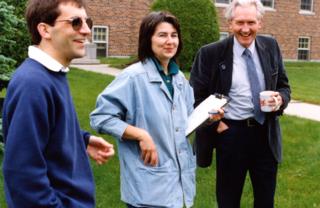
Once more, memorable individuals left their stamp. Edmonton’s Catholic Social Services were driven by the charismatic Fr. Bill Irwin, and the Catholic school board was being pushed by a smart, counter-cultural Franciscan, Kevin Lynch. (Disclosure: in 1982, with his guidance, I took a year off to explore the possibility of a Franciscan vocation at the St. Michael’s Mount in Lumsden, Saskatchewan. Great experience, but no, not for me). In the years that followed, I have been enriched by the scriptural insights of Norm Bonneau OMI, and the aesthetic and pastoral wisdom of Fr. Corbin Eddy, both here in Ottawa.
If there is a single abiding influence that brings my Canadian and Catholic experiences together it is John Pungente SJ. We met at St. Paul’s High School in Winnipeg in 1975 to work on a play to celebrate its 60th anniversary the following year. In the cast was Reg Alcock, that ferociously gentle bear, a great soul who went on to become a minister in the Paul Martin government. Reg died in 2011. The play went well because as an outsider I noticed “Paulinian” things that insiders took for granted. It made me an honorary St Paul’s graduate.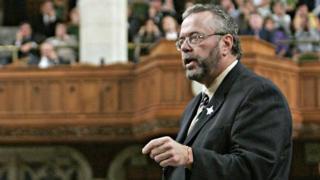
Watching carefully and thinking critically brings me back to John Pungente. Those words are the beating heart of his pioneering work in media education in this country. I know he will wince when he reads this, but it is important to remember and honour those who influence our lives for the better. For five decades now we have collaborated on all manner of projects: video, film, print, conference, and now this. He is a powerful mentor who has gently guided my discernment into – and thankfully sometimes out of – various initiatives that should, could, and perhaps will survive.
And this is where I stop this selective naming. As I tried to name what Canada has come to mean, I realized I was naming those who helped me form that understanding. It’s a vulnerable insight, though, as important things do not always endure.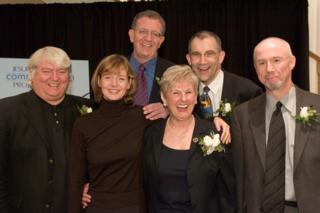
I remember reading something not long after I arrived in Canada. It haunts me still. I stumbled across these words in (literally) Fear and Trembling, the book by Søren Kierkegaard, where he warns that “no generation begins at any other point than did the preceding generations,” and “every generation begins all over again.” (p. 218-220 of the Walter Lowrie translation, Princeton University Press, 1941).
Such courageous fragility is what I treasure about life in Canada, where each generation can and does create the Canada it desires. In our extended webs of influence and connectedness, we can only hope that at least some of the things we helped to develop and want to protect will survive into Canada’s next big birthday celebration in 2067.
Values change, and sometime they don’t. Still, as Kierkegaard adds a few lines later: “One must go further, one must go further.”
Happy Birthday, Canada.

Brenda Craig
Posted at 15:22h, 27 AprilA ghost from the past. I was cleaning out an old sea chest and found history. It was interesting to read about what you have been doing.