



Solidarity during the Ebola Epidemic in West Africa
Since March 2008 I have been working as a teacher and international partner at the Kofi Annan Institute for Conflict Transformation (KAICT) in Monrovia, Liberia. Late in 2013 the deadly Ebola virus was discovered in our neighboring country Guinea and in due course it reached us in Liberia. At first the number of cases of Ebola was relatively few. So I took some home leave in Canada in late June. However, by August the disease had spread throughout Liberia as well as Guinea and Sierra Leone. The question arose as to whether I should return to Liberia as I had planned.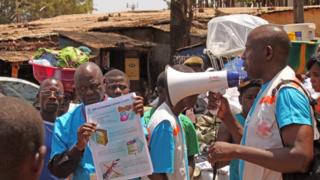
I received much advice, most of it to the effect that the situation was just too dangerous for me to return. I might contract the disease even though I did not intend to work in the health care field, but in educational activities at KAICT. But in one of the few truly courageous and possibly unselfish decisions I have ever made I did return to Monrovia.
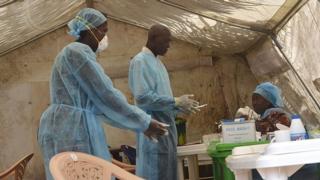
My main reason was solidarity. By this I mean the bond I have with others in Liberia who are ill with Ebola, with their care givers, with those who safely remove the remains of victims away from their homes or Ebola Treatment Units for cremation, and, especially, with all Liberians who live in fear of this dreadful and often fatal disease. By returning when I did I wanted to demonstrate that I want to be their brother and friend both in good times and in bad. In other words, I did not think that living in the relative safety of Canada would be for me actual solidarity with them during the epidemic.
 What have I and others at KAICT really done during the epidemic? Our most recent project was an Ebola awareness program we carried out in collaboration with other faculty and students of the University of Liberia (UL) with the people of Sinje, one of the rural settings of the UL. For a week twenty five of us visited more than four hundred homes in the immediate vicinity of the UL to tell the people we found there about Ebola and its dangers, and how they can help to protect themselves from it by washing their hands in a chlorine solution which we taught them to prepare.
Again this was an exercise in solidarity. Those of us who are privileged to study or work in higher education want to have deep connections with those who live near us in the UL, and beyond. We want to share with them what we knew about Ebola so that they would not fall ill with it themselves.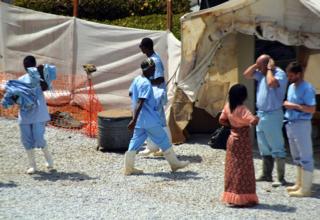
It could be objected that our effort at Sinje was not that significant within the “big picture” of the epidemic. But it was important for us because it constituted a sign and symbol of our concern and commitment for our immediate neighbors.
Solidarity is not merely comaraderie or esprit de corps but in contemporary Catholic social teaching it is the fundamental spirituality of those facing shared trouble together. We must never forget that in the Church we are, for good or ill, “all in this together”.

No Comments