



A Lenten Bookshelf: A Six-Fold Path: Week Six – Monty Williams, SJ on the Ignatian Path

By the solemn forty days of Lent the Church unites herself each year to the mystery of Jesus in the desert.
(From Article 540 of the Catechism of the Catholic Church)
In this six-part series, Kevin Burns selects a book for each week of Lent. Each book speaks to one of the great traditions within Catholic culture. Each book also shows how its author integrates that tradition. Six different approaches to the same journey through the desert of Lent to the Easter promise of resurrection.
Week Six: Monty Williams S.J. on the Ignatian path – wherever opportunity allows
This is the final week of the 2014 Lenten exploration of traditions. This week’s journey is one “that begins when we realize that we are trapped in a creation – cosmic, human, and personal – that is disordered. The first stage of intimacy carries us to the realization that even here we are loved, protected, and held in God’s love.” (The Gift of Spiritual Intimacy – Following the Spiritual Exercises of Saint Ignatius by Monty Williams S.J. Novalis, 2009, and the basis of this article.)
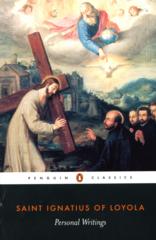 Discernment lies at the heart of the Jesuit tradition. In the Spiritual Diary that Ignatius of Loyola (c. 1491 – 1556) kept you can see how discernment was not an abstract process but the experience of a struggle that shaped every aspect of his life. In the cryptic, emotional, and tear-stained pages of his Spiritual Diary, Ignatius of Loyola makes this observation during Lent in the year 1544, a mere four years into the existence of the Society of Jesus:
Wednesday [12 March] …In the chapel, as I had seen people coming down the stairs and doing so hurriedly, I was unable to bring myself to say mass. I returned to my room to adapt myself to say it and amid tears recovered my composure. The tears continued as I walked to the chapel and began mass: during part of it, my devotion was considerable and occasionally I felt the impulse to weep. During the other part I was very often battling about what should be done to bring the matter to an end; for I could not find what I sought…
After mass and later in my room, I found myself completely bereft of all help, unable to find delight in the mediators, or in the Divine Persons; I felt as remote and separated from them as if I had never felt their influence in the past, or was ever to feel any of it in the future.
(Saint Ignatius of Loyola – Personal Writings, translated and edited by Joseph Munitiz and Philip Endean, Penguin, 1996, p. 97) 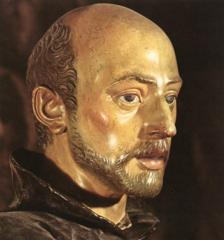
Remote and Separated
Monty Williams describes the young Ignatius of Loyola as “vain, venal, and charismatically aggressive, obsessed with the secular ideals of courtly love and chivalry.” In 1521, a life-threatening accident turns his world upside down and he opts “to follow the path of the saints rather than seek earthly glory.” Withdrawing to a cave, he pursues “a regime of extreme asceticism, alternating between severe depression, scruples, thoughts of suicide, and amazing mystical experiences.” When he leaves that cave, Ignatius of Loyola goes on to create the Society of Jesus and draft the Spiritual Exercises, defining a process whose influence is immeasurable today. The biographies of Ignatius of Loyola reveal his lifelong struggle with deeply human vulnerabilities despite the central conviction in the Jesuit tradition that “God is in constant and intimate dialogue with us. We experience this in our daily lives as feelings of union with or disconnection from God,” as Williams explains.
 In The Gift of Spiritual Intimacy – Following the Spiritual Exercises of Saint Ignatius, Monty Williams crafts a book version of a complete retreat following the traditional four-week process of the Spiritual Exercises. In presenting the details of this particular Ignatian process he also articulates key concepts and ideas that embody the Jesuit way: Discernment, Desolation, Consolation, the use of the Imagination, our Participation in Creation, and the experience of God in all things.
Discernment/Consolation/Desolation
Consolation and desolation are not feelings. They are indicators of the direction in which we are pointed based on our underlying attitude. If we are basically selfish, looking at the greater good causes desolation; if we are basically caring, then looking at the greater good causes consolation. (p. 30)
Consolations, like desolations are interconnected. They reveal to us our redeemed history and God’s care for us, even in those times when we might have felt far from God, or not even particularly concerned with spiritual things. Bringing this to our awareness enables us to appropriate more deeply God’s constant mercy for us and communication with us. (p. 31)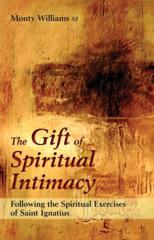
Imagination and Participation in Creation
What we experience as creation is the ongoing process of God creating. Creation is not complete. For the Christian creation is open and incomplete. It finds integrity beyond itself in God. (p.32)
Prayer gives us … entry into Gods love. That love seeks out the damaged in creation – including us – to repair, console, and transform. Inasmuch as we participate in that love, we too are carried into the world’s pain and past the illusions of ourselves that contribute to it. We become present to the source of creativity. (p. 33)
An Ignatian compass
Each journey, and each step of the journey, takes us away from something and brings us closer to something. To be a pilgrim people is to be always in transition and to live with a sense of impermanence. We can delight in what is given as it passes. We can celebrate it as a gift. It reveals what is abiding. What has been there from before all time is everywhere present now, and exists as the ground for all that is to come, rooting us in the depths of our being. Our identity lies in that rootedness. The path of intimacy carries us to that identity. (p. 39)
 Wherever opportunity allows
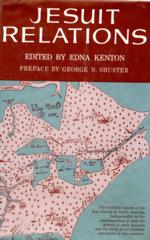
In 1611 when the Jesuits arrived on this continent they journeyed into danger and death. The consequences of that journey are things we continue to discover here daily. In one of the earliest Jesuit Relations documents the author acknowledges the enormity and the boldness of that Jesuit intent with a slightly cautious degree of encouragement, “A godly act was performed wherever opportunity allowed.” (The Jesuit Relations and Allied Documents – Travels and Explorations of the Jesuit Missionaries in North America 1610 – 1791, edited by Edna Kenton, Vanguard Press, 1954, p. 4.)
Next week is Holy Week, offering each of us a unique opportunity for boldness.

No Comments