



A Lenten Bookshelf: A Six-Fold Path: Week Four – Timothy Radcliffe, O.P.
By the solemn forty days of Lent the Church unites herself each year to the mystery of Jesus in the desert.
(From Article 540 of the Catechism of the Catholic Church)
In this six-part series, Kevin Burns selects a book for each week of Lent. Each book speaks to one of the great traditions within Catholic culture. Each book also shows how its author integrates that tradition. Six different approaches to the same journey through the desert of Lent to the Easter promise of resurrection.
Week Four: Timothy Radcliffe O.P. and the challenges of the Dominican path.
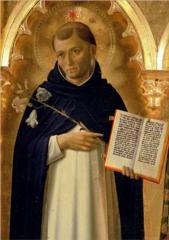 St Dominic (c.1170 – 1221) was a contemporary of St. Francis but unlike Francis, he was really good at systems and organization. These two men shared one overarching thing in common. At a time when worldly leaders sought to build Christendom through demolition and conquest (it was the era of the Crusades and the Cathar and many other heresies after all) both of these founders of a religious order looked to the power of prayer and preaching instead. That orientation lives in the very name of the religious congregation that Dominic founded: the Order of Preachers. He based what was to become Dominican practice on the simplicity of the Augustinian Rule with such precepts as:
“The main purpose for you having come together is to live harmoniously in your house, intent upon God in oneness of mind and heart…”
“Be assiduous in prayer…”
“Subdue the flesh …”
“You should either avoid quarrels altogether…”
And with the directive for all members of the order to pursue a communal way of life “not as slaves living under the law but as men living in freedom under grace.”
The Dominican way is through the creation of communities of learning, each of which encourages its members to further their own studies, to teach with the greatest of skill, to preach effectively and convincingly, and to lead of life ordered by a disciplined approach to prayer. The Dominican image is one of erudition and as the order that in its own way became the Church’s systematic teaching wing. Yet there’s also something punningly playful about the Dominican in the way that during the early and formative years of their order there was much playful musing about them being Domini canis, a.k.a., the hound of the Lord.
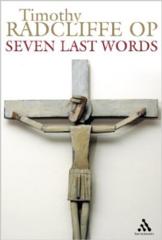
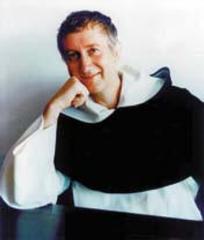 The British Dominican Timothy Radcliffe is a renowned scripture scholar and gifted public speaker based at Blackfriars, the Dominican college at Oxford University. In 1992, he was named the order’s CEO, in Dominican terminology, “Master of the Order of Preachers”, an office he held for the next nine years. During his time as Master, and especially in the years that followed, Radcliffe published commercially successful books that effectively bridged the worlds of the academy and the institutional church and that also found their way into the contemporary discourse about religion and society. These books have a directness, some have said bluntness, that captures and holds the attention of the reader. His books include I Call You Friends in 2001, Seven Last Words in 2004, What is the Point of Being a Christian? in 2005, and Why Go to Church? – The Drama of the Eucharist in 2008.
Each year as Master of the Order of Preachers, Radcliffe wrote formal letters to the entire membership of the Dominicans worldwide. He entitled one the letters he went in 1998, “The Promise of Life.” The full text this letter as well as for all the others that he wrote can be found at the official Canadian Dominican website. http://www.dominicans.ca/Documents/masters/index.html
This article focuses on The Promise of Life because it articulates some Dominican fundamentals. In speaking to the members of his religious order, Radcliffe could also be addressing those of us who are on a Lenten journey and who sense they are in the midst of a mystery and still quite lost somewhere in the desert.
Firstly, Radcliffe reminds us to reflect inwardly:
When St Dominic gave the friars the habit, he promised them "the bread of life and the water of heaven"(1). If we are to be preachers of a word that gives life, then we must find the "bread of life" in our communities.
He bluntly reminds us of our human frailty: 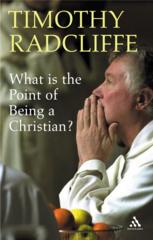
We are not angels. We are passionate beings, moved by the animal desires for food and copulation. This is the nature which the Word of life accepted when he embraced human nature. We can do no less. It is from here that the journey to holiness begins.
He reminds us of our need for support from those around us:
We need brothers and sisters who are with us as our hearts are broken and made tender.
He tells us that there is no easy way out but that even when we feel really lost we are not alone.
Every wise person has always known that there is no way to life that does not take one through the wilderness. The journey from Egypt to the Promised Land passes through the desert. If we would be happy and truly alive, then we too must pass that way. We need communities which will accompany us on that journey.
He reminds us of the daily pressures that fragment experience and can lead us to especially dark places:
This fragmentation can make it hard for us to live unified and whole lives. …The fundamental crisis of our society is perhaps that of meaning. The violence, corruption and drug addiction are symptoms of a deeper malady, which is the hunger for some meaning to our human existence. … God may lead us into that wilderness. There our old certainties will collapse, and the God whom we have known and loved will disappear. Then we may have to share the dark night of Gethsemane, when all seems absurd and senseless, and the Father appears to be absent. And yet it is only if we let ourselves be led there, where nothing makes any sense any more, that we may hear the word of grace which God offers; for our time.
 To pursue a life of faith is like a Lenten journey and it may lead us
into the dark night of Gethsemane. …Nothing binds a community more closely together than a faith that we struggled to attain together. This may be in a theological faculty or a poor barrio of Latin America. In wrestling together to make sense of who we are and to what we are called in the light of the gospel, then we shall surely be astonished by the God who is always new and unexpected.
We must be patient with God whose gifts take time:
Our families have taught us to love; they may also have inflicted wounds on us that will take time to heal. To grow in this Christlike love takes time, and this time is given. It is a gift, and God always gives his gifts through time. He took centuries to form his people, preparing the way for the birth of his Son. God gives us life patiently, not in an instant.
Every encounter we have leads us into a larger world:
The good shepherd who has come that we may have life and have it more abundantly, is the one who opens the gate, so that we may come out and find large open spaces. In prayer we make an exodus, beyond the tiny shell of our self-obsession. We enter the larger world of God. Prayer is a “discipline that stops me taking myself for granted as the fixed centre of a little universe, and allows me to find and lose and re-find myself constantly in the interweaving patterns of a world I did not make and do not control.” (quoting the former Archbishop of Canterbury, Rowan Williams, Open to Judgement – Sermons and Addresses, 1994.)
+++++++++++++++++++++++++++++++++++++++++++++++++++++++++++++++++++
Next Week: Edith Stein O. C. D. (St. Benedicta of the Cross) on the pursuit of a perfect coherence of meaning and the Carmelite path.
“…from God’s point of view – nothing is accidental … my entire life, even in the most minute details, was pre-designed in the plans of divine providence and is thus for the all-seeing eye of God a perfect coherence of meaning. Once I began to realize this, my heart rejoices in anticipation of the light of glory in whose sheen this coherence of meaning will be fully unveiled to me.”

No Comments