



A Lenten Bookshelf: A Six-Fold Path: Week Three – Dating God
A Lenten Bookshelf: A Six-fold Path
By the solemn forty days of Lent the Church unites herself each year to the mystery of Jesus in the desert.
(From Article 540 of the Catechism of the Catholic Church)
In this six-part series, Kevin Burns selects a book for each week of Lent. Each book speaks to one of the great traditions within Catholic culture. Each book also shows how its author integrates that tradition. Six different approaches to the same journey through the desert of Lent to the Easter promise of resurrection.
Week Three: Dan P. Horan OFM explores the Franciscan path.
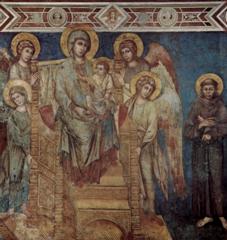 It’s very difficult to build an accurate portrait of Francesco di Pietro di Bernardone, a.k.a. St. Francis of Assisi (1181 – 1226). Of all the saints in the litany he has suffered more than most from century after century of romanticized reconstruction, especially in the nineteenth century and the arrival of cheap colour printing. Somewhere behind those blue-eyed, rosy-lipped, soft-focused portraits on holy cards, elegant brown-robes, cheerful chirping bird in hand, there lurks a real, living, breathing, vulnerable and complex individual.
The early Franciscan source materials offer a few glimmers into the human side of Francis, if you look closely. Chapter 7 of The Little Flowers of St. Francis presents him as a cautious “celebrity” hiding from throngs of needy people, trying to escape the demands of a wobbly and dependent organization that has suddenly grown up around him, and who is seeking a rare opportunity to be alone, get himself together, and to reframe his thoughts as Easter approaches:
He was inspired by God to go and make that Lent on an island in the lake. So Saint Francis asked this devout man that, for the love of Christ, he carry him with his little boat to an island of the lake where no one lived, and that he do this on the night of the Day of the Ashes, so that no-one would notice. And this man, out of love – from the great devotion he had for Saint Francis – promptly fulfilled his request and carried him to that island. And Saint Francis took nothing with him except two small loaves of bread. Arriving at the island, as his friend was departing to return home, Saint Francis asked him kindly not to reveal to anyone that he was there, and that he should not come for him until Holy Thursday. And so that man departed, and Saint Francis remained alone.
(From Francis of Assisi – The Early Documents, Volume 3: The Prophet, edited by Armstrong, Hellmann, and Short, New City Press, 2001) 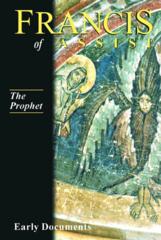
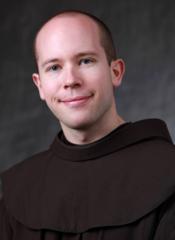
Daniel P. Horan is a young American Franciscan who is revitalizing the image of Francis, reaching back through all the distorted layers of the past to reveal a more recognizably human figure. Horan is millimetres away from a doctorate in systematic theology from Boston College and is a highly sought after speaker and teacher. He’s also a blogger, an academic writer, and the author of critically acclaimed works on contemporary Franciscan spirituality. All of this publishing activity and his speaking engagements – and now articles for America magazine – are gaining him a great deal of serious attention.
Horan entered the New York based Holy Name Province of the Franciscans in 2005 and was ordained a priest in 2012. Along the way, in 2007, he began a popular blog, called Dating God. In 2012 he published a book, using the name of the blog as its title and which is the basis of this article. (Please note: rather than digress here with a long-winded explanation of what Horan really means when he uses this potentially misleading word “dating” I suggest you might take a look at his blog yourself because he explains it all very clearly there. And there are videos. Here’s the link: www.datinggod.org . Now let’s get back in that Franciscan path.
In Dating God Horan writes: “One way the Franciscan tradition should shape or influence our lives is to remind us that our relationship with God is not all that different from our other forms of relationship.” It’s a relationship that is human and real and which is at the heart of the Franciscan tradition, a tradition that survives today because it is built on the legacy of a very human individual who struggled throughout his short and pain-filled life to make sense of his relationship to God.
As Daniel P. Horan writes:
 One lesson that emerges from the formation of the Franciscan movement is the universal nature of God’s call for all to take seriously the challenge of living the gospel. Another lesson that arises from the early Franciscan movement is the communal nature of gospel life. While Francis may have desired only to live out his baptismal commitment in humility, simplicity, and prayer, he quickly discovered that such a life could be lived only in community. To be a Christian does not mean to be in relationship with God alone but to live in loving relationship with others. (Dating God – Live and Love in the Way of St. Francis, p. 4)
In Dating God – Live and Love in the Way of St. Francis, Horan outlines eight different thematic exercises designed to help people to take some time out of busy schedules and to focus in on the experience of prayer, of personal relationships, and their relationship with God. His themes are classically Franciscan: Pilgrimage, Pursuit of the True Self, Loneliness, Solitude, Contemplation, Scripture, Social Justice, and Respect for all Creation. He describes his book as
a reflection on how to relate to God and one another in our contemporary setting. While not an answer book, it does offer a new look at the timeless condition of human longing for a deeper relationship with the Creator and points a way,in the spirit of Francis and Clare of Ssisi, towards that experience of the DIvine (p.13)
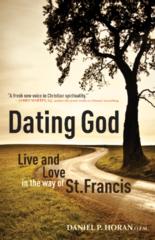
Horan reminds us that St. Francis took a distinctive and creative approach to that relationship:
He basically cut and pasted snippets from the Hebrew psalms but arranged them in a new collage of his own prayer. …What this seems to reveal is that in, in his relationship to God, St. Francis, like all of us, struggled with periods of time that led him to feel overwhelmed by sorrow, abandoned by God, or distant from the Creator. (p. 50-51)
In the Franciscan tradition, actions are simultaneously symbolic, personal, and always consequential.
When Francis broke with his social class, he made a statement to the world about what it meant to him to follow in the footprints of Christ in the pattern of the gospel. His desire was not simply to serve the poor and marginalized, not only to adjust his lifestyle to better reflect his Christian values, but to renounce the world’s power so as to be in solidarity with the powerless, the voiceless, and the forgotten in society. (p.105)
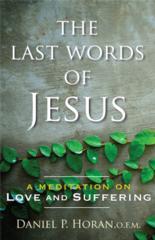 Incidentally, Daniel P. Horan has studied the life and works of the Trappist and author Thomas Merton and has written about Merton’s pre-Trappist Franciscan influences. He is also a member of the board of directors of the International Thomas Merton Society. Dating God – Live and Love in the Way of St. Francis by Daniel P. Horan is published by St. Anthony Messenger Press, 2012. His most recent book, The Last Words of Jesus – A Meditation on Love and Suffering was published by Franciscan Media in 2013.
++++++++++++++++++++++++++++++++++++++++++++++++++++++++++++
Next Week: Timothy Radcliffe OP on the Dominican path: “Every wise person has always known that there is no way to life that does not take one through the wilderness. The journey from Egypt to the Promised Land passes through the desert. If we would be happy and truly alive, then we too must pass that way. We need communities which will accompany us on that journey.”

No Comments