



The Contemplative St. Joseph

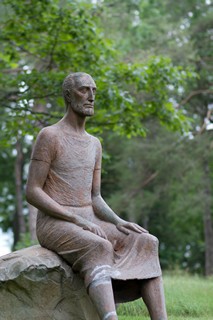 My all-time favourite image of St. Joseph is a statue that is located on our Jesuit property in Guelph, ON. The piece features St. Joseph sitting on a large rock, located just behind the farm workshop. His hammer is resting in his lap. We usually associate statues of St. Joseph as showing the step-father of Jesus in a more active stance, actually using the tools of his trade, rather than letting them sit in his lap.
I grew to love that statue when I lived in Guelph and would rush between various buildings several times a day. I was busier than I have ever been in my life. St. Joseph almost seemed to be staring at me, reminding me to slow down and actually contemplate the good and rich responsibilities I had. I used to imagine that St. Joseph was pausing in his work of building something. He was taking a look at it and trying to discern where to go next with it. How could he use his chisel to fashion just the right design in that chair or where was more work needed on that shelf?
Perhaps I would have been less frantic if I had paid more attention to him and actually contemplated the work with which I was involved. One Ignatian writer has defined contemplation as “taking a long, loving look at the real.” The real could be a piece of furniture I’m making, an article I’m writing, the garden that I am creating, a beautiful sunset, a thunderstorm, those around me or my own life history. There is nothing I am involved with or experiencing that can’t benefit from a long, loving look.
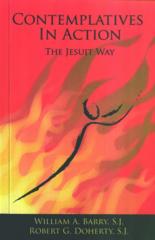
A phrase Jesuits use a lot to describe ourselves is contemplatives in action. The idea goes that a contemplative spirit should mark even my busyness and frenetic activity. It’s no different from the Gospel account of Mary and Martha. We can rush about and do many things, but the activity would benefit from the attitude of Mary, letting her whole being be present to Jesus. I sometimes think that many of us are actually actors in contemplation. In other words, we have it backwards. It’s only after the actions that we stop and contemplate how they went. That’s not a bad thing, but actually contemplating ahead of the action, by asking ourselves what we hope for and desire, would help.
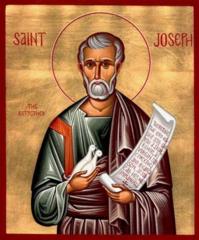 Joseph was a man who pondered and contemplated. We don’t hear much about him from the Gospel. But we do hear about his attentiveness to his night dreams, a spirit open to hearing how God was speaking to him. The hymn Joseph, Be Our Guide and Pattern, says it well: “Faithful to the guiding vision, listening to the angel’s word.” As we celebrate his life, let’s follow his example and put down our work tools and contemplate the next steps in our projects.

No Comments