



Labour Day – Endings and Beginnings
 I suspect that most of us associate Labour Day with endings and beginnings. We see this as the unofficial end of summer, the last long weekend before there is a lasting chill in the air. Summer is winding down, so this weekend provides us with the chance for that last barefoot beach walk. It’s also about beginnings. So many calendars and program schedules start after Labour Day. This is even true of most television shows and symphony orchestra seasons. This cycle is deeply imbedded in us from our childhood days of heading back to school.
Like many others, I remember being filled with the excitement of getting new school supplies, new clothing, the opportunity to see classroom friends from the previous school year, and the chance to make new friends. Of course, some of us likely approach that first day of school with dread. Think of those who have a difficult time in the classroom, those who faced bullying the year before, or those who have trouble making friends. Further afield, we can think of children in war torn parts of the world where there is no school to attend, or, if there is one, the trek to get there means risking one’s health or even life.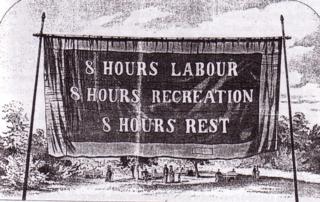
Like the first of January, Labour Day provides us with an opportunity to reflect back on the past year and to discipline ourselves and get back to healthy habits or start new practices. As we gather at barbeques and picnics today, let’s take a few minutes to look back on the gifts of the summer and to ponder what we’ll take up with a new determination as we start a new year. But, let’s not forget the official reason for this long weekend. Let’s also take time to ponder labour, whether it is our paid work or those unpaid personal projects with which we are engaged.
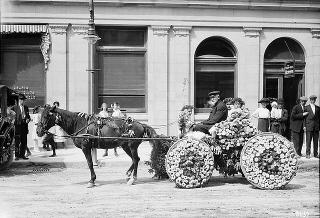
Labour Day has been an official holiday in Canada since 1894, though its origins are from before that. Its roots are in the labour union movement, which advocated eight hours for work, eight hours for recreation, and eight hours for rest.
In 2013 we take for granted safe and reasonable working conditions in this country, but that only happened because labourers struggled to convince Sir John A. Macdonald to promise to repeal what he called “barbarous” anti-union laws. Parliament passed the Trade Union Act in 1873 and Labour Day became an official holiday twenty-one years later.
We are in an odd situation of imbalance today. Many people work far too much, partly because of their own choice, while others cannot find meaningful work. In July, just before he travelled to Brazil for World Youth Day, Pope Francis warned of a “lost generation” of unemployed young people, because of the perils of global unemployment.
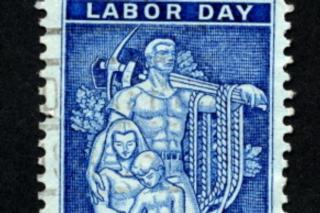 As we enjoy that gin and tonic or that cold beer, let’s acknowledge the fact that it is only because of the labour of so many that the many layers of our culture work smoothly. It was Sophocles who said, “Without labour, nothing prospers.” Our country is certainly prospering! Let us keep in mind those many people who lack meaningful and fulfilling labour. Let’s be especially mindful of the young men and women throughout our world who lack activities that give them a sense of dignity. As we look ahead to a new year, let’s take to heart the words of Martin Luther King Junior: “All labour that uplifts humanity has dignity and importance and should be undertaken with painstaking excellence.” This new year gives us an opportunity to labour for excellence.

No Comments