



St. Ignatius Day Homily – July 31, 2012
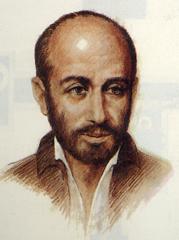 “In 1492 Columbus sailed the ocean blue.” A rhyme most of us old folks heard often as children. But I have a new one for this occasion: “In 1491 Ignatius became a native son.” A son of Spain that this, a Basque though he be. (That mysterious people whose roots are said to be non Indo-European) That same year the Spanish completed the reconquista (the reconquest ) of their home and native land after centuries of off and on warfare with the Muslim rulers. The battle hardened Spanish would then go on to build an Empire of their own in Americas and beyond destroying the Aztec and Incan Empires along the way.
Muslims and Jews within the new Spain were given a stark choice: convert or be deported. Most left. Some converted like the ancestors of St.Theresa of Avila with whom Ignatius & Xavier would be canonized in 1622. A greater group of mystics we will probably not meet again this side of heaven. But I digress to raise a question about a mysterious encounter at the beginning of Ignatius’s pilgrimage to spiritual maturity.
Along a route that would eventually take him to Manresa he made a couple of pilgrimage stops at Marian shrines. After the first stop he said goodbye to his brother and headed for Montserrat and the Benedictine Monastery famous for it’s black Madonna. There at the shrine he would make a confession that lasted three days and a vigil of arms.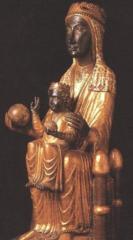
But before that important stop he was travelling alone “never considering anything about the interior life, nor what humility was, or patience, or that discernment and discretion was the rule and measure of these virtues. He only thought about what great things he was going to do to match what the saints had done before him for the glory of God.”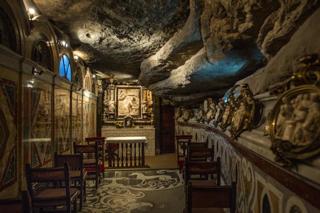
His reveries were interrupted when a Muslim riding on a mule caught up with him and they engaged in a theological conversation about the perpetual virginity of Mary, the mother of Jesus. I have never read or heard anyone raise an obvious question about this encounter: Were not all the Muslims expelled or converted by this year of the Lord 1521?
But perhaps this man was a “converso” a convert but clung to Muslim views about Mary. Or perhaps like many forced conversions he faked it to survive in his birthplace.
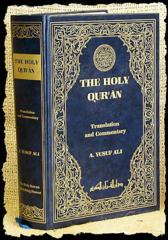 Now most people don’t know that Muslims honour Mary greatly. She is mentioned more often than any other woman in the Koran. They too believe that she was a virgin when she conceived Jesus: In the Koran Mary says “ O My Lord! How shall I have a son when no man has touched me?” But they don’t hold to her perpetual virginity something that the Catholic Ignatius was adamant in defending. The argument got pretty heated and the unarmed Moor, who would have noticed the dagger at Ignatius’ side high-tailed it ahead for his own safety.
Ignatius being the chivalrous soldier moulded by ideals of courtly love thought he had not sufficiently defended Our Lady’s honour in this delicate matter. Initially he was determined to rush off and do serious damage–if not kill–this Moor. Then in a moment of primitive discernment a cooler, but naive, head prevailed. He shares this experience with us I submit to encourage beginners like himself who might be put off if they only heard about the mature mystic of later years who could find God in all things and at any moment–a true contemplative in action.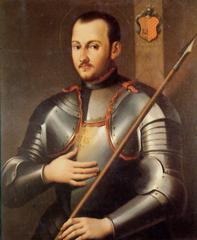
In his earlier first experience of discernment at Loyola Castle he identified the feeling states that arose when he read his favourite romance novels and then switched to reading about the heroic deeds of great saints like Dominic and Francis. When engrossed in the Louis L’amour or Harlequin romances of the day he felt elated during the reading but dry afterwards. When thinking about saintly exploits he experienced consoling joy during and after the reading. 
This time feeling states seem to have been forgotten. His plan was to have the mule decide. He would let the reigns drag on the ground giving the animal free reign to move where it wanted. If it continued on the highway the Moor was safe; if it veered onto the side road leading to the town where the Moor was headed Ignatius would find the man and cut him up.
Fortunately, For Ignatius and the Moor, the mule chose the highway. Ignatius interpreted this–however naively– as God’s will and let the Moor live.
Like Elijah in the first reading Ignatius was tutored directly by God in the ways of discernment. But Elijah had it easier. God told him explicitly to do three things: anoint two kings and his successor prophet Elisha. Ignatius would be tutored over many years into a mature discerner of spirits and God’s will for him and many others he directed.
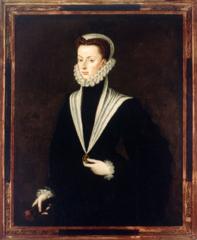
Like Elijah he would face opposition and persecution but nothing like being terrorized by that memorable Biblical bad girl Jezebel, the Sidonian princess. Ignatius had to contend with an imperial princess but she was not out to kill him. She simply wanted to join his company. Married at 17, widowed at 19 Juana of Austria, daughter of Holy Roman Emperor Charles the V, came under the influence of St. Francis Borgia and decided she should be a Jesuit. She was made regent of Spain by her brother Philip now married in England to Mary Tudor. They worked out a compromise solution for her. She would
have the vows of a perpetual scholastic–so that if she was ever forced to marry again, her vows could more easily be dispensed. John Padburg said she kept poverty by living simply within the opulence of the court, her vow of chastity by discreetly declining every offer of marriage, and obedience –well she was used to ordering the two saintly Generals, Ignatius & Francis around. She even had code names–Sanchez & Montoya for two. Her secret identity was kept–likely because she died young at 37.
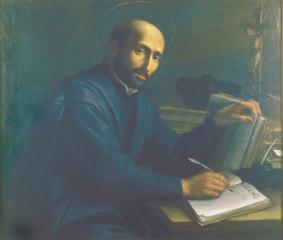 Despite all the politics and intrigue of the times Ignatius, like Elijah, had three tasks to complete before his life was done: to have the Society of Jesus approved by the Church, to have the Spiritual Exercises accepted as a legitimate spiritual methodology, and to complete the writing of the constitutions for this upstart religious band of brothers and at least one sister. He truly walked in the works prepared for him, those mentioned and many more lesser known.
The second reading reminded me of last summer’s Olympics. I cannot but remember an earlier Olympics and the glorious runs that Donovan Bailey and his 4 by 100 relay team achieved at the Atlanta games. St. Paul said “run to win” and they did to two gold medals for Canada. We will probably never achieve this again. But they could have achieved more. Donovan when he knew the relay race was won slowed and looked back over his shoulder forgoing, I believe, a world record.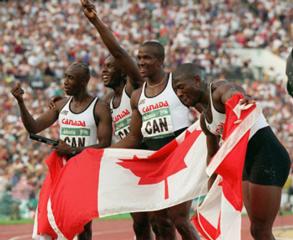
Ignatius and Paul never looked back, or clung to past achievements. Like those relay runners Ignatius passed the baton to the next generation and then in those closing years of his life seemed already to have experienced the New Jerusalem in his visions of Christ as the Sun. The book of revelation grants us the same vision: “the city has no need of the sun or moon to shine on it because the glory of God shines on it. And the Lamb is the lamp. And the peoples of the world will walk by it’s light.” (Rev. 22: 23)
The Muslims of the world have caught up to us again on the dusty roads of Spain and here in Canada too. What kind of dialogue and discernment will we make in our time after Iraq and Afghanistan, Libya and Syria and so many other places of encounter and conflict?
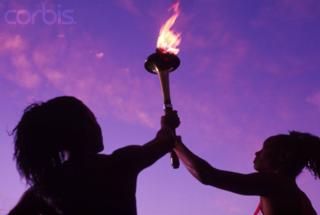 They too—like all peoples—must be pointed in the direction of the Christ, whom Muslims already revere as a prophet and even the Messiah but not the Son of God. John the Baptist did this for Jesus the lamb of God. But Ignatius like John also knew when it was time to get out of the way and point the disciples to Jesus the lamb and lamp of God. And so should we who are passing the torch to the next generations. I say that especially on behalf of the jubilarians who are graced to celebrate this feast of Ignatius with you here today–not in the Old or New Jerusalem, but right here where we are.

No Comments