



Resurrection: The Liberation of the Imagination
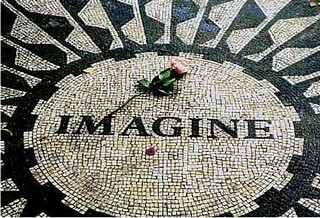 Rosemary Haughton, a British Roman Catholic theologian, uses a wonderful phrase to describe what is happening in the healing accounts in the Gospels. She suggests that Jesus was able to “liberate the divine energy in people.” This happens because of the encounter between Jesus and the one being healed. This is an apt description of one of the effects of the resurrection. One dimension of divine energy that can be liberated in us is the gift of the imagination.
We are aware of what a lack of imagination looks like. Think of the person who fails to see another option for her life and is stuck in a rut. Think of the political leader who is unable to find creative solutions to a problem or who throws up his arms. How often do we hear the attitude, “Oh well, it’s always been that way. Nothing can be done about it. It’s impossible to find a solution.”
As Oscar Wilde said, “Consistency is the last refuge of the unimaginative.” We hear that attitude in individuals, families, communities, the political world, the corporate world, and the Church. I think that this helps to explain why so many people both inside and outside the Church are so captivated by Pope Francis. He is a breath of fresh air and seems to have a whole different notion of the Papacy than the Church has se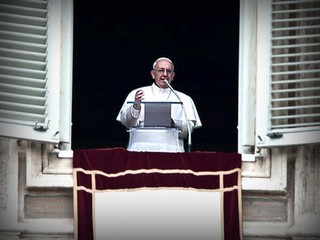 en for a long time. A word that has been used a lot in the time since his election has been “the outsider.” Part of that is because he has a completely different way of seeing things and acting than his predecessors. Outsiders have a tendency to bring fresh thinking to problems.
What is the imagination? It is a creative force or energy that gives us the ability to visualize and bring into existence the uncreated potential that lies within us. It takes us beyond our familiar surroundings, helping us see that there is more to our lives and more to the world that what we see. It is the power of forming images and of rendering present what is not actually present. I can form in my mind a solution to a problem that I am having or that a nation is experiencing. Of course, insights are a dime a dozen (as one philosopher pointed out). The images can stay in my head and go nowhere.
We can all sit on our couches and decide what the prime minister should do about the economy, or explain what that coach must do to get a winning team. Our imagination has to be accompanied by creative action. Creative people know how to bring an image to life. I can create a beautiful piece of art based on what I have imagined, create a new garden for my backyard, write a book, solve a problem, or work for the reduction of global hunger.
There is a constructive function to the imagination. When we use imagination, we begin to see our world with new eyes. David Milne, the Canadian artist, said in 1930, “The one thing that has moved the human race, developed it, is creative courage, imagination.”
What happens when we experience the graces of the resurrection of Jesus? We experience joy and enthusiasm. We can also experience imagination and creative energy. It brings liberation and a new perspective on life to those who experience its effects. The resurrection lies beyond our dreams and vastly beyond our powers. But if the resurrection of Jesus is possible, anything is possible. We restrict the power of the imagination when we allow it to remain at the level of descriptions of colours, sounds, and smells. Its power is far greater than that. It has the power to change our lives and the world.
The imagination has the potential to keep us alive and even thrive in situations where the ability to survive is in question. Many individuals who have found themselves in situations of abuse, torture and persecution have been able to close their eyes to the frightening realities around them and imagine safe places. This does not eliminate or justify the pain, but it does show the power of the imagination.
 There is a strong link between the creative use of the imagination and survival. How much of the world’s most beautiful music, painting, poetry and other creative expressions have their roots in the suffering of an individual or a whole people! The pain inflicted on people by another individual or the state does not have the kind of power over them that traps their spirit. The power of the imagination is greater than the power of the persecutor. This is precisely the power that is evident in the mystery of Jesus’ resurrection. The suffering and death of Jesus did not end the possibilities that were inherent in his life. Even in the face of persecution, the Church has never stopped spreading the Gospel.
The resurrection means that there are even newer things that can be seen with eyes of faith. We no longer need to be limited by our past or by our sense of inadequacy or by a sense that change is impossible in our personal lives or in the world around us. We are often restricted by the limits of the horizon that we see in front of us. This is also true of decision-makers in politics, business or religion. New possibilities are not always evident to us. The resurrection blows the evident horizon wide open and reveals to us a new horizon, a world of possibilities. We no longer need to be like Thomas, doubting until we see the visible evidence of newness.
The early Church is evidence of this power of the imagination. The accounts we read in the Acts of the Apostles reveal individuals and communities who were not bound by their past or by the social, cultural and political horizon in which they lived. Saint Paul is a good example of the freeing power of an encounter with the Risen Lord. Paul’s experience of conversion shows that we can be freed from our past. He writes of letting go of the past and straining ahead for what is still to come (Phil 3:13). He has left his past life behind and his heart burns with a great desire to spread the story of Jesus.
The imagination released by the resurrection does not merely restore and revive what already is. It creates the possibility for something new in the personal life of an individual, the corporate life of a community, the life of the Church, and global life. Let us pray that each of us, including Pope Francis, is receptive to the Easter grace of a liberated imagination
No Comments