



What We Believe: Part 13 – “Sacramentally present”
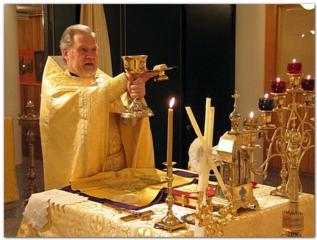 The more we understand what takes place in the Celebration of the Eucharist, the more spiritually fruitful can be our participation.
If we look at the heart and summit of the celebration the Eucharstic Prayer (we will use the second version which is the oldest), in the preface, the Church gives thanks to the Father, through Christ, in the Holy Spirit, for all his works. They include creation, redemption and sanctification. The whole community joins in the unending praise that the Church on earth and in heaven sing to God the Father, the Son and the Holy Spirit.
Then in a few words the Church asks the Father to send his Holy Spirit (or the power of his blessing) on the bread and wine, so that they may become the body and blood of Jesus Christ and so that those who take part in the Eucharist may be one body and one spirit.
There follows the narration of the institution, the power of the words and the action of Christ and the power of the Holy Spirit make sacramentally present under the species of bread and wine Christ’s body and blood, his sacrifice offered on the cross once for all. (1353).
I quoted the words of the Catechism because this is a most important explanation. I suggest that it be reflected upon very carefully. Especially the phrase “make sacramentally present.” In other words, there is not a renewal or representation or repetition or re-enactment of “his sacrifice offered once and for all.” The original act of offering of Jesus to His Father is made present and real for us then and there on the altar.
This is through the power of God to whom there is no past or future, only the present. So what is past for us is present to God and always will be. What more needs or can be said about what happens in each Celebration of the Eucharist!
Then the Church calls to mind the Passion, resurrection and glorious return of Christ Jesus; she presents to the Father the offering of his Son which reconciles us with him. The general intercessions of the whole Church are followed by the Communion.

No Comments