



Death of a Ladies’ Man

"So the great affair is over
but whoever would have guessed
That it would leave us all so vacant
and so deeply unimpressed.
It’s like our visit to the moon
or to that other star:
I guess you go for nothing
if you really want to go that far." (1)
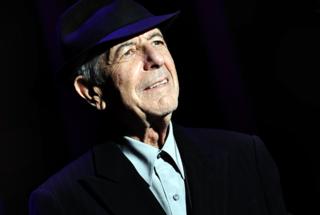 One night a few months ago I was at a meeting and a young man there told us that he woke that day and heard that David Bowie was dead and he cried all morning. I wondered then how someone could mourn so deeply for a singer he had never met. I wondered that is until I heard that Leonard Cohen had died. I didn’t cry all morning but I could have. Leonard Cohen was my hero and his passing saddened me.
Years ago I heard him being interviewed on CBC radio:
“ You write a lot about God?”
“ Oh yes. The Cohens are a priestly family and I am absolutely fascinated by G-d.”
“But you also write a lot of smut.”
“Oh yes. I am absolutely fascinated by smut.”
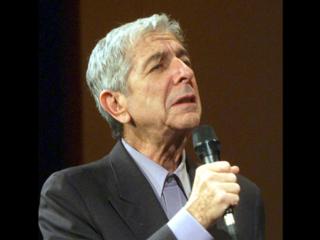 Cohen was always brutally honest about the human condition and knew that both fascinations arise from the same passion and only when that passion dies do we become pagan and degenerative.
He was once asked if he were a pessimist. He answered: “A pessimist is someone who thinks it is going to rain and fears getting wet. I’m drenched.” He saw clearer than anyone the bleakness and the brokenness of our world (“It’s all around me, the darkness.”) and sang about it in unforgettable exquisite songs. Yet he was such a gentle soul, a Canadian, a Jew, a Buddhist monk for ten years. He wrote beautiful lyrics about Bernadette of Lourdes and Joan of Arc. He sang in tribute to the Sisters of Mercy, not selfless nuns but serving prostitutes. He had a great sense of humour: “I dreamt I was making love. I am glad the spirit is doing some of the heavy lifting for a change”.
Once Cohen cancelled a Canada wide musical tour because of, as he told a reporter "too much wine". He stopped smoking thirty years ago, but enjoyed it so much he vowed to take up the habit again at eighty and did. There are many parts of Cohen that people could relate to and millions did.
His spirituality stemmed from an aloneness we all share. Thus this prayer: “Blessed are you who has given each man a shield of loneliness so that he cannot forget you. You are the truth of loneliness and only your name addresses it. Strengthen my loneliness that I may be healed in your name, which is beyond all consolations that are uttered on earth. Only in your name can I stand in the rush of time, only when this loneliness is yours can I lift my sins toward your mercy.”
Here is how he described a saint: “Something in him so loves the world that he gives himself to the laws of gravity and chance. Far from flying with the angels, he traces with the fidelity of a seismograph needle the state of the solid bloody landscape. His house is dangerous and infinite, but he is at home in the world. He can love the shape of human beings, the fine and twisted shapes of the heart. It is good to have among us such men, such balancing monsters of love.”
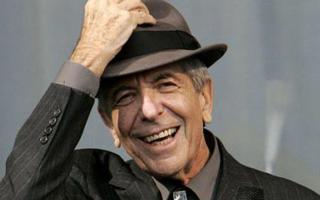 In the last line of his masterpiece hymn, Cohen wrote: "I will stand before the Lord of Song/With nothing on my tongue but Halleiujah." Leonard is a modern saint. I love Leonard Cohen.
He died in the week that Trump was elected president, which led one commentator to lament: “Why now, why did he have to go now of all times?” For me, I am consoled by the truth of the great American ballad, Joe Hill: People like Leonard Cohen never die.(2)
+++++++++++++++++++++++++++++
(1) The opening verse was taken from the words of the song: Death of a Ladie’s Man by Leonard Cohen.
All other quotes are from selected poems and songs fo Leonard Cohen entitled: Stranger Music
(2) The Ballad of Joe Hill – a union song made famous by Joan Baez and others and proclaimed by Dylan to be the greatest American ballad:
“I dreamed I saw Joe Hill last night,
Alive as you and me
Says I “But Joe you’re ten years dead”
“ I never died” said he,
“ I never died” said he. “
++++++++++++++++++++++++++++++++
An excerpt from a PBS Documentary – Leonard Cohen: Live in London – can be seen here.
A New Yorker article – "How the Light Gets Out" – was published October 17, 2016 – just before his death.
+++++++++++++++++++++++++++++++++++++++++++

No Comments