



The Experience of an Internet Fast
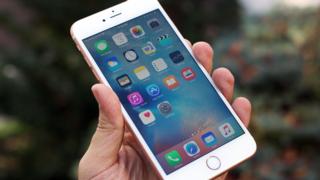
My iPhone is an invaluable tool. So is my iPad. I'm hearing impaired. Seeing the agreed-upon meeting time on the screen provides me with the confidence that comes with knowing that I have not misunderstood the specifics. That may not seem like a big deal to most people. However, since my hearing challenges started in 2001, I've lost a lot of time wondering if I actually have the correct details. I often make assumptions and guesses and mistakes, based on what I think I’ve heard.
I've learned to not end the conversation until I have absolute certainty that I know what I've committed myself to. I’ll probably sneak a peek at my neighbour’s calendar, to see what that person added to the calendar. Those I have been in meetings with might have a sense of my insecurity about times and dates. But this also covers the specifics of world news. I don’t watch television and I rarely read a physical newspaper, so I rely upon my mobile devices to stay up-to-date. Were thirty people killed or was it 30,000? Was the tragedy in Iraq or Iran? I’ve made mistakes.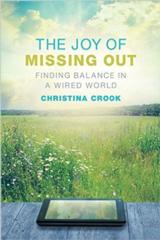
From what I’ve seen, the hearing-impaired community has been helped enormously by mobile devices. That's why I was intrigued when the editor of igNation asked me to review Christina Crook's 2015 book, The Joy of Missing Out – Finding Balance in a Wired World. Crook's book is rooted in her own Internet fast and she advocates such a thing for others. She helps her reader to reflect on our relationship to the wired world.
Perhaps I'm the wrong reviewer. I've never even contemplated a fast from my devices. I think that my ten years of being unable to hear was my fast – albeit, one imposed from without. It was an alienation experience that required spiritual strength. My mobile devices are invaluable and I happen to be a highly disciplined person. Besides, I place a high value on being connected to the world around me. But I am also disciplined and know how to stop. I also rarely fast from food, unless it’s for a blood test or on Good Friday, and I’m a healthy 145 pounds because I know something about moderation.
 Crook’s contention is that most of us can't throw away our smart phone or cut ourselves off from the Internet. She is looking for balance and discipline in the use of technology in our lives, suggesting that we be intentional in our daily life. Her desire is for the rediscovery of "quietness of mind, and seeking a sense of peace amidst the cacophony of modern life."
Crook offers dozens of sidebars with supportive quotes, everything from the Judeo-Christian scriptures, philosophers, business leaders, poetry, Ignatius of Loyola, literature, Marshall McLuhan, and so on. These quotes do not add substance to her argument. Thus, she cannot be described as Ignatian or McLuhan-esque or Christian. They are selected as a means of illustrating her point.
The book is based on her Internet fast. "In my own life, I wanted to untangle the web of my online engagemenet, so I gave up the internet for 31 days." She sought an escape from the steady state of distracted connectedness. 
There are three parts to her book. She begins by examining the issues, "focusing on the rise of passivity, isolation and increased cultural anxiety," analyzing the massive global shifts in our interactions.
The second part focuses on "presentness" and what we can expect to find when we fast from the Internet.
Her third part considers solutions for living in a wired world. She explores the value of focus and the necessity of viewing the Internet as a tool over which we can have discipline.
Her book definitely falls within the realm of self-help. Some of the books mentioned in her recommended reading are far better at laying out the background and the theories. There is nothing analytical about her argument. It’s simply an account of her decision to pull the plug for a month.
My question after reading about her Internet “fast,” was, did she really fast? She chronicled her experience with a letter a day, complete with news clippings, quotes and thoughts on technology. She sent it to a friend. Then – Get this! – She had the friend post it to her blog. Perhaps I'm missing something, but this sounds a bit like "having it both ways." Or, having your cake and eating it too!
Did she really fast or did she find a cute way to actually use the Internet to make her point (and have her friend do her work!). Perhaps I can sit in the living room of the editor of igNation and have him transcribe my musings.
 I also found Crook’s argument romantic. Just unplug our devices and we’ll all be peaceful and intentional and get along. I’m not convinced that turning off our devices prepares anyone for the world in which we live. And, I am pretty certain that I’m in line with the Church and recent pontiffs. Will my withdrawal from the Internet help me to better connect with my parishioners or students?
I’ve written of the Ignatian Rules with Regard to Eating and how they help us regulate our desires. They refer to food and drink, but they are applicable to all the passions whether it is the use of the Internet or television or alcohol or sex.[1] Crook’s work is a light self-help resource for those who don’t have access to the world of discernment in Ignatian spirituality or for those who have no interior life, but, rather, need to have protection from others.
++++++++++++++++++++++++++++++++++++++++
[1] Philip Shano, S.J., The Way October 2013, 52/4, pp. 9-22, Dining with St. Ignatius of Loyola: Rules for Regulating One’s Eating.

No Comments