



Negotiation
(Homily for the 17th Sunday in Ordinary Time, 24 July 2016)
The readings today are very rich, but rather then comment on them directly, I thought I would focus on their cultural context.
 Some years ago, when I was first in Jerusalem, I went into a shop in the Arab Quarter of the Old City and was surprised to find that no prices were indicated for any of the goods. I assumed that it was probably because of the rampant inflation: the value of the shekel was fluctuating wildly. More recently I’ve discovered it was because of cultural reasons. When you want to know the price of something, you ask; you are told the price, and then you begin to negotiate. In North America, we look for bargains: 50% off! We snap up whatever it is and go away feeling we’ve saved money. It’s all very efficient, but there is no human interchange, no back and forth with the sale clerk in order to arrive at that saving. It’s been said that, “In the Middle East, no is never an answer; it’s a pause in the negotiation” (Kenneth Bailey).
In the Middle East, negotiation is more than a way of doing business: it’s a way of life. In Genesis 18:20-32, Abraham is not doing business with God; he has nothing to exchange. He is simply appealing to God’s justice, and to the sense of honour which is all-important in the Middle East. Negotiation is simply part of the cultural context, but what is at issue is God’s integrity and honour. “Will you sweep away the righteous with the wicked?…Far be that from you! Shall not the judge of all the earth do what is just?” God agrees that, “If I find at Sodom fifty righteous persons in the city, I will forgive the whole place for their sake.”
With great deference, the negotiation continues, from fifty to forty-five, to forty, to thirty, to twenty, and finally to ten. Abraham knows that God is just. He does not press any further. What Abraham cannot know it that, for the sake of one just man, Jesus the only Son of God, God will spare and save us all!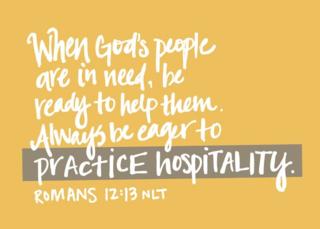
In the Gospel (Luke 11:1-13) we find another Middle Eastern principle operative, that of hospitality. The parable of the friend at Midnight might be phrased this way: “Can you imagine anyone refusing such a request?” What is at stake here is not only the honour of the friend being asked, but also that of the whole village. Your friend may be upset with you, and so he gives obvious excuses about the locked door and his sleeping children. He may not even like you, but you know that he will get up and give you not only the bread you need but also the tablecloth, the cups, and everything else required to welcome your guest. You may have to appeal to his sense of honour.
The question arises: How should we address God? Jesus tells us we can confidently address God as Abba, as a Father who knows how to give good gifts to his children. How should we address Jesus? We can confidently address Jesus as our friend. We don’t have to knock persistently (Baily says this is a bad translation). We simply have to call out and he will graciously give us all we need, even if we cry out for help in the middle of the night.

No Comments