



Faith Seeking Understanding
Before becoming Socius to the Provincial, John McCarthy,SJ taught at St. Mark's in Vancouver.
During that time he wrote today's post about teaching
++++++++++++++++++++++++++++++++++++++++++++++++++++++++++++++++++++++++++++++
I teach a St. Mark’s graduate course entitled Foundations of an Ecological Ecology. Basically, it's a course in the theology of creation in the light of cosmogenesis and evolution. We try to engage the Catholic biblical and theological tradition in the light of Charles Darwin, the fascinating discoveries of the depth of the seemingly infinite universe, and the impact of human activity on the environment.
I don't know about the students, but I am learning a lot. They say that the best way to learn is to teach. I can attest to that. Every week I learn. I learn much in the preparation of the weekly lectures. I learn much from the assigned readings. Most of all, however, I learn from the students. I learn from their struggles, their insights, their moments of "Eureka."
Teaching and learning are flip sides of the same coin. Theology is best learned communally. I like the traditional definition of theology provided by St. Anselm in the 11th century; fides quaerens intellectum – faith seeking understanding. Faith and reason are never enemies, but always friends.
I have always assumed that there is but one world. Therefore, there is nothing, absolutely nothing, that will ultimately run counter to our belief in the life, death and resurrection of Jesus Christ. St. Paul maintained that we must assert, with gentleness and reverence, the reason for our hope (1 Peter 3:15). That hope, in the end, cannot be sidetracked or derailed by the many questions that we pose.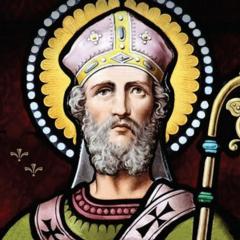
Push the scientific and humanistic endeavours as far as you can. Never relent from question. Without questioning, our faith will wither and die. Questioning is central to the Catholic imagination. The insatiable desire for understanding is the heartbeat of Catholicism.
In my course, I hope to think that I present what is true to our Catholic tradition. At the same time, questions are essential. There should be no fear of heterodoxy in favour of orthodoxy. A theology class needs both.
And so, I continue to learn from the students. I am pleasantly surprised by the varied and diverse response to the weekly readings – the flash of insight, the struggle with ideas. Theology is not rocket science – it's much more difficult than that.
In the end, our finite words and ideas fail before the Mystery of God. But speak we must. We long for understanding. It's a God-given desire, that fire in the belly that drives us forth, into the depth of impenetrable mystery.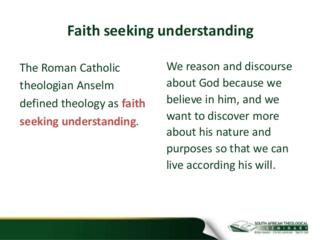
Theology is a dance, holding in tension seemingly contradictory concepts and ideas. Maybe that is the best that we can do. Jesus Christ is both human and divine. God created heaven and earth. We are both body and soul.
And so we believe. That is our ground. But to understand – that's the difficult – and fun part. And so, I am grateful for the students that teach me by their questions, their struggles, their insights. I am grateful for men and women rooted in faith, seeking understanding.

No Comments