



Does Matter Really Matter? Finding God in the Forest
What's a priest like you doing in the woods? Shouldn't you be in a parish, doing what priests normally do? 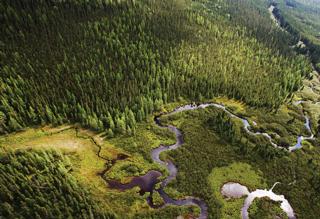
Such questions and their variants were common during my years of doctoral research in forest ecology. My interlocutors were not critical in any way; in fact, they were often delighted, if not somewhat amused, to find a Jesuit priest in the forest, active in field research.
At an early age I was seduced by nature; tempted by rock, wind and water, invited by barrens, bogs and forests, infatuated by the wilderness of my native Newfoundland. Mesmerized, obsessed, blinded, I fell for nature. The affair continues.
The Society of Jesus blessed this primordial vocation, encouraging my desire to pursue doctoral studies in boreal forest ecology at the University of British Columbia. After years of philosophical, theological studies and spiritual formation, I could finally return to my beloved forests. The combination of the spiritual, the aesthetic, and the scientific perspectives offered a full and engaging vision of forests and their age-old relationship with humans.
 We live on a human-dominated planet. We lament the deleterious impacts of our humanactivity on global biodiversity and the ability of ecosystems to provide ecological services. We are the first generation to acknowledge this fact. Never before has humanity understood itself this way. We are also the first generation to have viewed Earth as a finite, exquisite ball cast in the darkness of space. Furthermore, we are witnesses to the enthralling story of cosmogenesis and evolutionary biology.
What does Christian faith have to say about this new self-understanding? This is the challenge of the Church. The rich biblical and theological tradition has much to offer.
Our understanding of nature as gift of Love, as an expression of the Trinity grounds any Christian response. Created by God, sustained by God, and called to final fulfillment by God, nature is inherently theological. In fact, at the heart of all creation is Christ, through whom, in whom and for whom all things were made. Calling forth creation into a novel future is the vivifying Spirit of life. Grounding this Trinitarian formulation of nature is the doctrine of Incarnation. God in known fully in response to the incarnation of Jesus Christ, the Word made flesh. Nature cannot be fully known, except within the context of its divine foundation. 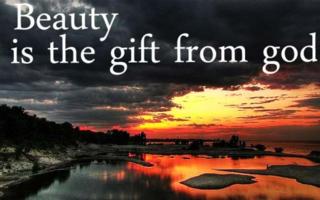
Does matter really matter to Christianity? That question defined my years of philosophical and theological studies. Such studies led me back to the scientific world that formed my university studies prior to entering the Jesuit novitiate in 1983. I knew that I had to immerse myself back into the world of matter, to the world of flesh and life, in particular to the world of the forest. The Society of Jesus blessed this desire and missioned me to doctoral studies in forest science at the University of British Columbia.
Science is critically important in our appreciation of the world and the role of humans within the natural world. Furthermore, science as a vocation has called many men and women to a deep and abiding sense of beauty and mystery in their search for truth.
 However, while the insights of science are essential, they are not sufficient in our efforts to imagine new and comprehensive ways of relating to nature. We need the insights of the great humanistic traditions as well, including the spiritual and theological traditions of the world cultures, to help us meet the new challenges never before faced by human generations.
My current ecological work focuses on three areas: firstly, writing and speaking on the relationship between theology and ecological consciousness; secondly, research on the biodiversity of lichens in Newfoundland and Labrador; and thirdly, the protection of the natural heritage of Newfoundland and Labrador. As co-chair of the Wilderness and Ecological Reserves Advisory Council, I advise government on the creation and management of ecological and wilderness reserves in my home province. With the lichen biodiversity work, I engage in field research and collaborate with professional colleagues, research that keeps me rooted, incarnate, and engaged in the scientific quest.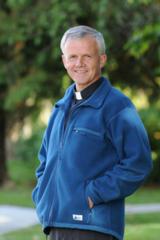
My reflections on ecological theology seek a broad understanding of humanity's relationship with the diversity of creation. It envisions nature within its social and theological context. Nature is too complex to be viewed through only one perspective or language. As Pope Benedict XVI has stated in his 2009 encyclical Caritas in veritate, "nature is a vocation." In other words, nature "expresses a design of love and truth." Nature speaks to us of God and of God's love for us. I am blessed in my efforts to speak of nature as the creation of God. My vocation to science and to nature and my Jesuit vocation have come together as one and the same. May they continue to bear fruit.

No Comments