



Called To Be A “Man for Others”

It’s strange but sometimes school assignments can actually have a big impact on your life! This year my second term Religion project had students look at what it means to be a “man for others.” You had to look at two people who live or lived this saying and then reflect on how you live it in your own life. First, I looked at Jesus; then, I looked at Raoul Wallenberg, the Swedish diplomat who, during the Holocaust, protected thousands of Jews and at Sam Childers, the so-called “Machine Gun Preacher,” who has been trying to protect children in strife-torn Sudan. Learning about these heroic people was worthwhile but even more worthwhile was how I looked at myself as being a “man for others.”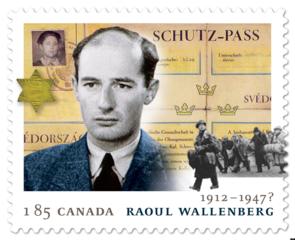
I was raised with the most humble family ever. I always went to church as a child, I was always told to do “nice” to others. My Mom is a huge example for me. She constantly volunteers and is the kindest person I have met. My father has always spoken about helping others, even if it means going out of your way to accomplish that. I believe that because of my home life and upbringing, I am called to be a “Man for Others.”
I also preach and believe in the simple phrase, Facta non Verba. I first read that in a book entitled, We Were Inviincible. The book was a story of a Canadian Armed Forces member who was serving with the Joint Task Force 2 (JTF2), Canada’s elite counter-terrorism unit. Their motto is Facta non Verba (Deeds, Not Words).
 My Dad also preached this and this rubbed off on me. In school, it taught me to help someone. If I know something, then they need to know it, and I will explain it to them and make sure that they understand it as well as I do. In church, many times I find myself seeing that there is something wrong and how can I help out. In the back of my brain, I think that this is what a Christian should do, this is what Jesus would do, then I should do it.
A quality that is underappreciated in being a “Man for Others” is politeness and respect for everyone. I constantly had to deal with this when I went to my old school. Many of the students had severe social issues. If you can stay calm, you can handle people in a civilized way. It is a skill that I think many students do not have to deal with. They are dealing with one student in a school but I had to deal with seventy-two of them.
 Another example of being called to be a “Man for Others” is my beliefs in protecting the weak. There’s someone I know who has social issues. He engaged in chirping and goes straight to the jugular which causes him to be disliked and even hated in his class and friendless. I always tried to keep people from harming him and I would try to calm down other students. He really does not understand what he is doing and I want my friends to understand to not mess with him. I see him as a guy who has something different about him and that makes him seem like a bad person, but he is not. No one deep down is a bad person. I believe that most people who do bad things and say bad things are not bad people. One of the biggest chirps against him is when people say to him, “You have no friends”. I would constantly jump in and say, “I am his friend.” My statement completely derails their argument.
About twice a month I go to a soup kitchen, the Immaculate Conception Drop-in Centre, on Sundays. I help serve lunch to inner-city community members. At the end I feel tired but with a strong sense of fulfillment that I helped people that day. I feel fortunate my performance is as a follower of Christ and is one of the things that the Catholic Church asks us to do – to take care of those who cannot take care of themselves.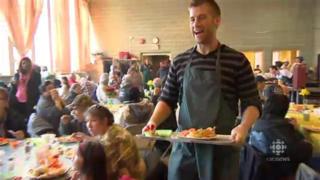
As a young child, I remember using crayons and using small ones that had already been used up. I suggested to my Mom that we should give away those little crayons to the poor. She objected and said that we were going to give crayons to the poor, but they were going to be the whole crayon. We never threw anything out. If we could not use it, it went to someone who could. All my clothes that do not fit, do not get thrown out; we send them to the Salvation Army.
My Mom runs a reading program for children at risk. I have attended the program with her and was lucky enough to be able to go and help out. They would read to me or I would read to them. I remember doing that in the same way at my elementary school St. John Brebeuf School. I also was able to encourage them that, although many may have trouble with reading like I did, it will all work out and they will be able to read.
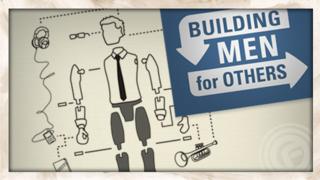 Students of St. Paul’s High School are encouraged to become a “Man for Others” in imitation of Jesus who is recognized as THE “Man for Others.” The motto of “Man for Others” “…is a simple one: we are to be at the service of our brothers and sisters. This service is multifaceted: there is the service of faith and the Gospel, service of the poor, service of justice, and service of education, which involves teaching others the first three “services”. The examples which I discussed in the lives of Jesus, Raoul Wallenberg and Sam Childers demonstrate their love for others through their actions and deeds and service. I am also proud of the deeds and service which I have accomplished so far in my life to show how I am called to be a “Man for Others.”

No Comments