



Tears!

“I cried a tear, you wiped it dry” written by Randy Goodrum, sung by Anne Murray
 Tears – a curious phenomena. Described in the dictionary as “a drop of the clear salty liquid that is secreted by the lacrimal gland of the eye to lubricate the surface between the eyeball and eyelid and to wash away irritants”, they are much more complicated. Apparently a tear contains water and a host of other elements, as many as eleven. And tears of grief and tears of joy under the microscope differ not only from one another but also from the ‘basal’ tears that simply lubricate the eye!
A project, The Topography of Tears, even posits that each tiny tear drop carries a microcosm of human experience in it. Another researcher declares that the three major types of tears, “basal, reflex, and psychic (triggered by emotions)”, each not only have distinct molecules, but even when they have the same chemical composition produce salt crystals of different shapes and forms! 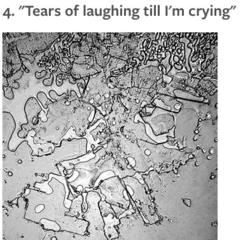
The centrality of tears in Homer’s The Odyssey has always intrigued me. The ancient classic lauds the traits of the legendary Greek hero. Yet both Odysseus, and his son Telemachus, the hero in training, are introduced in the poem story in tears! In Ithaca the boy Telemachus sheds tears of frustration and impotence in face of the threatening suitors for his mother’s hand in marriage.
Odysseus weeps on the shores of Calypso’s island pining for his home and his wife Penelope. The entire poem relating his famous ten year journey home is punctuated with his tears. Clearly in this ancient civilization, in the presentation of this hero, tears were considered integral to describing what it means to be a human being.
Perhaps also illustrating the importance of tears to human beings is the practise of keeping a lachrymatory bottle, a ‘tear bottle’, by different peoples through history.
 Even in a Psalm of the Old Testament David prays to God: “My wanderings you have noted; / are my tears not stored in your flask,/ recorded in your book?” (56: 8) This was written perhaps 1000 years before the birth of Jesus, but tear bottles were common in Roman times. Mourners apparently filled small containers with their tears and put them in burial tombs. (There was a practice too of hiring professional ‘criers’ to produce tears of anguish– the more tears, the greater importance of the deceased!)
Even as recent as the Victorian period often those mourning would collect their tears in bottles with special stoppers to allow the tears to evaporate at a specific rate. When the tears were gone the mourning period was complete.
Even on the North American continent, stories are told of women during the American Civil war who cried into tear bottles and saved them until their husbands returned from battle. The purpose? to show what affection they were held and missed.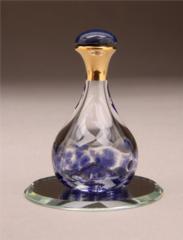
Although the tradition of the tear bottle seems mainly attached to mourning, apparently in nearer to contemporary times in stories and music it has been expanded to include capturing tears of joy and inspiration in wonderfully creative containers.
Tears. A very human phenomena! But a truly mysterious one too.

No Comments