



The TRC and the Jesuits – One Year After The Conclusion of the TRC
In June 2015 the Truth and Reconciliation Commission (TRC) wrapped up with celebrations in Ottawa, the main focus of which was the release of the early version of the report of the process of uncovering the experience of the survivors of the infamous system of residential schools for aboriginal youth in Canada. The report included 94 Calls to Action. These are recommendations aimed at every level of government in Canada, at the churches, at educational institutions and at aboriginal life itself.
Anyone paying even minimal attention to political and social discourse in the country is aware that there has been a major shift in awareness and action about the situation of indigenous peoples in Canada. Serious challenges persist, but the new federal government has played a key role in the change of attitude, a shift from hiding from the issues to listening and promising change.
Likewise, the Christian churches have looked at their grievous part in the residential schools and colonization. They desire to play their part in the process of reconciliation. Universities and colleges have been quick to respond favourably to the Calls to Action.
 The Jesuits in English Canada were very much involved with the events in Ottawa last June, primarily because we operated a residential school in Spanish, ON. Even before then, Fr. Peter Bisson, our Provincial Superior, has been striving to make certain that the lessons of the past make a difference in how the Jesuits in English Canada engage with our ministry. The difference is not confined to our ministry with indigenous peoples, but also includes how we work with non-aboriginal Canadians.
Fr. Bisson's challenge goes out to every work that we are involved with across the country: schools, colleges, parishes, spirituality centres, how we form young men to be Jesuits and so on. Everything! A line he uses is, "Just as we were part of the problem, we intend to be part of the solution." We know that as moral and pastoral leaders and as educators our words and actions influence people. The Jesuits are humbled to play a small part in closing the incomprehensible gap between the opportunities for indigenous peoples and most other Canadians.
One of the ways in which the Jesuits are adding to the ongoing conversation is by organizing a one-day event to mark the first anniversary of the events last June. A Truth, Reconciliation and Hope Conference is being organized for 22 June 2016. It will take place just over a year after the Ottawa ceremonies.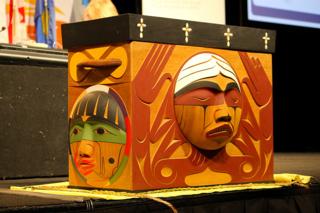
The one-day event promises to bring together a rich diversity of participants. It will take place at the University of St. Michael's College in partnership with St. Michael's and the Jesuits in English Canada, and through the generosity of a private family foundation and other generous benefactors. The day will start with a drum ceremony, aboriginal smudging (a purification rite) and morning prayer.
The conference has four major sections. The first is "TRC – Listening to Those were there." Among the speakers in that section are Knowledge Keeper Noel Starblanket, from Saskatchewan and a residential school Survivor. Others are Dr. Marie Wilson, one of the Commissioners of the TRC, and The Right Honourable Paul Martin, former Prime Minister. The first section will include a reading by Fr. Bisson of the Statement of Reconciliation presented to the TRC by the Jesuits in English Canada in April 2013.
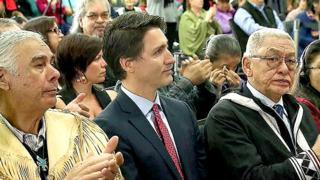 Section Two features a panel on "The Treaties, their impact and moving forward to hope." It includes Charlie Angus, the NDP critic for Indigenous Rights and author of "Children of the Broken Treaty." Mr. David Nahwegahbow, solicitor for Nahwegahbow Corbiere and possibly two Grand Chiefs from the First Nations.
Section Three is entitled "Listening today, hope for tomorrow: Reflections on what has been heard by Canada's next generation of leaders." Several young people are being asked to speak to the conference issues and what they believe will follow for the future in Canada.
The final section deals with "Education as the key to the future," taking up #62 of the Calls to Action. The day promises to be rich and stimulating. You can find up-to-date information at www.jesuits.ca.
No Comments