



A Guide to Reading the Bible #7 – Epistle to the Romans

St. Paul’s Letter to the Romans is the longest and most skillfully written of all his letters. It presents key thoughts of the Christian faith in well developed explanations. In it Paul offers a study of Christian life that is both penetrating and inspiring.
The Epistle probably was written at Corinth in Greece at the beginning of 58 A.D. Paul was in that city at that time planning to deliver his collection of alms to the poor in Jerusalem and from there to visit Rome on his way to Spain . (15:24-29).
The Church in Rome was already founded, quite likely by Christian immigrants from Palestine. The Church gradually attracted pagan converts who learned to direct themselves when the large group of Jewish Christians was expelled from Rome in 49 and 50 by the decree of Claudius. However, in 54 A.D. this decree was no longer enforced, and many Jews returned to Rome from the cities in the East where they had sought exile. Paul met many of them in his travels.
The presence of these two groups (Christian and Jewish and of Roman background) in the same Roman community was a danger to peace and harmony. Paul had faced the same problem in a crisis situation in his Letter to the Galatians. In his Letter to the Romans, Paul was forestalling the problem by presenting a full explanation of the principles he had invoked in recalling the Galatians to their original loyalty to Christ.
 The Epistle is a doctrinal presentation of the basic elements involved in justification and salvation. Paul sees it as God’s work in which God is always engaged (1:17) . Paul devotes Chapters 1-4 to the first step in the process – neither Jew nor Gentile can claim to be just before God unless God intervenes to bestow this gift on those who are ready to accept it by faith. Whatever we have in the spiritual life we owe to the gift of God (5:1-11).
All human beings united to Christ by faith and living the new life by sharing the Spirit of Christ are made perfect by God’s action and so are enabled to live in the way God wants human beings to live (8:1-4). The faith must result in the person doing “good works,” but these will not be all the same as those “good works” commanded by the Law on which the Jews were so proud to rely. They will be prompted by the presence of the Spirit (8:5-13) and they will be open to all who have faith, whether Jew or pagan.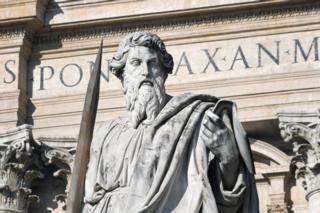
The Savior abides in the heart of the believer, leading and inspiring, comforting and strengthening him through the activity of his own divine Spirit. Man reaches salvation only on condition that he continues to surrender completely with living faith to the “spirit” which makes him truly just before God and which forms him into a perfect image of God’s own Son, Christ Jesus.
All converts without exception , whether they are Jews or not, must love and help each other as one family (12:1-15:13). Paul here gives practical norms and drections for living in total dependence on God`s will.
The Letter to the Romans is a magnificent though incomplete synthesis of Paul`s theology. It does not exhaust his doctrine. The other Epistles of St. Paul are necessary to complete a really adequate view of all his theological ideas.

No Comments