



The Mercy of God
"God's mercy" would make any short list of the most commonly used words from Pope Francis. He almost daily stresses our Christian call to be merciful and compassionate. Thus it is no surprise to hear the universal prayer intention entrusted to the worldwide Apostleship of Prayer for this final month of 2015: Experiencing God's Mercy – "That all may experience the mercy of God, who never tires of forgiving." This intention coincides with the December 8 start of the Extraordinary Jubilee of Mercy. (A future posting will deal specifically with the Jubilee.)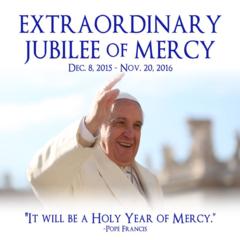
Cardinal Walter Kasper received the ultimate promotional blurb for his book, Mercy – The Essence of the Gospel and the Key to Christian Life. Pope Francis mentioned in one his Angelus addresses that, "this book has done me so much good." Sales surged! Kasper examines God's mercy while considering the twenty-first century's reality of ruthless terrorism, outrageous injustice, abused and starving children, millions of displaced people seeking stability, the increasing persecution of Christians, and devastating natural catastrophes. He looks at empathy and compassion as a starting point for theological reflection on the world in which we live. He writes of a culture of mercy.
Kasper reminds us about Saint John XXIII opening the Second Vatican Council with an emphasis on the "medicine of mercy" as opposed to the severity that often characterized the Church. The Church continues to offer the same basic message it has offered for a long time about morality and Christian life. What changed with the Council was the tone with which the Church speaks. 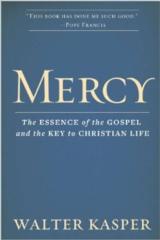 That tone has changed even more with the style of Pope Francis. Kasper points out that Saint John Paul II's emphasis on mercy "did not occur to him while sitting at the desk in his study." Rather, it came from his personal experience of knowing the history of suffering from having witnessed it first hand. For example, he grew up in the vicinity of Auschwitz, was Bishop of Cracow, lived through the horrors of world war and lived through two brutal, totalitarian regimes. Kasper says, "The witness of his suffering was a more powerful sermon than his many homilies and numerous writings. In this way, he made the message of mercy the leading theme of his long pontificate." Mercy and love are the basis of Christian social teaching. Our initial Christian response to worldwide sufferings is to be merciful, compassionate and loving.
Francis' emphasis on mercy also does not emerge from a classroom or his desk. It comes from his hands-on approach as the Archbishop of Buenos Aires. He has intimate knowledge of the crying need that so many have for mercy. He says that mercy is the Lord's most powerful message. He sees it as "an abyss beyond our comprehension." The Pope offered a beautiful image for mercy in his Easter message in 2013: "God's mercy can make even the driest land become a garden, can restore life to dry bones. Let us be renewed by God's mercy, let us be loved by Jesus, let us enable the power of his love to transform our lives too; and let us become agents of this mercy, channels through which God can water the earth, protect all creation and make justice and peace flourish." He goes on to stress that God is always waiting for us and never grows tired of welcoming us back. Francis recently sent a tweet: "The door to God's mercy is always open. Have courage to cross the threshold."
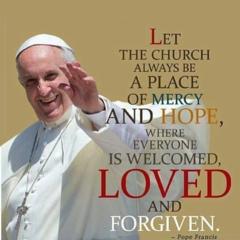 Francis shows us each day what it is to be compassionate and merciful. Many of the images of him speak much more clearly than the words he uses. In both the words and his actions, he is setting us an example. Our own compassion and mercy is expressed in how and who we relate to. It's in the genuine concern we have for the welfare of another. The growing reality of a "small world" means that our compassion is not restricted to those in our immediate milieu. We feel empathy for the victims of an earthquake on the other side of the world, for the victims of terrorist attacks, for those forced to be displaced from their homes because of war or natural disasters, for those victimized because of the colour of their skin, for those attacked because they cover their face, and for young people who are bullied. As we look forward to the Jubilee of Mercy, let's give some thought to how the year will challenge each of us to new forms of mercy.
No Comments