



A Guide to Reading the Bible #1 – Introduction
The Bible is not a book. It is a collection of books composed by many individuals or groups over a period that spans more than one thousand years. Therefore when you read the Bible, you are reading an ancient library of books written approximately between the years 1250 B.C. and 100 A.D.
For Christians and Jews, the Bible is something very special referred to reverently as “the Holy Bible” and “Sacred Scripture.” Although the books of the Bible were written by human authors and every part bears the stamp of its human author or authors, yet Christians and Jews believe that God Himself is somehow involved in its composition—and God Himself is regarded as its principal author.
The human authors of the Bible are, as Pope Leo XIII described them, God’s instruments. A violin in the hands of a musician is an instrument. When the musician plays, the violin is the instrumental cause and the musician is the principal cause of the music produced. Also, the musician has to submit himself to the limitations of the instrument used. So in saying that the Bible is the word of God, we are saying that God is the principal cause or author. But we know that humans wrote the Bible (as instrumental cause or authors) with the limitations imposed by their ability, culture, and experience. For example, we should not presume that God gave a scientific account of the origin of the universe through the author of the Book of Genesis because that author was not a scientist.
 The inspired author is moved by the Holy Spirit, but he is moved according to his nature and talents comparable to the resonance of the wood and strings used when a piece of music is performed as on a violin. That is why Scriptural scholars try to learn as much as possible about the author and the relevant culture so that can arrive at a more exact understanding of what the author intended to say.
The world of the Bible was a cultural environment quite different from our own. Thus we should not expect to understand immediately and exactly all the meaning in any passage of the Bible simply by reading the words it contains.
The only true norm of interpreting Holy Scripture is to ascertain as clearly as possible what the inspired author intended to convey. After all, that is what we believe to be inspired. Ultimately, we have to depend on help from Scriptural scholars and on what the Church declares is the meaning if it has so declared about the specific passage in question.
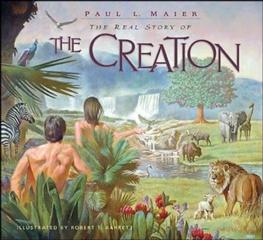
We must be careful to distinguish between what the author wants to say or teach and the means by which that teaching is presented. For example, in the creation story, the sacred author is not trying to tell us how God created the universe but the point that is being made is that God is the creator of the universe.
Many of the sacred authors used fables, bits of folklore stories and myths that were current at the time they wrote. But they always used these things to convey some religious truth. That is why it is so important to separate the meaning of Sacred Scripture from the means used by the author to express this truth. Our Lord, likewise, used stories and parables to highlight some of His teachings.
Scripture scholars can help us greatly to achieve a deeper understanding of the meaning in the Bible but they are not the official interpreters. That is the role of the Church guided by the same Holy Spirit who inspired the Scriptures.
The inspired authors related incidents, for the most part, to show how God had intervened in their national life. They were far more concerned with explaining the “why” of an historical event than in describing “exactly what happened.” Our modern desire for “an eye-witness account” was of little or no concern to them. Because the inspirid authors were not abstract, scientific thinkers, they could express themselves in concrete and specific ways which can mislead us into thinking that they are giving a factual account.. For example, they often used numbers to express quality rather than quantity (did you ever wonder why the numbers 7 and 40 were used so often?).
Written and spoken languages can change in meaning from century to century. New translations of the Bible help us today to understand the meaning of God’s word. Modern research and scholarship have resulted in better translations of the Bible. At times, poetic expressions and treasured phrases are lost. However, God did not inspire the sacred authors to write in English or French or Gema or Italian.
 All of Scripture is inspired by the Holy Spirit but not all is revelation about God for in the salvation history which Scripture records you have not only the word of God spoken for us but also the words spoken by humans to God. A large part of Scripture is a record of how men and women spoke to God. Revelation is restricted to information about God Himself, the will of God for us, Hisintentions, His love, His plan, His providence, what He has done for us in the past, what He intends and promises to do for us in the future. But there is far more than that in the Bible.
Inspiration in the Bible is concerned with the various things that have a lesson for us, lessons of fidelity or infidelity. The Bible is not just a record of the holiness of God. It is a record of both the holiness and unholiness of men and women.
True Scriptural reading is the careful, intelligent and prayerful use of the Bible by a believer. That kind of reading can prompt and bring out the attitudes of trust and hope so desperately needed today. Proper dispositions are important in reading the Bible. We should read with reverence, with a willinginess to be instructed, with the idea that here God has something to say to us.
At the same time, we should be very cautious about deciding explicit actions on the sudden impulse arrived at in reading the Bible. God certainly can help us in that way, but we should not presume that He has done so simply because of a vivid idea or emotional reaction. Any section ought to be considered in context and on the basis of an overall understanding. No radical change should be made in one`s life without seeking the guidance of an experienced counsellor like one`s confessor in the Sacrament of Reconciliation. God can speak to us through the Bible but we know that He certainly does so through the confessor who acts in the person of the forgiving Christ.

No Comments