



The Sermon on the Mount

Setting and Context
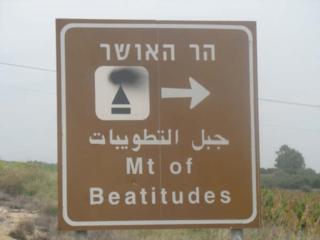 If you were to go to the Holy Land, you could visit the Mount of the Beatitudes and see the geographic setting of the Sermon on the Mount. If you were to turn also to a Bible, especially one with paragraph headings, like the Good News Bible, you would find, not a sermon but a collection of teachings: Teaching about the Law, Teaching about Anger, Teaching about Adultery, Teaching about Divorce, Teaching about Vows, Teaching about Revenge, Teaching about Charity, Teaching about Prayer, Teaching about Fasting – three chapters (5, 6, and 7) filled with teachings.
If you turn to chapters 8 and 9 of Matthew’s Gospel, you find a collection of healings, and in chapter 13, you find a little collection of parables. This gives us an insight into how this gospel was compiled: we might almost call it a collection of collections. Another gospel, the apocryphal Gospel of Thomas, consists of nothing but teachings of Jesus, 114 of them, some authentic and some not. We can see that many disciples must have made lists of things that Jesus did and said, and used them in their preaching, preserving them in writing, probably in Aramaic (the language that Jesus spoke), later translating them into Greek, the international language of the day, and even into Coptic (the language of Egypt) for the collection attributed to Thomas.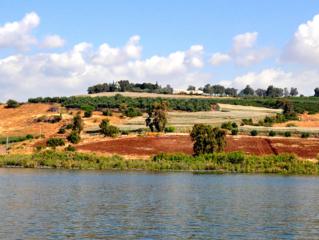
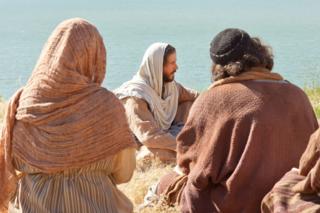
Matthew gives us not only a geographical setting for Jesus’ teachings but also their context: they are addressed to the disciples. And he gives us, at the end of the preceding chapter (4:23-25), a wider context, which is really an introduction to these teachings (Matthew, of course, did not provide us with numbered chapters and verses, much less with headings like “The Sermon on the Mount”–some later editor provided us with this misinformation). We’re told that Jesus went all over Galilee, teaching in the synagogues, proclaiming the Good News about the Kingdom, and healing all those who came to him. Large crowds assembled from all over, even from Jerusalem and Judea, and continued to follow him. Then, chapter 5 begins, “Jesus saw the crowds and went up a hill, where he sat down. His disciples gathered around him, and he began to teach them.”
A Biblical Parallel
Matthew’s Jewish readers would have been quick to recognize a similar setting and context in the Book of Exodus (chapters 19-23): Mount Sinai, with Moses, and the whole People of Israel gathered around for the giving of the Law, the Ten Commandments. It becomes clear that what Matthew has described is not an actual but a symbolic setting for Jesus’ teachings, one which leads us to see in Jesus a New Moses, giving a New Law, and establishing a New Covenant.
 People have a tendency to read everything as history, and so they tried to locate the historical and geographical setting for the giving of the eight Beatitudes, though no one seems to have done this with Luke’s symbolic setting for his account of the giving of the Beatitudes (chapter 6:17-49), which offers a parallel to the whole Book of Deuteronomy, where, in the plains of Moab, Moses gives the Law to Israel a second time (hence the title, Deuteros-Nomos: a Second Law).
Jesus says that he has not come to abolish or do away with the Law but to fulfill it. The Law that Jesus spells out is stricter than the Law of Moses. “You have heard that people were told in the past [by Moses] … but now I tell you …” The Commandments still hold firm, he says, but we must go deeper in observing them: there is to be no compromise with the things that lead to murder (like anger), or the things that lead to adultery and divorce (like lust), or the things that lead to false witnessing (like casual oaths). Moreover, Jesus’ followers must be ready to suffer rather than to sin. The plucking out of your right eye is obviously a Middle Eastern exaggeration, since your right eye is no more guilty of lust or greed or envy than your left. What it means is that we must be ready for martyrdom.
The Church of the Poor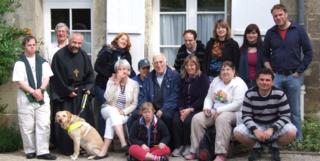
This wider gathering–of the sick, the suffering, the poor, together with the Apostles and other disciples–will become a New Community, the Church. Those who threw in their lot with this Community of outcasts would likely be rejected by their families, leaving them with no one to care for them in sickness and old age, and so the New Community now became their family. We see this in the Acts of Apostles: “All the believers continued together in close fellowship and shared their belongings with one another. They would sell their property and possessions and distribute the money among all, according to what each one needed” (2:44-45).
The New Community places the poor at its centre, rather than on its periphery. Though it may seem utopian, it has perdured through the ages as monasticism, and has served as the model for communities such as the Amish and similar Anabaptist groups. Today we see it in the community of l’Arche and in other intentional communities springing up in many parts of the world. It remains the model and the source of our hope for the continuing renewal of the Church.

No Comments