



To Nibble or Not to Nibble

 A youngster can test the frosting on the corner of a deliciously looking cake with his little finger if he thinks no one is watching. A mouse can nibble at a bit of cheese.. So, too some people today want to pick and choose among the truths of the Faith that can be believed only with the help God’s grace received at Baptism. These truths are enunciated, for example, in the Apostles’ Creed and similar statements issued by the Church.
No harm is done by the youngster’s nibble. For the mouse it might be his last if the cheese is bait in a trap. But people might not be aware that God’s grace in Baptism is comprehensive enabling us to believe in all the truths. In other words, God’s grace cannot be for each individual truth that can be selected to suit oneself. For example, you cannot opt out of believing in the infallibility of the Pope while expecting to have God’s grace for belief in all the other truths. There can be no picking and choosing like selecting the edibles offered in a buffet display.
Those who have been involved in selecting just what they want to believe might not realize the negative effect on God’s grace in their lives. They could continue to participate in the celebration of the Eucharist and in the other external practices of our Faith more out of habit and social acceptance than with the help of God’s grace. Also, if we know of someone who seems to have nibbled to suit themselves, only God can judge the person’s conscience with regard to their relationship with God.
 We are explaining the need to adhere to the truths contained in what is known as the “Deposit of Faith” which contains the truths revealed by God in the era of history recognized by the Church as “public revelation.” That era closed with the death of the last Apostle. There can be no picking and choosing, no nibbling away at any truths in the Deposit of Faith.
There can be truths also stemming from “private revelations” that often form the basis of devotional practices. Whatever is contained in private revelations, even if such a revelation is recognized by the Church as authentic and genuinely from God, does not have to be accepted for belief as do the truths contained in the public revelations.
What , then, is the purpose of private revelations that often form the basis of devotional practices? Our answer is found in the new Catechism of the Catholic Church. “Any devotions that are apptoved by the Church and are based on private revelations can help us to live mote fully our Christian faith in a certain period of history.” (Catechism #67)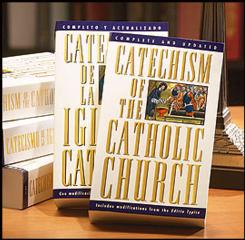
In other words, God is giving us assistance about ways to love Him through these private revelations that we can use as we find helpful. I think that we can presume that God is pleased when we adopt any devotional practise that we find helpful spiritually. Also, it follows, that we hold in high regard those who have responded to this special help offered by God . After all, God knows what is best for us and is pleased when we respond to His gifts. Let our nibbling always be for our spiritual welfare but never for dissent.

No Comments