



My (insert name of city here) is ….. (8)

For over 400 years, Jesuits and their colleagues have had a presence in Canada. Today they work coast to coast – from Vancouver to St.John's. In this series igNation invites you to join us as we travel across Canada stopping at cities where there are Jesuit apostolates to read personal reflections about the city and the work being done there. Today we are in Toronto, Ontario.
Toronto is home to many Jesuit works – including Regis College – our theologate, Canadian Jesuits International, The Jesuit Communication Project, the Jesuit Forum for Social Faith and Justice and Our Lady of Lourdes Parish – in which today’s author works.
 In my Toronto, the rate of poverty, rather than decreasing, grows every year. Toronto is a city of extremes. According to statistics, Toronto is the least equitable metropolitan region in Canada. About 53 Jesuits live here in Toronto where it is part of our mission to be in solidarity with the poor. Our former Superior General, Fr. Arrupe, defined this solidarity as a relationship as one in which “we have unembarrassed access to the poor and the poor have unembarrassed access to us.” Mainly because of where we Toronto-based Jesuits live and work, this solidarity is difficult to attain.
I live and work in a downtown parish where there are many poor in the neighbourhood.  We may live in proximity to each other yet I find it difficult to make much of a connection with them. Once a week, however, the Red Cross serves a hot meal in one of our church halls, serving about 100 poor people.
Each week, I used to wade through throngs of those poor people as I made my way to celebrate evening mass. I didn’t feel threatened by them, but I felt very alienated from them. Then something changed. I began volunteering, helping to serve the meal. By doing this I learned much about them. And I also learned much about myself.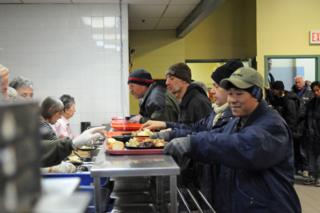
Even though I often see these people on the streets, I never see them begging. And I never see any of the many beggars on the street here in the food line. Most of the panhandlers on the streets are supporting an addiction of one kind or another. I know about addiction. I speak from personal experience. And I know that the worst thing I can do for them is to give them money. I have learned to no longer feel guilty as I pass by their outstretched palms. Still, a sense of guilt lingers.
In Scripture, we read of Jesus cleansing 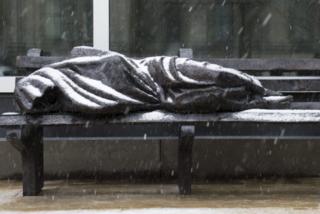 the temple and witnessed his rage at the desecration of the holy, I felt convicted of a certain complacency within myself. Week after week, I dished out food to the poor. Many of these poor people are mostly mentally ill and many are elderly. They are some of the most vulnerable people in our community. I saw their plight as a definite form of desecration of the holy, and yet I felt little sense of rage about this.
The social economic system that fosters and tolerates their condition is the same system that allows me an incredible life of ease, comfort, and security. Raging against such a paradoxical system would certainly threaten my own well-being. But something profound is stirring within me. I may have attained a limited access to the poor. Is it, as our Superior General described, "unembarrassed"? I think that is going to take more time. Nevertheless, with each passing day of material comfort I still struggle with an awkward feeling about living so comfortably as a Jesuit here in my Toronto.”

No Comments