



Laudato Si – Praise Be to You My Lord!
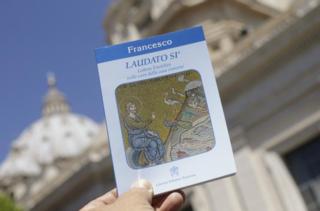 Seismic. An earthquake. Sweeping. Radical. These are just some of the words used in headlines about Laudato Si, the new encyclical from Pope Francis. On June 18, users of Facebook and Twitter found many ways to announce to followers that the document had finally been released, after months of rumours.
Laudato Si (Praise Be to You My Lord!) is the first papal encyclical that has received so much attention months before it was even released. Commentators had been writing with their predictions about what it would say. A few business leaders have threatened to withhold their gifts to the Church because of what they feared it would say about hot-button issues such as global warming, emissions, the moral duty to protect the earth, and so on. They’ve already been turned off by what they see as an attack by this pope on capitalism. As if Pope Francis were the first pontiff to critique capitalism!
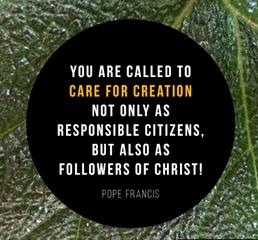 Some politicians have also been mouthing off about Pope Francis and threatening to make an issue of what he says. One American politician put his foot in his mouth by suggesting that Francis should leave these issues to scientists, only to be reminded that Pope Francis has an academic background in chemistry. This pope already surprised us by taking the name of St. Francis of Assisi. I guess that it was inevitable that he challenge our way of treating creation.
In the days before its release, a draft was leaked, leading Vatican watchers to speculate that some in the hierarchy were trying to embarrass Pope Francis. They saw this as part of the internal power struggle going on between those comfortable with Francis' agenda and those opposed to it. For his part, the day before the release, Francis said: “I invite everyone to receive this new document with an open heart, which places itself along the lines of the Church’s social doctrine.”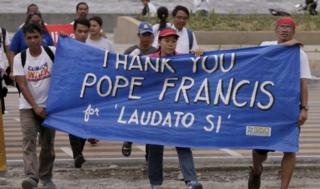
Why have so many people been looking forward to, or dreading, the release of a papal encyclical on the environment? I'm sure it has something to do with the amazing respect that so many people, both in and outside the Church, have for Francis and his leadership. He is likely one of the most quoted leaders in the world and has more global popularity than anyone else on the face of the earth. People hang on his words, and, more so, on his actions.
I admit to a fear about this document. Regardless of his strong words, do global leaders and individuals, really have the will to bring about a change in the lifestyle that is behind so many of the ecological challenges we face?
As I have written before, we know what has to be done, but do we have the willpower and discipline to do it? I'm fond of reminding people of the old spiritual truth that states that the longest journey is that from the head to the heart. I know that struggle for myself. I think about it as I toss something in the garbage, as I purchase things in disposable containers, and as I buy I don’t need.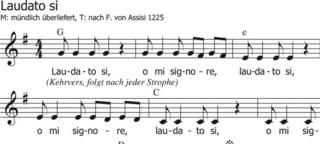
What’s behind the title? The phrase Laudato Si (Praised Be to You, My Lord!) comes from a line in the famous Canticle of the Sun, St. Francis of Assisi’s hymn in praise of the Creator and his work. Here’s one of the opening verses.
Be praised, my Lord, through all your creatures,
especially through my lord Brother Sun,
who brings the day; and You give light through him.
And he is beautiful and radiant in all his splendor!
Of You, Most High, he bears the likeness.
What is the general concern of Francis? He says that, “Climate change is a global problem with grave implications: environmental, social, economic, political and for the distribution of goods. It represents one of the principal challenges facing humanity in our day.” Thus he calls for a “bold cultural revolution,” a necessity to save the planet from destruction. This effort to confront environmental degradation and climate change entails a radical transformation of politics, economics and our individual lifestyles.
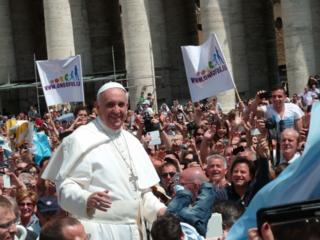 The encyclical combines a strong critique of consumerism and excessive development with a cry for a swift and unified global action. He brings moral clarity to the subject of the environment. The Pope suggests that it is humble gratitude that should colour our ideas about the environment. In that regard, Francis is not writing about our need to worship creation, but about our worship of the Creator.
Who is he addressing? Encyclicals are technically to the worldwide Church. Francis starts Laudato Si by saying that he is speaking to “every person living on this planet.” Given the respect that so many have for this pontiff, he knows that his words will have broad appeal.
Is there anything new here? Francis borrows heavily from predecessors, especially John Paul II and Benedict XVI, and from Patriarch Bartholomew I of Constantinople, leader of the world’s Eastern Orthodox Christians. This is the first time a papal encyclical has been focused on the environment. We see here that the themes are in keeping with the rest of Francis’ papacy.
Right from the first days, he was clear. He told us that he took the name Francis to honour St. Francis of Assisi, who stood for the poor and for peace, and was a “man who loved and cared for creation … in this moment we don’t have such a great relationship with the Creator.” His concern for the poor looms large in this document, as does his sense of the importance of human life. He is concerned about the poor and refugees.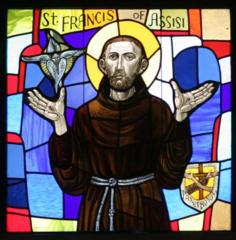
Why is Pope Francis so concerned for the poor? Well, in a general way, the Judeo-Christian scriptures call all Jews and Christians to care for the underprivileged, the strangers, the ones on the margins, the lepers, the anaweim, and all who are poor. There is also a long tradition of the Church having a preferential option for the poor.
Pope Francis states that the most vulnerable victims of our environmental degradation and our excessive consumerism are the world’s poorest people. They are so often dislocated from their homelands and their voices are ignored. Francis says that developed and industrialized nations are mostly responsible for our problems, and are obligated to help poorer nations confront the crisis.
What do scientists think of these words from Pope Francis? Regardless of their faith, or lack of faith, mainstream science is very consoled by these words from Pope Francis. He aligns himself with mainstream scientists, most of whom agree with him in saying that “most global warming in recent decades is due to the great concentration of greenhouse gases released mainly by human activity.” When he is reciting facts, the Pope aligns himself with mainstream scientific thought. There are certainly scientists who disagree with him and with their colleagues, but they are increasingly in the minority.
What are theologians saying about Laudato Si? I’ve seen a couple of pieces in which theologians use the phrase “integral theology.” Vincent Miller, at the University of Dayton, says, “the basic idea is, in order to love God, you have to love your fellow human beings, and you have to love and care for the rest of creation. It gives Francis a very traditional basis to argue for the inclusion of environmental concern at the center of Christian faith.”
I’m just one person. What can I do? That’s a big question. The task before us seems so daunting. It’s felt that way for a while.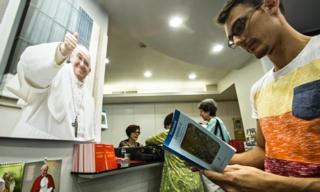 But Francis is hoping that his words will influence energy and economic policy and stir a global movement. Francis quotes Saint John Paul II on the need for an “ecological conversion.” He suggests that each of us, ordinary people, pressure politicians for change.
The Catholic News Agency has offered #LaudatoWay (akin to the “little way” of Ste. Therese of Lisieux). It includes five simple steps we can all take, as a way of changing our ecological lifestyle.
1: Pray for a conversion of heart.
2: Learn to appreciate beauty.
3: Practice gratitude and selflessness in the family.
4: Change the way you consume products.
5: Simplify your life – use only what you need.
Is there any hope? Pope Francis always calls us to hope. He says, “All is not lost. Human beings, capable of the worst, are also capable of rising above themselves, choosing again what is good, and making a new start.” He praises the younger generations for being ready for change. For Francis, the Christian faith is an invitation to joy. “Let us sing as we go. May our struggles and our concern for this planet never take away the joy of our hope!”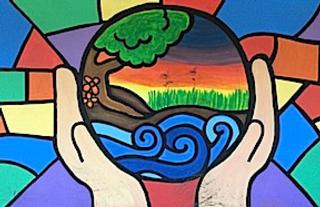
Pope Francis has spoken with a bold and clear voice. We know that he also acts, showing by example what he means by a radical change in lifestyle. How can we follow his example? It might be in simple things: taking public transportation, doing a more thorough job of recycling or deciding not to purchase an item that we don’t need. To that, I would add that it helps to put pressure on our elected officials. Good coincidence!
This is an election year in Canada. I’m curious to see if Laudato Si will have an impact on our election. Is it possible for enough of us to speak up and challenge our leaders? I hope so! Meanwhile, to repeat Francis, “Let us sing as we go. May our struggles and our concern for this planet never take away the joy of our hope!”
No Comments