



For Whom The Bell Tolls
“Mine. My Precious! Mine.”
Smeagol Gollum
The Supreme Court of Canada’s recent ruling on physician-assisted suicide was a disappointing but predictable one. The wide-spread support the ruling has received across the country reflects a widening values chasm between the dominant post-Christian humanist culture and the world-view of Catholics and many other adherents to more traditional religions. The critical difference centers around what it means to be a person.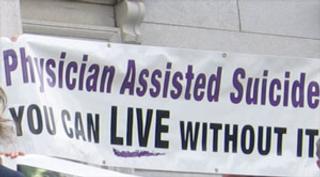
The 16th Century Renaissance wrought many changes, not the least of which was growing individualism. In contrast to medieval European society where family, parish and fiefdom defined who a person was, the Renaissance ushered in the notion that the individual was the only meaningful unit in society. Of course, this was not entirely a bad thing since it has led to some major advances such as the elimination of serfdom, the end of child labour and slavery and the growth in the equality of women. However, some of its fruit has been poisonous.
At its core, modern radical individualism says that one’s life is entirely one’s own. I suspect that were a twenty-first century John F. Kennedy to say, “Ask not what your country can do for you but what you can do for your country,” many of his hearers would roll their eyes. Radical individualism leads, inevitably, to denigration of collective action of any sort. Look how the word “taxes” has become a four-letter one in some circles! “I’m looking after me: you look after you.” It is hardly surprising that the past decade has seen a surge in the sales of Ayn Rand novels. Also implicit in this world view is secularism, since religious or spiritual values have become idiosyncratic, like clothing or sexual proclivity. “
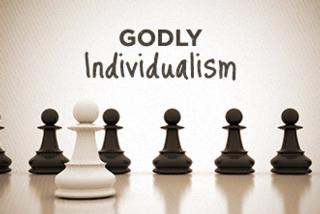 Of course, radical individualism is at odds with Gospel values. We Christians are our bother’s/sister’s keepers. Our lives, let alone our bodies, are not our own. With St. Paul, we say, “I live not but Christ lives in me.” Most importantly to the question of physician-assisted suicide, we say that suffering, while not good, can result in goodness. We say that there is no life not worth living. We say that intention matters and so there is a fundamental difference between willfully ending life and willfully allowing nature to take its course. I fear that to the radical individualist, this seems like hair-splitting but to us it is the difference between willingly suffering with Christ or not.
I see a parallel with the current rise in the number of parents who choose not to vaccinate their children against common but dangerous infections. The epidemiologist talks about the “herd protection” which is reduced once immunization rates fall below 90%. While doubtlessly these parents are choosing, albeit ignorantly, what they believe is best for their own children, they are ignoring the enormous benefit which society gains when all people are vaccinated. But how does the radical individualist admit the claims which society might have on him/her when these claims require a degree of personal sacrifice and/or risk? How can you “take one for the team” when you are at best a reluctant player?
Since it is unlikely that anything, short of a major catastrophe, will shake many of these people out of their cocoons, the most important things we can do now are continue to witness to the truth but also work to make sure that any legislation protects the vulnerable to the maximum degree possible. For example, we must work to ensure that insurance companies do not refuse disability benefits if the person declines to commit suicide; that the bulk of funding for palliative care does not go to programs that stress suicide; that the strictest standards possible of informed consent be required.
We must not make the mistake made during the abortion debates of the 1990's when the refusal to limit harm resulted in abortion-on-demand. At the same time, we must continue to witness to the life-affirming values of our faith and to trust that, ultimately, with the help of the Spirit, people’s eyes will be opened and hearts moved.

No Comments