



Jesuit Volunteers in Kathmandu
The flight into Kathmandu, in front of the splendour of the Himalaya; the drive through Kathmandu’s chaotic traffic; the first trip to a village where one eats rice with one’s hands while squatting on a wooden plank – so the life of a volunteer begins! For almost two decades, the Jesuit International Volunteers in Washington, D.C., sent college graduates on two year volunteer assignments to Nepal. These talented and dedicated young men and women served our school students and provided social service to the poor.
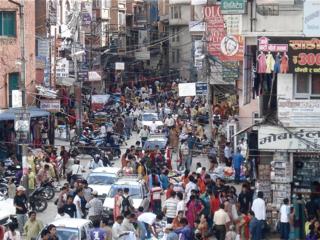 The new volunteer’s initial awe and shock fades as one struggles to learn a new language, puts up with the first tummy upset, and tries to understand ways of living almost opposite to those of the West. Together with their Jesuit director, the volunteers start to focus on four areas of life: community, spiritual growth, a simple lifestyle, and service.
The give and take of living in community is the first challenge. Everyone has different expectations and talents, and is used to more privacy than the culture here will provide. The volunteers carefully work through misunderstandings and soon find the best ways to support one another by sharing chores, listening, and above all, forgiving.
The volunteers come as missionaries, sharing the Nepal Jesuits’ services. The people here see them as extensions of the Jesuits and so demand much of them. Thanks to their strong faith the volunteers rise to the challenge, supporting the Church and striving to grow in faith, hope, and love. They become involved in parish activities, and through retreats and weekly reflections, deeply share their faith with one another. From Buddhists and Hindus the volunteers learn new and valuable methods of prayer and worship.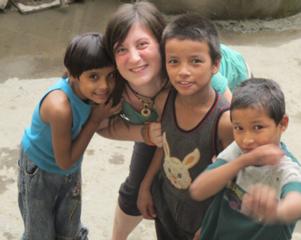
Most volunteers, and Jesuits, would not last long living a in a poor Nepali setting, in a hut with no running water, or indoor toilet, a minimum of furnishings, and a clay wood stove for cooking. The volunteers have private sleeping space, a proper toilet, electricity, and a gas powered stove. Their lifestyle is that of a middle class Nepali Kathmandu family. They do their own cooking and house cleaning, and depend on bicycles or public buses for transport. Many of their essential needs at home have suddenly become luxuries here!
Service for the volunteers is two way. They work hard at their teaching and administration, and soon realize that their students and neighbours are giving as much and more to them in return. Children appreciate student centred teaching and learning, carefully prepared classes, and corrected assignments. The volunteers devote extra time to extra curricular school activities: sports coaching, drama direction, art, and music.
 The Nepali people are most hospitable, so it is not long before fellow teachers and families of students welcome volunteers to family celebrations. Children laughingly, but lovingly, correct grammar mistakes as the volunteers struggle to speak a new language. During vacations the volunteers explore the hills and valleys of the Himalaya, enjoying more hospitality.
Volunteers bring their Christian faith with them, and because they live that faith, share it with the Nepalese. Their service and their genuine interest in the people here show that they want to help these Nepali people grow to become better, more spiritual people. It is a joy to see a student light up saying, “Now I understand!” A silent “Thank you,” shown by raising one’s hands, palms together, deeply touches both server and served.
God, Father, Son, and Spirit, was in Nepal long before any missionary or volunteer came along. The discerning volunteer will find God here, in the people, and hopefully the Nepalis will learn more about God’s love from the volunteer. Both eventually part ways, but changed for the better thanks to this volunteer program.

No Comments