



Some Thoughts on Praying (8)
Where should we make our personal prayer? Should it be in church, at home, outdoors while communing with God’s nature?
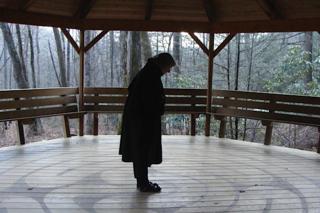 We read in Matthew’s Gospel that Jesus had something to say about where we should pray. He did so in answer to the request by His apostles to teach them how to pray. “But when you pray, go into your room and shut the door and pray to your Father who is in secret” (Mt. 6:6).
Are we to take the answer in a literal sense? Jesus was speaking in a way similar to how the Prophet Isaiah directed that private prayer should be in one’s own room. Jesus on this occasion was pointing out wrong ways of praying such as “Beware of practising your piety before men in order to be seen by them” (Mt 6:1).
The problem with private or personal prayer that is done in public when other people are around is that we are actors by nature. We tend to behave as if on stage in front of an audience. Are we not somewhat self-conscious when we are on the street, in a shopping mall, even in a church? If we are self-conscious at the time we engage in praying, then it is more difficult to be conscious of God ‘s presence. Jesus as was Isaiah were setting up a condition that is likely to eliminate the element that is conducive to being self-conscious because of the presence of others.
Are we saying that one cannot pray in church unless the church is as empty as your own room? The truth is that one can pray very well in church when other people are present. Some can spend many hours of fruitful prayer in church either alone or with others. The solution is to be able to withdraw into your “private room “ of composure with your attention given to God alone with no stage acting directed at others if they should be in the church at the same time.
This reflection on a direct quote from the Gospel is a good lesson in how to interpret what is said. Jesus anticipated the need for interpretation of what He taught while on earth. He gave us the Church and He gave the Holy Spirit to guide the Church.
Under this guidance of the Holy Spirit, the Church has learned what should be understood in a literal sense and what requires an interpretation. For example, when Christ took the bread and the wine at the Last Supper and said “This is my body…this is my blood” (Mt. 26: 28) , the Church tells us to accept His words very literally. The Church is the ultimate guide to interpreting the words of Scripture.
 About praying in your own room with the door shut, we know that centuries of personal praying by members of the Church has not led to a strict interpretation of that directive of Christ about the place to pray. Going back to the context in which He gave the directive, He was trying to point out the difference between pretending to pray and real praying. He was attacking those who were concerned about having a reputation for praying instead of doing what is needed for an authentic communing with God.
However, it remains valid that being alone in one’s room is the ideal situation if one wants to avoid any danger of showing off at praying. If one can take along this atmosphere of being alone to whatever place one has chosen for private prayer, then what Christ had in mind has been attained. The suitable condition has been set up so that one can experience God’s presence if He so chooses to give that precious gift.
Now that we have our aloneness, the next step is to stop doing everything else for a moment. By a conscious effort, out aside the concerns, worries, plans, projects, day dreams. The purpose is to be ready to speak to God and to listen to Him. The rule given by St. Ignatius Loyola is: “Before you start praying, you should stand still and you should ask yourself this question: ‘Where am I going and what for?’
In these thoughts on praying, we have to remind ourselves from time to time that the purpose of praying is not to get brilliant ideas or clever solutions to nagging problems. The final and ultimate purpose is to be with God, to be in His presence, to be at peace of soul with Him.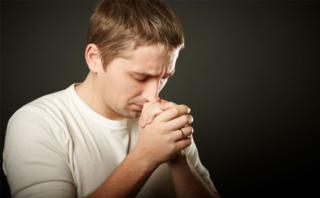
The master of the art of praying, St. Ignatius Loyola, was concerned that the person praying should not be restless in the pursuit of new ideas. In the very simple method of reflecting on the words of a familiar prayer, he directed that “if one finds in one or two words abundant matter for thought and much relish and consolation, one should not be anxious to go on.” In other words, when one is close to God be content to stay with Him.

No Comments