



Islam, Christianity and Just War Theory
 In the Catholic tradition just war theory was first articulated by St. Augustine. He set out criteria to justify going to war, and criteria for conducting war itself. The right to wage war assumed firstly that war was a last resort. All other means to resolve conflicts should have been exhausted. This is the most overlooked aspect of the “jus ad bellum” aspect of Just war theory, and is also a substantial point of difference with Islamic teaching on war.
In our present circumstances where war is always on the horizon, diplomacy should be pursued and exhausted first. For a war to be just there must be a just cause, and a right intention. The war must be declared by legitimate authority. There must also be a reasonable hope of success. The good to be achieved must outweigh the inevitable evils wars entail. Obviously, each of these criteria is open to interpretation, and merit an extended commentary that cannot be undertaken in this short reflection.
War, furthermore, should be fought within certain restrictions and limits. Historically, there have been two guiding principles for the conduct of war: discrimination and proportionality. The former requires that non-combatants be immune from direct attack; the latter necessitates a calculus of consequences good and evil of the military action being planned.
In the modern world, where nuclear escalation is always a possibility, some ethicists have used just war criteria to rule out war altogether. Others would say that most wars are still fought with conventional weapons and so some wars are still justifiable. However, since not all wars are just, and not every military action justifiable, the Catholic tradition post Vatican II has come to accept conscientious objection from war in general, from particular wars, and from specific military operations should one’s conscience so dictate.
Ultimately, the goal of every Christian stance to war must be a peaceful social order based on justice. However, Christians realize that we live in tension between this world, in which evil still abounds, and the fullness of the Reign of God, in which justice and peace have been permanently established. It is this theological understanding that still grounds a right to self-defense on the part of persons and societies. In fact, in the Catholic Tradition it is self-defense that is the principle just cause for going to war. Of course, to pre-empt an imminent attack on one’s country qualifies as a form of self-defense.
 What, then are we to make of calls for a “Holy War” by individuals like Osama Bin Laden and other Muslim leaders? By way of qualification I should point out that in Islam the term “jihad” has several meanings. It can be used to cover a variety of referents. For example, it is often used to cover both the “greater jihad” meaning personal struggle against evil and the effort to conform one’s life to the will of Allah, and the “lesser jihad” which requires waging war for just reasons.
As in Western just war thought, the authorization for war can only come from legitimate authority. In the Sunni tradition of Islam that would be the head of an Islamic state who consults with the appropriate Muslim scholars. Generally, individuals like Bin Laden are not allowed to proclaim a “lesser jihad.” But both the Christian and Muslim traditions do allow for a just revolution in extreme circumstances.
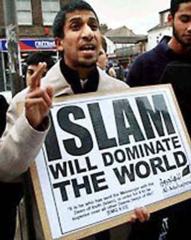
As for just cause—unlike in Western just war thought—the principle Islamic motive for war is religious: to defend and extend the territory of Islam. This is the responsibility of every able bodied Muslim male. Ideally, this extension should take place by the uncoerced adherence of individuals and peoples to Islam. Non-Muslims have two choices either to accept Islam and become part of dar-al-Islam (the Land of Peace) or to pay tribute to the Islamic state while remaining in the dar-al-harb (the land of War).
Refusal to accept this invitation, once Muslim intentions have been made known, usually entailed war. Of course, it is the duty of the Muslim head of state to determine whether or not Islamic forces can prevail, and to make sure the protocol inviting submission to Islam has been properly carried out.
 As for the conduct of war itself, it should not be carried out for personal gain or glory but for the cause of Allah. There is also a principle of “discrimination” by which Muslim soldiers are to distinguish between the innocent and the guilty. As well they are to use only the force necessary to achieve the end desired—a principle akin to the western idea of proportionality. There are many other aspects of the Islamic just war theory. For an excellent study of these topics I recommend John Kelsay’s “Islam and War.”
What seems clear from this comparative study is that there is no justification for the indiscriminate killing of the thousands of innocent people in New York City on September, 11th. 2001. Less clear is the justice of waging war in Afghanistan and beyond. While there may be a just cause, and proper authorization, right intention is ambiguous, the prospects of success are questionable (as we now witness more clearly 13 years into the war). In fact, the good to be achieved may well be overwhelmed by A “Clash of Civilizations.” Furthermore, we should have asked ourselves then and now whether the recourse to war really was a “last resort.”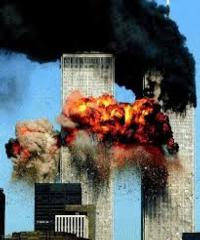
However, since ethics is about what is to be—not what is–statecraft is not afforded the degree of certitude we hope to find in mathematics or physics. Prudential judgments about war need to be reviewed constantly as events unfold. Consequently, just war principles should be applied not only before war is declared, but also during the prosecution of war itself as circumstances change. We also need to think about “post bellum” responsibilities—the least developed, and most neglected aspect of just War theory.
Finally, while I have tried to make a case for the continued usefulness of just war theory, I also realize that it doesn’t embody the highest ideals of Jesus Christ, the Prince of Peace. Peace is both a gift and a task. Let us pray for the gift and work at the task.

No Comments