



Faith and Culture
My name is Georges Gracieuse. I’m from Mauritius and have settled in Vancouver, Canada, with my wife Sharmila and my daughter Samantha since January 2008.
 During the last Jesuit Alumni of BC’s workshop on Saturday March 15, 2014 facilitated by Fr Richard Soo SJ, we reflected on the following questions on faith and culture:
How has your culture been a support to your faith?
How has your culture hindered you on your faith journey?
How has the Church been a support to your faith?
How has the Church hindered your faith journey?
The following is what I shared during that meeting.
I am a Creole of African descent. My ancestors came to Mauritius as slaves to the French settlers in the early 18th century, either from Mozambique, Madagascar or Senegal. They worked on large sugar cane plantations and sugar mill belonging to those settlers. Slaves of the same tribe were scattered over different plantations on the island to prevent communication and revolt. Slaves on a particular plantation had to imitate their master’s language, i.e. French, to communicate, thus developing a patois language called Creole.
The Church was under the control of the settlers. The clergy and the liturgical language were French. All the slaves were Catholics because they were baptized and given a Christian name as soon as they landed.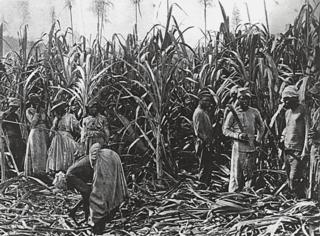
The Creole community has suffered from an identity crisis because as slaves they were cut off from their roots: their tradition and culture. They identified themselves with the Church because they were Catholics. Even in the Church they felt alienated because they had no power and the liturgy didn’t accommodate their way of praying. Whereas the Western way of worship was quite cerebral, the African way of worship was more emotional and a greater place was given to bodily expressions. I realized this difference on hindsight when I went to India in 1979 and joined the Society of Jesus.
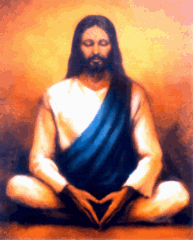 In India, religious practices were less discursive and more contemplative; they embraced the whole person – body and soul. For instance, yoga teaches the individual to develop an appropriate posture, to be aware of one’s breathing, to become still, in harmony, to unite oneself with God. Religion aimed at developing a personal relationship with God: it wasn’t based on how to understand the divine mystery, but on how to allow oneself to enter in communion and become one with the divine mystery. I found the Indian culture quite holistic and conducive to my spiritual growth.
In September 1981 I went to France to study philosophy and theology at Centre Sevres, the Jesuit faculty, in Paris. I thought that living in France would be easy because I was quite familiar with the French language, history and literature. But I soon discovered to my dismay how wrong I was. France was a secular country and very anti-clerical, with a strict separation between the state and religion. The French culture at that time was quite hostile to religion. At Church, the traditional way of praying like saying the rosary was considered outdated. The practice of religion, just like in Mauritius, was more cerebral and discursive. I couldn’t feel the warmth of religion and I started to lose my foothold. The culture was aggressive and I slowly lost my identity as a Christian, a religious. I felt that sense of the sacred was lost. I was swept away and had to request my Superiors to allow me to go back to India to recover from that cultural shock.
When I joined the Society of Jesus in 1979, it was after an experience of conversion and I had the desire to strive to lead a life of holiness. At that time, it was commonly accepted fact that consecrated life (priests, monks, nuns etc) was the main path to holiness. So I decided to become a priest. I chose to become a Jesuit because I was attracted to St Ignatius of Loyola, the founder of the Society of Jesus. I admired him because in my European history class, I discovered that he was someone who had a deep impact on the Church during the time of the Reformation and Counter-Reformation in the 16th Century. Celibacy was part of the package of religious life and I accepted it. But later I realized that living a celibate life was a challenge to me and I finally decided to leave the religious life.
When I left the Society of Jesus in 1986, I suddenly found myself alone without a structure to support me on my spiritual journey. I no longer had an orientation, a purpose to cling to. That year, I went back to France to continue my studies and I decided to embrace its secular culture. I wanted to live a life free from religious constraints. Slowly I drifted away. I no longer had a taste for prayer, to go to Mass and to be involved in Church activities. I wandered aimlessly for years, experiencing emptiness, restlessness, fear and anxiety.
 It was about August 2002 when I started to come back home to the Church. In 2005, I joined the Society of Evangelical Life of the Heart of Jesus, an association of lay people who follow the Ignatian spirituality. I was attracted to this group for different reasons. Firstly, I now had a spiritual family to support me on my journey. Secondly, the Ignatian spirituality had remained my core spirituality even though I was no longer a Jesuit. Thirdly, in this group all were welcome: male or female, married, separated, divorced, single or widowed, priest, deacon or lay person. I felt that God was giving me a second chance to consecrate myself entirely to him. I found a unity within myself and a renewed purpose in life.
On August 15, 2012, I took the temporary Vows of Prayer, Fraternity, Chastity and Poverty. Pierre-Jean Stygelbout SVE, General Assistant came over from Belgium to receive my vows and to launch the Society officially in Canada. Today the Vancouver group has five members.
When I look at my spiritual journey, I’m grateful to Jesus for always taking the initiative to draw me deeper into his friendship, especially whenever I resisted him. I’ve learnt in the course of time to surrender to him. I no longer ask him to help me achieve what I’ve already decided to do; but before I take a decision I ask him to help me discern what would bring great praise and service to him. With this attitude, I experience a deeper peace and inner freedom.
++++++++++++++++++++++++++++++++++++++++++++++++++
JAG (Jesuit Alumni Group) blogs can be read in English, Chinese, and French at: jagvancouver.wordpress.com

No Comments