



Keyword: Jesuit, Genre: Fiction. – Judith Rock’s The Rhetoric of Death

If the only Jesuit you ever met was a character in a work of fiction in a library collection, what would this individual tell you about Jesuit life?
In this series, IgNation blogger Kevin Burns, who is not a Jesuit, takes a look at some of the works that come up in a large urban public library when he entered the search term "Jesuit" and filtered it through the genre of "Fiction". The novels that popped up include some familiar names and some not so familiar Jesuits.
This week: Charles Matthieu Beuvron du Luc S.J., a character in Judith Rock’s The Rhetoric of Death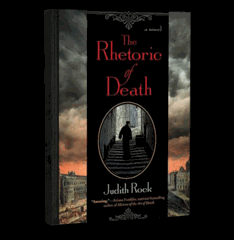
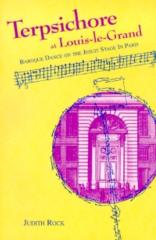
Judith Rock is an America dancer, choreographer, and now novelist. In the course of her dance studies it was the rarefied world of Jesuit theatre and ballet performances in 17th century France that caught her attention. She was especially intrigued by their presence in the curriculum of the prestigious Jesuit school in Paris, the Ecole Louis-le-Grand. She went on to write about that school’s place in the history of performing arts in a scholarly work (Terpsichore at Louis-le-Grand – Baroque Dance on the Jesuit Stage in Paris) published by the Institute of Jesuit Sources in 1996. Then, in 2010, Rock released her first novel which is set in that school and in which she introduce a young Jesuit who in the process of teaching there becomes a sort of sleuth. The character is Charles Matthieu Beuvron du Luc S.J.
This is how she presents her fictional Jesuit:
The year is 1686 and a 28-year old Jesuit scholastic from Carpentras, near Avignon, is being moved by his superiors to Paris for his own safety. As a character says late in the novel, “like many of your Jesuit brothers, [he is] considered intelligent beyond the ordinary.” (p. 268) But Charles been getting too close to Huguenots and in the context of France’s religious wars, this is not the time for interfaith dialogue. Charles is not yet ordained. He has taken his first set of vows, has been teaching for five years in Carpentras, and has just been sent to Paris to teach at the prestigious École Louis-le-Grand.
This Jesuit is “big and broad shouldered and brimming with life. His straw-colored hair, long since grown over the symbolic little Jesuit tonsure given at first vows, … [in] thick unruly curls.” His face is “tanned to pale gold.” (p. 2-3)
He has a shoulder wound from his brief time in the army before he entered the Society.
His strange personal grooming habits leave him “usually free of lice, and so far, with all his teeth.” (p. 16)
His approach to life as Jesuit was somewhat counter-cultural. “One of his hopes when he joined the Society had been that the noisy, glittering show of nobility would be less important. He had very quickly learned that influence was influence, and that Jesuits were as shameless as everyone else about using it.” (p.27)
He is clear about his evangelizing role as a Jesuit. “Saving souls is part of what God requires of us.” (p. 30)
He prays often, sometimes silently, and sometimes wordlessly. “Charles stayed on his knees and tried to let the flowing melting images that filled his mind carry him deeper into wordless prayer.” (p.96)
He is angered by the treatment of his Huguenot contemporaries and speaks out when he is able. He tells an official: “I am not aware that believing in the love of God is heretical.” (p. 139)
He is fascinated by the work of his controversial fellow Jesuit, Athanasius Kircher who died in in 1680. When walking past a bookseller in Paris he sees a copy of Kircher’s Itinerarium Exctaticum. “He’d longed for years to read it.” (p. 160)
He has taken his first set of vows – poverty, chastity, and obedience – and it seems as if his main struggle will be with obedience. “First a solder, now a Jesuit, why did he keep putting himself into situations where obedience – often unquestioning obedience – was required? Because I am an idiot, he told himself sourly. (p. 195)
His sets limits around that obedience. “I can no longer obey if it means ignoring evil.” (p. 213)
 He finds some form of kindred spirit connection with Jeanne d’Arc, who at the time was celebrated though she had not been formally canonized. In a moment when lives are at risk he is convinced that “Jeanne d’Arc or someone was surely watching over them.” (p. 318) Later, he turns to her again at a key decision point. He concludes that she was compelled to action by one thing, “belief in her truth.” This motivates him into action on what he sees as his truth.
Obedience is then eclipsed by chastity. “Charles clasped his hands tightly to keep from taking her in his arms. (p. 331) A little later, he loses control of that impulse. “What will I do now, he asked the Silence.”
This physical experience teaches him that love and feeling are not the same thing. “But I love her with all my heart, he said to the Silence, appalled at his lack of feeling.”
He turns again to his original question, What will I do now? and answers with another: “Finish the school term, make my yearly Jesuit retreat, and during it make my decision about the Society?” (p.362)
What that decision might be is no doubt addressed in the next three books in Rock’s series in which he is named as a central character.
+++++++++++++++++++++++++++++++++++++++++++++++++++++++
Judith Rock's The Rhetoric of Death is published by Berkley Books (Penguin) 2010.
++++++++++++++++++++++++++++++++++++++++++++++++++++++++++++++++++
Here is a link to the Jesuit school in Paris, the Ecole Louis-le-Grand. (Note: you need Java to view it)
http://www.louislegrand.org/index.php/visiteurs-articlesmenu-28/visite-panoramique-articlesmenu-56
+++++++++++++++++++++++++++++++++++++++++++++++++++++++++++++++++++++++++++++++
Next in Keyword: Jesuit, Genre: Fiction – Shusaku Endo’s Silence
++++++++++++++++++++++++++++++++++++++++++++++++++++++++++++++++++++++++++++++++++++++++++
This series represents a tiny selection from a wide-range of possibilities. IgNation invites readers to describe the Jesuit character they have encountered in fiction. Tell us about that character in 500 words or less and send your article to pungente@sympatico.ca
++++++++++++++++++++++++++

No Comments