



Keyword: Jesuit, Genre: Fiction. – Joseph Boyden’s The Orenda.

If the only Jesuit you ever met was a character in a work of fiction in a library collection, what would this individual tell you about Jesuit life?
In this series, IgNation blogger Kevin Burns, who is not a Jesuit, takes a look at some of the works that come up in a large urban public library when he entered the search term "Jesuit" and filtered it through the genre of "Fiction". The novels that popped up include some familiar names and some not so familiar Jesuits.
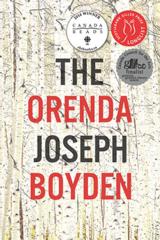 This week: Père Christophe, the creation of Canadian novelist Joseph Boyden, is one of the main characters in his highly acclaimed novel “The Orenda.”
Before I get to the book, please note: this series is not a collection of reviews of fiction, I leave that to real critics. In these pieces I introduce characters who are Jesuits as formed in the imagination of creative writers past and present. There’s a truth within the heart of all good fiction, though that’s not an image to use with this particular work, as you will discover if you have not yet reached the final pages of this novel.
Only a few pages in and you know instinctively that the author of this novel was educated in Canada by Jesuits who clearly instilled the grizzly and heroic stories of the Canadian Jesuit martyrs in the 1600s. What’s turned inside out and upside down in this novel is that it is written by someone whose parents are Nipmuc (Algonquin) and part Ojibwa. This is a view of missionaries from inside the communities they have entered.
Père Christophe is not a stand-in for St. Jean de Brébeuf, but there are reverberant echoes of his story in this novel, but that is to start at the end of the story. Let’s move back earlier in his brief fictional biography.
In this novel you learn that Christophe was born in Brittany. He was tall, nicknamed “the Brittany Giant” by his local bishop back. He chose to become a missionary and has a clear understanding of the risks he faces when he arrives with two fellow Jesuits in the midst of five warring First Nations. He describes his double-edged mission: “To bring Jesus into the lives of these people is one mission. To report my findings back to my Superior in Kebec, who will in turn send it to his back home in France, is the other. Ultimately, I write of my journey and my struggles and my suffering to glorify You.” (p. 28) 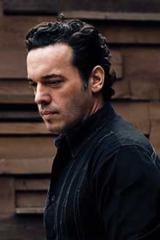
He senses he has arrived in a dark corner of the world and is astounded by the “brutality these people are willing to show their enemies.” (p. 35)
He is a man of his times in his attitude toward women, especially those he meets in his missionary role, “their simplicity prevents them from understanding the complexity of Catholicism.” (p. 30)
The inner voice of his thoughts constantly shifts from monologue, becoming more of a prayer: “God, give me the courage and resolve to enlighten those who walk in darkness.” (p. 81)
He learns the local language quickly and is delighted when he can report, “I am beginning to dream in their tongue.” (p.88)
He uses typical military language to describe the Jesuit missionary role of the time. “We are your soldiers, Lord.” (p. 141)
He embodies that Jesuit maxim about children as both the strategy and source of influence: “Their children are the door to their conversion.” (p.143)
He is insistent on creating an accurate record in the reports he writes – the Relations – written for himself, his Jesuit superiors, and, he hopes, posterity. “I write for myself in the belief these words aren’t wasted. I write in the hope we’ve not been forgotten by our Church or by our nation. I write to please God, for I treat these relations as my prayers.” (p. 211)
When challenged by one of his brutally tortured Jesuit colleagues about the violence that surrounds them – “Why do they wish to cause such pain to another human?” – he answers with another question. “Why does the Spanish Inquisition do what it does? …Why does our own Church burn witches at the stake? Why did our own crusaders punish Moors so exquisitely?” (p. 256) 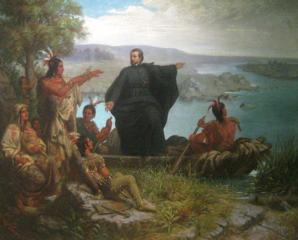
Finally, when the inevitable outcome of his situation is no longer in doubt, he still manages to pray for his tormentor, not out of fear, but out of firm conviction. “I smile at him as I hum the lovely hymn ‘Ave Verum Corpus’ as loudly as I can, although I can’t speak the words, I hear them in my head, Lord, I hear them in my heart. Hail, true body, born of the Virgin Mary, who having truly suffered, was sacrificed on the cross for mankind, whose pierced side flowed with water and blood.” (p. 475)
And finally, even the next excruciating moments become another prayer.
+++++++++++++++++++++++++++++
Joseph Boyden’s The Orenda is published in Canada by Penguin, 2013.
+++++++++++++++++++++++++++++++++++
Here is a link to the (official) Penguin video of Joseph Boyden talking about the book:
http://www.youtube.com/watch?v=7TbsThSJvgE&feature=c4-overview&list=UUOH2nyyTSKXQB0MKNUmPHyQ
+++++++++++++++++++++++++++++++++++++
Next in Keyword: Jesuit, Genre: Fiction: Judith Locke’s The Rhetoric of Death.
++++++++++++++++++++++++++++++++++++++++++++
Note to the Reader:
– This series represents a tiny selection from a wide range of possibilities.
– igNation invites readers to describe a Jesuit character they have encountered in fiction. Tell us about the character in 300 words or less and send your article to pungente@sympatico.ca
– igNation welcomes your articles!

No Comments