



In Response to “Surviving Catastrophe” (1)

The reasons for the suppression of the Society are complex and only a very well versed historian can hope to get a handle on the multifarious reasons behind it. Broadly speaking we can probably say that the political climate of the mid-eighteenth century fueled the demise of the Jesuits.
 Europe was in the midst of a storm of change which culminated in the French Revolution. The change included a rethinking of the relationship of Church and State, thinking that gave rise to the separation of the two entities, such as the one enshrined in the U.S. Constitution. As the most powerful and prominent of religious orders, it was inevitable that the Society get swept up in the tidal wave of change; and since the church was also under siege, in order to weather the storm, it needed a scapegoat.
In this year when we celebrate the 200th anniversary of the restoration of the Society it might be helpful to broaden the conversation by asking the question: did the spirit of the Society somehow live on or in spite of the official nature of the Suppression, did the Society really cease to exist? The answer to the second question is a simple ‘no.’
Firstly, we know about the famous refusal of the monarchs of Prussia and Russia to publish the brief in their non-Catholic realms where Jesuits were appreciated for the quality of their education. So, while the Jesuit’s presence in Rome and within its own traditional structure ceased, the Society continued to minister and to receive vocations. Secondly, we’re beginning to hear more research about how the brief of suppression was never published in other non-Catholic realms such as Great Britain, which included Canada at the time. 
The first question about the ‘spirit of the Society living on’ is not as easy to answer. However, when we add the question posed in Kevin Burns’ recent blog entry ‘how did they come back so quickly?’ I think that we can at least speculate a bit.
The Jesuits have always had many detractors but many friends also. And so, there may be something to the sense that even before the formal suppression, and when it had become inevitable, ‘friends of the Society’ were already waiting in the wings and had begun planning for an opportune moment to revive the order.
In this regard there is one name that surfaces time and again: St. Joseph Pignatelli (1737-1811). Pignatelli was indefatigable in working to restore the Society through ecclesial and secular channels. A paragraph from an article found at ignatianspirituality.com encapsulates Pignatelli’s work:
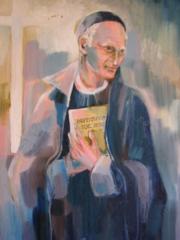 Forbidden to practice his ministry as a priest, Pignatelli [in 1773] moved to Bologna and for the next 24 years kept in contact with his dispersed brethren. Pignatelli attempted to become a member of the Jesuit community in Russia. Unable to go to Russia, Pignatelli accepted an invitation from Ferdinand, Duke of Parma, to reestablish the Society in his territory. With several Jesuits from Russia, the Jesuit community was reestablished in 1797. Pignatelli renewed his vows and was appointed Novice Master. Later he was appointed Provincial in Italy [before the official restoration of the Society].
In my role of Novice director for the Canadian Jesuits, I frequently find myself speaking to novices about Jesuit pragmatism stemming from Ignatius’ own practical approach to running the order. And so, rather than pointing to some kind of ‘Jesuit mystique’ that somehow lived on to be resurrected suddenly with the restoration, I think that it is more accurate to suggest that the hard work and pragmatism of the likes of Pignatelli were key to the revival of the Society to its universal status within the Church 200 years ago. With a little help from the Holy Spirit, of course.

No Comments