



St. Peter Faber – The Quiet Companion

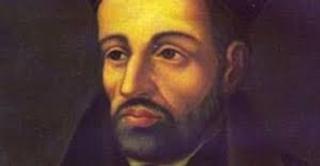 In December 2013, Pope Francis set aside the normal process for canonizing a saint and extended sainthood to Fr. Peter Faber, a Frenchman who was one of the founders of the Society of Jesus. Many people heard the news and probably wondered who he was talking about. Not Jesuits! I’d be willing to bet that if you surveyed every Jesuit and asked about favourite Jesuit saints and blessed, Peter Faber would make the short list. Oh yes! There’s no question that we have to include Saints Ignatius of Loyola and Francis Xavier. But they get enough attention. Peter, too, had an influential role in the origins of the Jesuits.
It’s likely that Pope Francis shares the sentiment about Peter and decided to skip the usual processes. It’s not that unusual. Pope Blessed John Paul II and Benedict XVI made exceptions. This is called “equivalent canonization” and is generally justified when the candidate comes from a remote period of time and has an unchallenged reputation for holiness. Francis has often spoken of his admiration for Faber, including in the famous interview last fall with Jesuit publications. It was there that Francis praised Faber’s “dialogue with all, even the most remote and even with his opponents; his simple piety, a certain naïveté perhaps; his being available straightaway; his careful interior discernment; the fact that he was a man capable of great and strong decisions but also capable of being so gentle and loving.” The label that the biographer Mary Purcell used in her title was “the quiet companion.”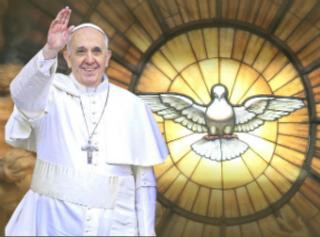
Peter Faber was born in Savoy, France in 1506. His family was too poor to send him to school. But when they saw his deep longing for education, they acquiesced. Step by step he made his way to the University of Paris. His roommate was Francis Xavier. They were the same age and became close friends. They devoted their time to studies in philosophy and theology. Four years into their studies, they acquired an older student as their roommate – Ignatius of Loyola. They heard that he had a reputation for being very charismatic and influential with people.
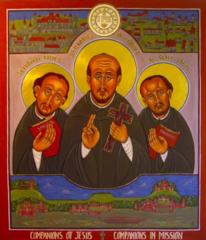 The Jesuit writer Joseph Tylenda sums up the early influence of Ignatius and Peter on each other. “While Peter served as Ignatius’ guide in academic matters, Ignatius served as Peter’s guide in spiritual matters.” Ignatius gave spiritual direction to Peter, the latter deciding to become a priest. Just before his ordination, he did the thirty days Spiritual Exercises with Ignatius. Faber later wrote that Ignatius “gave me an understanding of my conscience and of the temptations and scruples I had had for so long without either understanding them or seeing the way by which I would be able to get peace.”
The band of the “three amigos” had grown to include new followers. On August 15, 1534, they pronounced vows while Fr. Faber celebrated Mass. He was the only priest in the group at that time. For the next several years, he laboured tirelessly all over Europe, teaching, preaching, spreading the work of the Jesuits and guiding people in the Spiritual Exercises. Ignatius said that he was the most gifted in offering the Spiritual Exercises. He was famous for his engaging conversations and his guidance of souls. On August 1, 1547, Peter Faber died, having had frequent bouts of fever over the years of travel. In 1872, Pope Pius IX acknowledged the cult that had been paid to Peter Faber in his native Savoy and declared him blessed.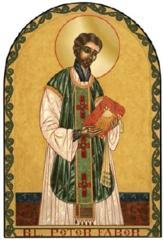
Pope Francis also referred to Faber in Evangelii gaudium, his apostolic exhortation. He quoted the new saint as saying, “time is God’s messenger,” making the point about the need for patience, the ability to listen, and docility to the Holy Spirit in the process of drawing others closer to God. I suspect that even if Pope Francis hadn’t made that unusual move, most Jesuits would still have considered Faber a saint in their hearts.
No Comments