



Care of The Soul

I recently reread Thomas Moore’s Care of the Soul (1992) a popular ‘self-help’ book that was significant for me over 20 years ago when it was first published. It deserves a re-reading. Moore takes his inspiration from the Renaissance writers Paracelsus and Ficino, as well as from his experience as a psychotherapist and aficionado of the analyst James Hillman. Moore’s “care of the soul” understands the soul in a fairly conventional religious way as the seat of God’s indwelling spirit. At the same time, he invokes the Greek notion of the soul as the animating principle of our entire existence. He is happy to source these early modern writers whose approach did not separate psychology from religion and spirituality. For Paracelsus and Ficino the soul represented both the voice of the unconscious and the pathway into the mystery of God. 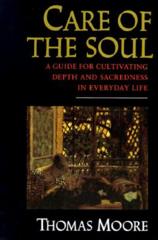
In his updating, Moore speaks of the pivotal role that the individual needs to play in walking the path towards fullness of existence. When Jesus says “I came that they may have life and have it abundantly” (John 10:10), he is not saying that he will do all the work. Jesus is savior of the world, indeed, but the choice of whether or not to follow the “way, truth, and life” that he offers is up to us. Echoing his Renaissance counterparts, Moore writes that “metamorphosis doesn’t happen without our artful participation” and that “we need to be the artists and poets of our own lives.” The insistence on personal responsibility for the care of one’s own soul is evocative of Ignatius Loyola’s stress on the role of personal desires for progress in the spiritual life.
In annotation five of the Spiritual Exercises, Ignatius writes that “we should begin… with a spirit of great magnanimity and generosity towards our Creator and Lord” and, at the beginning of each prayer time, “I will ask for what I desire….” In sum, while we know that God wants to be generous towards us, it is not always obvious that we should be generous in return. While God desires great things for us, we too need to invest wholeheartedly the life project of bringing our true selves into realization.
 Perhaps it is no coincidence that Ignatius lived during the same general period as the writers that Moore cites. In the Spiritual Exercises, Ignatius often speaks of the soul in terms of memory, will and understanding. These three ‘powers of the soul’ relate to the engagement of the person making the Exercises and how he can use his natural capacities to embark upon the journey of linking his deep desires with God’s desires for him. In return, I am invited to respond to the imperative that to feed the soul means embracing life fully. And that every experience and challenge is an invitation to open up to God. Further, opening up to God also means opening up to others and to the world.
Ignatius vision of how one ‘cares for the soul’ shares the positive Renaissance ideal of the human person in and of world; an ideal that was both the recovery of the wisdom and culture of the ancients and the opening up to the new possibilities offered through advancement in science and the great age of exploration. And so, for Ignatius and for Moore, the soul leads us on a journey that needs to be embraced positively rather than getting bogged down in that which holds us back: “the goal of the soul path [is] to feel existence, not to overcome life’s anxieties and struggles.” Moore’s 20 year old reflection is still very relevant in a society that tends towards fatalism and despair and where so many people know deep down that the soul needs tending but without knowing where to turn.

No Comments