



The Book of Immortality

Father Marc Gervais SJ was the CBC’s “go-to” resource on contemporary film. Each year he would attend the Cannes film festival and would phone in with daily news clips. During his long career he attended some 40 festivals at Cannes and was awarded a special critics’ award in recognition of his major contribution to cinema culture internationally.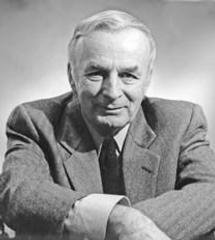
Gervais taught film at Concordia University in Montreal and wrote extensively on contemporary cinema, championing the works of Pier Paulo Pasolini and, especially, Ingmar Bergman. It was his commitment to the controversial work of Pasolini that put Gervais in the international headlines in 1968. That year, Gervais was a member of the jury at the Venice Film Festival that awarded Pasolini’s film Teorema with the Grand Prize of the International Catholic Cinema Office. Ooops! Pasolini’s integration of the sexual with the divine was too much for the Vaticanistas who objected and eventually created the circumstances whereby Pope Paul VI ordered the award rescinded. Gervais had become an international voice for uncompromising, visionary cinema.
His book, Ingmar Bergman: Magician and Prophet, published by McGill Queens University Press in 1999 is considered by many to be a definitive work. Sadly, Alzheimer’s took a toll in the final phase of this Jesuit’s life, spent at the infirmary on the grounds of the Manresa Retreat House in Pickering, Ontario.
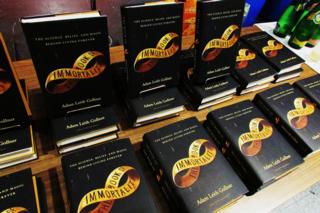 Shortly before Gervais died in 2012, his former student and later teaching assistant, Adam Leith Gollner met with him at Pickering. Gollner was doing the research for his latest book The Book of Immortality – The Science, Belief, and Magic Behind Living Forever. Having been deeply influence by Gervais he wanted to see what his former teacher and mentor might have to say on the idea of a life force. The sequences with his Pickering encounters with Marc Gervais are some of the most moving sections of Leith Gollner’s wide-reaching book. Here, courtesy of Doubleday Canada, are four brief excerpts.
+++++++++++++++++++++++++++++++++
EXCERPT 1:
“What madness is this?” Father Gervais asked, standing up, arms open for a hug. He looked the same, down to the suit and tie, but he clearly didn't recall our phone calls. He hadn’t been expecting me and I wasn’t sure if he remembered me, though he did seem to realize that I was a former student of his. “What brought you out here-to the moon?”
“I wanted to see you again.” I laughed, emotionally. “I heard you were out here and wanted to speak with you.”
“You hear that?” he said, turning to the two elderly Jesuits at the table beside him. “This lout says he wanted to see me! Right. You came to cadge a free lunch, didn't you?”
 Each of the cafeteria's half dozen tables was encircled with aged priests. Many of them craned around, curious about the unexpected visitor. It was just like my grandfather's old retirement home, from the vinyl-covered tabletops to the overboiled vegetable medley on each plate. But this building radiated a distinct intensity. It felt like a spaceship bound for infinity.
“So,” I said, sitting down, “what do you guys do out here on the moon?”
“We circle the sun,” Gervais replied, immediately. His two dining companions chuckled to themselves. One of them, wheelchair-bound and serious-faced, had been a high school principal. “He was known as the Strap,” said Gervais, cupping his hand over one side of his mouth.
“I only used a strap on very rare occasions,” he protested earnestly. The other priest, with bristly white hair and sparkling eyes, told me he was a former math teacher from Nova Scotia. “He mighta been a math professor,” added the Strap, “but he doesn’t know his own age.”
“Bullshit!” said the math teacher, waving his fist threateningly. “I’m ninety-three.”
“He’s quite intelligent,” added Gervais. “Or at least he thinks so.”
He turned his fist toward Gervais.
“Oh-oh, if you don’t watch it, you’ll get his vocabulary,” said the Strap.
“Or his math,” I ventured, trying to participate in the repartee.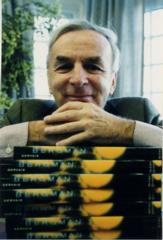
''Yes! I'll use math on you.” The former teacher laughed, dropping his fist and adjusting his wool sweater.
The Strap asked what I was doing with my life. When I said that I’d become a writer, Gervais demanded to know how I paid the bills. As an act of charity, he offered to give me a copy of his book about Bergman, which I hadn’t yet read. A young nurse came over to ask what I wanted for lunch. I said I’d take whatever Father Gervais was eating. He told the nurse I was one of the worst students he’d ever had.
“Oh, we like Father Gervais, don’t we?” She smiled at me. “It’s very nice of you to come visit your teacher.”
“I don’t like these people,” he stage-whispered. “They beat me every day.”
Some friends show their affection by insulting one another constantly, but I hadn’t expected this level of irony in a nursing home for deteriorating priests.
“I’m starting to see a pattern here,” I said.
“You’re slow, by Jove, but you’re getting there.” He laughed.
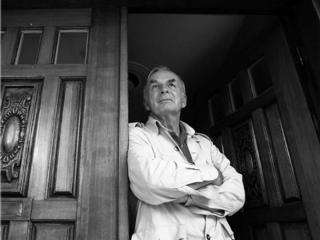 Over lunch, the ribbing continued, but we also managed to speak seriously about the films he’d shown in class: Fellini, Hitchcock, John Ford. At one point, he remembered that I’d become his teaching assistant for the final couple of years. We discussed Pasolini’s Teorema, how it shows the sacred entering people’s lives. “What our world needs so desperately is to be reminded that there is something beyond,” Gervais said, “and Teorema is filled with that message. It really goes after the depths.”
Pasolini, an atheist, felt that we’re detached from the divine-but that we have the capacity to reconnect with it.
“You see, I showed them films full of Christian iconography,” Gervais said, turning to his fellow Jesuits. “All those films have shots of the cross, in window frames or telephone poles. And the hero walks up the hill. Sacrifice and all that. I kept trying to rescue a few of these poor students. It didn't always work. I ruined you, right?”
“You made me think, a lot,” I answered.
“Impossible,” he declared, jutting his chin out comically.
The other priests had never seen any of the films Gervais loved. As we spoke about them, they grew uncomfortable. “You wouldn’t appreciate them anyway,” Gervais muttered. They nodded in assent.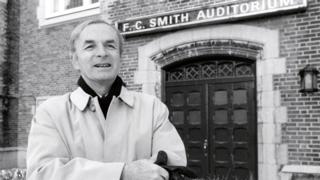
When lunch ended, the cafeteria emptied out. Gervais and I stayed behind, chatting openly. “This is the best place I’ve ever lived,” he confided. “There’s a very nice spirit here. People like people. I’m the youngster, eighty-one years old, and I’m so happy here. You’d think-a bunch of crotchety old priests, everybody must be so cranky-but, no, we all like each other so much. The word for how everybody treats one another is love.”
I smiled, unsure what to say.
(pages 64 – 66)
+++++++++++++++++++++++++++++++++++++++++++++++++
EXCERPT #2
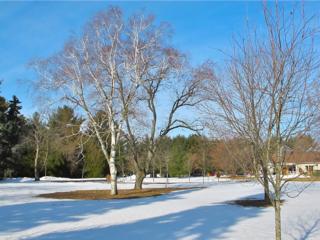
Thinking of how Gervais had found God while going for walks in the countryside, I set off into the woods behind the infirmary. A diffuse sun dripped through the branches. Blue jays chirped. Rusty leaves dusted with snow blanketed the forest floor.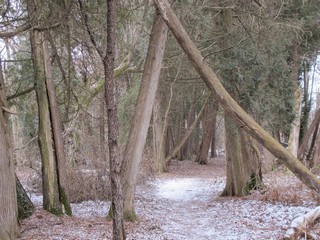
A path between the trees brought me to a creek. Two supine branches dangling languidly across each other seemed to be saying something about love and death. The water trickled into mud and disappeared. I kept going. A blur of black fur scampered through felled birch trees. I came upon a clearing, a white glade whose sparseness was broken only by the columnlike trunks of ancient, dark trees, perfect in their stillness. All was calm. It felt as if I’d stumbled upon an abandoned cloister. I could see why they considered this hallowed ground. The treetops, spinning in their silent vortex, seemed to extend beyond thought. I wondered if l could ever be a believer. Could I make that leap? If so, what would I even believe in?
(pages 75 – 76)
+++++++++++++++++++++++++++++++
EXCERPT #3
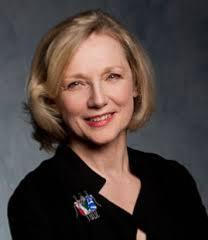 (NOTE: Sharry Flett, one of Canada’s most celebrated stage actors, performed in productions directed by Marc Gervais before joining the Stratford Festival and then the Shaw Festival companies. She became a long-time friend of Marc Gervais and it was at her suggestion that she join Adam Leith Gollner during one of his interviews about the life force. Here, this particular interview doesn’t quite go as expected.)
After lunch, we ended up at a picnic table on the edge of a ravine near the infirmary. The forest spread out before us, standing sentinel in its autumnal robe.
As Sharry and I went to sit next to each other, Father Gervais looked at me in an effort to ascertain what I was doing there. “Where are you stationed?” he asked, confusing me again for a young Jesuit.
“I’m actually a writer. One of your former pupils.”
“You mean you’re not here doing your novitiate?”
“No, I'm just a heathen,” I half-joked.
“You don’t mean that!”
“Really, I’m a pagan.”
“No! In what way?”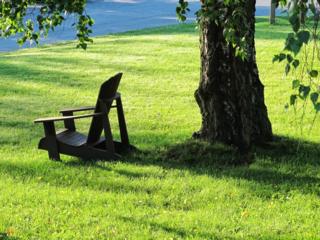
“I love all religions, but I don’t practice any of them. Belief systems are great, as long as they aren’t hurting anybody. I believe in mythologies without having faith. I’m fascinated with religion, but I’m not attached to any one faith. Isn’t that paganism? Maybe it’s polytheism, or pantheism. I just like stories that remind us of the power of the elements- ”
As I spoke, he went to sit down opposite us, and we all heard a groaning, creaking sound. The wooden bench had rotted, and he started falling through its bowed, worn-out, splintering beams. Before either Sharry or I could move, the final connecting fibers gave way, depositing him on the ground, where he landed in a bed of leaves. We both jumped over to help him as he lay there, looking up at the sky, laughing.
(page 79 – 80)
++++++++++++++++++++++++++++++++++++
EXCERPT 4:
Father Gervais died that winter. His funeral ceremony took place at the Saint Ignatius parish, adjacent to the Loyola campus. A quote from an Ignatian prayer adorned the program: "Give me only your love and your grace. That is enough for me."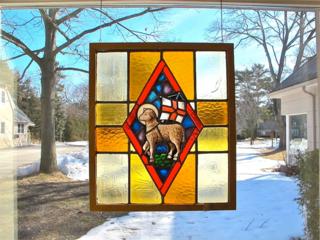
When his coffin was brought in by family members, priests in ankle length white robes and creamy scarves clustered up against it, seemingly excited to be close to someone going where they wanted to go. They huddled together like white petals around the stamen of his body. During the memorial mass, the father described him as a steward of the Lord's mysteries on earth.
The reception afterward was attended by many filmmakers, artists,publishers, and media types. I hung around for a few minutes and then slipped out. I entered the old chapel Gervais used as a theater for screening films. Inside the foyer, I found some of his film posters still tacked to the wall. On the main floor, noontime mass was under way, with nine or ten people in attendance. The priest lifted a chalice to his lips. His wordsechoed into the sunlight: "For ever and ever."
(page 80)
++++++++++++++++++++++++++++++++
Excerpted from The Book of Immortality by Adam Leith Gollner. Copyright © 2013 9165-1610 Quebec Inc. Repreinted by permission of Doubleday, Canada.
+++++++++++++++++++++++++++++++++++++++++
Adam Leith Gollner is a Canadian writer and musician who lives in Montreal. He has written two books, and is the former editor of Vice Magazine. Gollner has also played in bands including We Are Molecules, Dessert, and the Hot Pockets.

No Comments