



The Return of the Jesuits

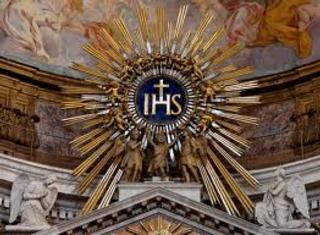 On August 7 of this year, the Jesuits commemorate the 200th anniversary of our restoration, having been suppressed by Pope Clement XIV in July 1773. Clement caved in to pressure from European kings and shut down the Society of Jesus in its entirety. However, two regions of the world refused to be dictated to by Rome. Thus, the Society of Jesus remained alive in Prussia under Frederick the Great and Russia under Catherine the Great. The Jesuits in those regions remained active throughout the suppression.
Pius VI succeeded Clement. He was very friendly toward the Jesuits and he granted formal permission for the Society’s existence in those lands where it was not suppressed. A Polish Jesuit was elected superior. Meanwhile, the suppression resulted in the dispersion of vast numbers of ex-Jesuits, some of whom went to areas where the universal order was not heeded.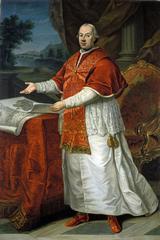
There were matters of great significance in Europe between the Society’s suppression and restoration. Chief among them were the French Revolution and the rule of Napoleon Bonaparte. This helped make the Church friendlier toward the Jesuits and their possible return.
The next pope, Pius VII was in captivity in France (a “guest” of Napoleon). From the time of his election, he had resolved to restore the Jesuits universally. He saw this as part of his effort toward the religious reconstruction of Europe, in turmoil and chaos after the collapse of the Napoleonic Empire. Once he returned to Rome, he did so with little delay. He wanted to announce the restoration on July 31, the Feast of St. Ignatius, but there were delays with the text of the papal bull.
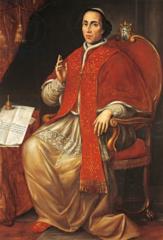 Finally, on August 7, 1814 he issued a papal bull by which he reversed the order of Clement XIV. He offered Mass at the altar of St. Ignatius in the Gesù in Rome. Then in a side chapel an assistant read aloud the bull Sollicitudo Omnium Ecclesiarum. This took place in the presence of an immense crowd, which included cardinals, royalty, and many members of the suppressed Society.
In the opening paragraph, Pius VII revealed his thinking. He indicated that his pastoral office impelled him to use the means provided by God to care for the spiritual needs of the faithful throughout the world. “How wrong it would be if, placed in the Boat of Peter tossed and turned by frequent storms, we were to reject expert and strong oarsmen who present themselves spontaneously to fight against the waves of the open sea which at every moment threaten us with shipwreck and ruin.”
With the papal bull’s release, the then superior in Russia, Fr.Thaddeus Brzozowski, acquired universal jurisdiction over the Jesuits. The period following the restoration was marked by tremendous growth for the Society of Jesus throughout the world. The Jesuit historian, Fr. William Bangert writes of the Society being strong enough, even in suppression, to capture the hearts of youth: “and these young men were on hand, when the day of restoration dawned, to give assurance to the survivors of the catastrophe that the Ignatian vision would live on.”
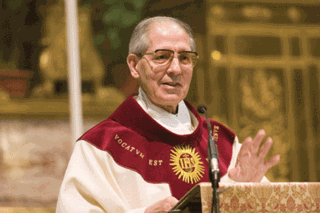 Fr. Adolfo Nicolás, the Superior General of the Jesuits, has urged us to celebrate this anniversary “with humble and sincere gratitude to the Lord, with a desire to learn from our history, and an occasion for spiritual and apostolic renewal.” He reminds us of one of our major sins – pride – when he says that we should “avoid any suggestion of triumphalism or pride.” Rather, this anniversary offers us a chance to look ahead and to discern how our gifts are needed.

No Comments