



The Reality of J.K. Rowling
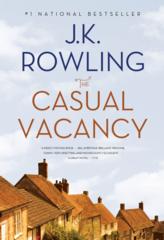
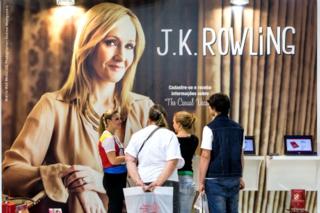 After five long years of silence, J.K. Rowing, the creator of Harry Potter’s world rewarded her fans with a new novel, The Casual Vacancy. This year she has published, under a pseudonym (Robert Galbraith), The Cuckoo’s Calling. Although both leave Harry’s world for that of the muggles, both reveal her deep exploration of the reality that served as a foundation for the earlier works.
The Cuckoo’s Calling, an intriguing detective novel, introduces Cormoran Strike who is investigating the mysterious “suicide” of a London model. Critics have given it top marks, and it instantly was at the top of the New York Times’ best seller list. It is a fast moving story that got me suspecting almost every character of being the murderer. I found, however, The Casual Vacancy, that received lukewarm reviews, more intriguing, and perhaps more self-revealing of Rowling’s real world.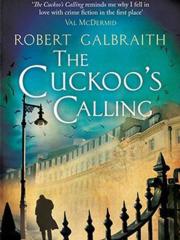
The Casual Vacancy takes place in a stark, grimy world that Harry’s only hints at. The action centres on the election of a new town councillor for Pagford. At the beginning of the story Barry Fairbrother has a stroke and dies, thus, creating a vacancy that necessitates his replacement on town council. This might seem like a matter-of-fact task, but its process is the impetus for an exploration of the lives of several families – not the Dursleys, the Weasleys or the Malfois of Harry’s world, but families of Rowland’s world.
As in the Potter novels, adolescents are at the centre of the action. These young people lead lives that only tempted the imaginations of Harry, Ron and Hermione. They are lives centred on deceit, violence, and hate fueled by drugs and sex. It is as if Rowling wants to reassure her readers that she has both feet in British reality as well as Hogwart’s fantasy.
 The main characters of Vacancy, as in the Potter novels are teenagers: Andrew Price, physically abused by his father; Sukhvinder Jawanda, a self-mutilator; Gaia Bawden, a victim of her mother’s love affairs; Krystal Weedon, a neglected child-adult, and Stuart Wall, a cruel bully. They live in the very real world of 2012. Stuart’s father is verbally and physically abusive; Sukhvinder methodically cuts herself in order to cope with her world of isolation; Gaia hates Pagford where her mother has dragged her so as to be close to a latest boyfriend; Krystal’s mother is a drug addict surviving precariously in dilapidated council housing through prostitution, and Stuart’s parents are caught up in a world of anxiety and pretence.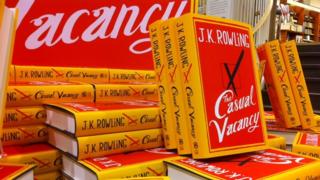
Rowling’s gradual development of the reader’s experience of these families is most fascinating. Her exactness of detail leads the reader to believe that she has lived and suffered in close proximity to this reality. The characters’ fear, anger, despair, and hatred come alive in her story-telling. The reader enters into the turmoil that fuels Krystal’s desire, Andrew’s fear, and Stuart’s despair. It is not surprising that unlike the Potter saga, this novel ends in unhappiness and tragedy. There is no ray of future hope, and certainly not the glory of Harry and Hermione’s children. There is, however, the rich assurance that the creator of Harry’s world knows the reality of both

No Comments