



Tales from the Inky Way #6 – You Ought To Be Ashamed – Sister Elaine MacInnis

Catholics are familiar with the acronym RCIA. Travelers along the Inky Way might be interested to know that this refers to something else in addition to the Church’s formal process of initiation: attempts at intimidation.
Let me explain.
One of the things I learned in the arcane world of Catholic publishing is that RCIA also stands for Ranting Censorious Intimidating Attacks. These are the letters that arrive when a published work meets with, let’s call it, disfavour of a particular kind. Always intense, and invariably layered with threats and accusations. For eight years I drafted the replies. Here is the story of one of them.
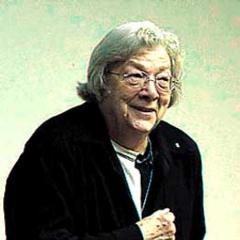 Sister Elaine MacInnes is a member of the Catholic religious order, Our Lady’s Missionaries. She is also a member of the Order of Canada. When she received that award, in 2001, the citation outlined the various strands of a long and influential career.
"She offers those who are incarcerated a path to hope and peace. A Catholic missionary, she founded and ran a conservatory-style cultural centre near Osaka, Japan. As she introduced western music to the region, she was introduced to Zen. Later becoming one of the world’s few Zen Masters, she taught meditation to prisoners in the Philippines and Great Britain, helping to improve their concentration, sociability and self-esteem. Her approach flourished, with thousands of inmates benefitting from her persistence and compassion. She has returned to Canada and is now initiating similar programs here."
The citation almost hides that tricky bit, right there in the middle: Zen master.
When a Catholic publishing house puts the word “Zen” on the cover of one of its books RCIA is sure to happen. And it did.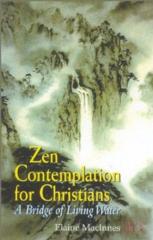
I commissioned her work, Zen Contemplation for Christians: A Bridge of Living Water, which was published just days after her Order of Canada ceremony in Ottawa. In her mostly autobiographical book, Sister Elaine explains her journey from Moncton where she was born in 1924, to Julliard where she studied violin, and then to the convent where she prepared to become a Catholic missionary. That work took her to Japan and then to the Philippines, and it is this eastern experiences that gave her a life-changing encounter with the theory and practice of Zen meditation. As deeply as she studied it – and she eventually did become a recognized Zen master – she pursued it as a means to further her own commitment to and membership of a Catholic religious order.
 In her book she also explains how she sees another kind of utility for meditation when it is separated from religious practices. In England in 1992, (yes she has had a very international and varied career) she became director of the Prison Phoenix Trust, an organization committed to working with prison populations, offering them meditation techniques. The British actor Jeremy Irons, long before he became a maniacal Borgia pope (in the television series, that is) became a fan and offered fund-raising support.
Fast forward a few years and Sister Elaine is back in Canada where she hopes to create another version of the Trust, and she does. Freeing the Human Spirit offers Canada’s prison population meditation tools that might help them change the climate within the institution. (Celebrity footnote: when Jeremy Irons was attending the film festival in Toronto a year later, he hosted another fundraising gig for his good friend Sister Elaine and Freeing the Human Spirit organization.)
Her book contains an eloquent appeal for a more humane prison system. But it’s also about much more than that. It details her remarkable life-long journey of deep spiritual investigation and scholarly research in the pursuit of those means and methods that might help her to become more fully connected to the God whom she serves daily.
Key details about her life and work – the Catholic nun bit, her overt statements about her unwavering commitment to Christianity, her direct assertions that she is not in the Zen conversion business but simply offers Catholics additional tools for their own meditative practices – were ignored in the RCIA response. What is also typical in the RCIA letters is that you are never quite sure if the person writing them has either purchased or even read the book that has caused them such apparent apoplexy. Lines are rarely quoted but positions are invariably asserted. The RCIA letter typically begins with a “What kind of Catholic are you?” challenge and then takes the position: “You ought to be ashamed of yourself!” before moving to the generalised observation: “You have always taken an antagonistic view of our beloved church.” Often there’s a heresy claim, and invariably there’s a

reverse subsidiarity move in the form of “I’m going to speak to the bishop” or “I’ve already written to the Papal Nuncio.” Sometimes, there’s a final call to action: “You must withdraw these books right away.” And only occasionally, there’s: “They ought to be banned and burned.”
Responding to an RCIA takes patience and restraint. Something akin to the meditative calm that Sister Elaine writes about in her book.

No Comments