



A Few Things I Learned in Prison
My first day at prison didn’t go so well. According to Google maps, there were two entrances to Springhill Institution. The rear entrance was much closer to where I was living, so it seemed the natural one to use. All the more so given that I was on my bicycle, and to use the front entrance I would have had to go down a big hill and then climb right back up again. Approaching the Institution, I was undeterred by the locked gate across the road, which clearly barred motor vehicles, but which was easy to get around on my bike. There were no signs indicating that use of this entrance was prohibited, so I figured there was no problem. 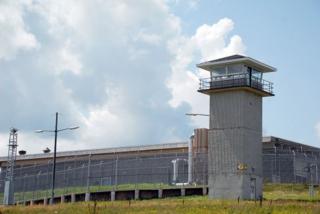
Until, that is, I was stopped by two security vehicles, driven by officers armed with rifles. They glared at me, motioned me over, eventually asked me some questions, and made it very clear that in no circumstances should I use the rear entrance again. First lesson in prison etiquette: whether you’re an inmate, a volunteer or a staff person, the person in the uniform is always right. But I would learn more important lessons over the course of my twelve weeks there.
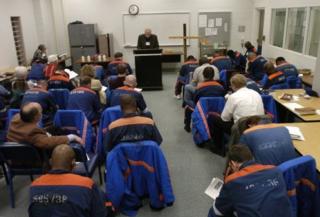
I came to Springhill, NS to participate in a Clinical Pastoral Education (“CPE”) program, a sort of chaplaincy internship, to complement my theological studies. There were two other students on this program, and we were supervised by Springhill’s full-time Catholic chaplain. Our first week was devoted to learning about the prison context, and we didn’t have much chance to interact with the inmates. The first opportunity to do so came at a Tuesday evening fellowship service in the chapel. As a newcomer, I was very warmly welcomed by the inmates and felt right at home.
Beginning the second week, each of us three students was assigned to work in one of the housing units, which each house up to 96 guys. In prison there are a lot of locked doors, and everything is clearly separated into areas where inmates have access, and where they don’t. I spent my first day in the housing unit in the ‘bubble’—the elevated console area from which the correctional officers keep watch and control what goes on. I started to learn the rhythm of the place—the times when everyone’s locked up, the times when everyone can hang out in common areas, the times that counts take place, and so on.
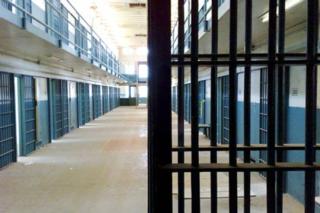 My second day I left the bubble and went down to the floor, where I would spend the rest of my time in the unit. At first I was nervous and felt out of place. Most of the time I was the only one there who wasn’t an inmate. Although the officers and other staff are physically very close to the floor, the ‘bubble’ creates a strong psychological distance. Further, the guys I’d met at the worship service were those who choose to visit the chapel, which is a small proportion. I felt like I was invading the inmates’ own space, an area that is normally free of staff.
But even here the majority of the guys welcomed me and seemed happy to meet me. To be sure, some people weren’t interested, but the worst they would do was ignore me. At the end of my first week, I was surprised and delighted that no-one had yet told me to eff off, and at least in my unit, no-one ever did. Much to the contrary, when I was on my own in my semi-private office, guys would often stop in to see how I was doing, chat about last night’s hockey game, or bring me a cup of tea.
In addition to the warm welcome, I was very moved by the gratitude so many guys expressed.
 I’ve worked in a lot of different settings, but I’ve never been told more often, or with more sincerity, how much my time and presence was appreciated. On numerous occasions following a worship service, one of the guys would tell me how much it meant to him that we had come to celebrate with them. I was in turn very grateful to them, especially after our worship services.
Rather than a “preaching-to-the-congregation” model, our services were very participatory, with group reflection following each reading. Regardless of their level of formal education, each of these guys brought real insight to the fundamental question facing each Christian—what does it mean for me, here and now, to follow Christ? Life in prison is hard, and I learned a lot from them about living one’s faith through times of adversity.
The most important lesson that I learned from the guys at Springhill, though, was about openness and vulnerability. As I’d expected, in jail everybody puts on a hard, tough exterior;indeed most of the guys have worn this mask since long before getting to prison.
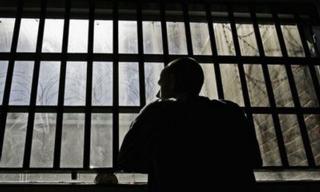 So I was surprised to see how able and willing many guys were to share openly with others the pain and darkness from their own past. Here were these supposedly ‘hard men’ taking the difficult, painful steps towards assuming more personal responsibility, towards greater interior freedom, ultimately towards the healing which can only come by looking with an unflinching gaze at those wounded areas that most of us avoid at all costs. Their courage in turn inspired me to look more closely at those areas in my own past that still need healing.
Though three months isn’t that long, it was hard to say goodbye to the guys at Springhill. I count myself very fortunate to have spent time with them. I learned a lot from them, I continue to pray for them, and I hope some of them are praying for me too.

No Comments