



Stained Glass in The Morning.

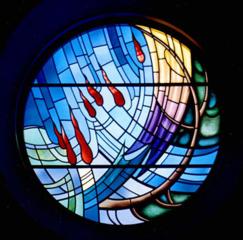 As I waited in the early morning chapel for the beginning of Mass, the stained glass caught the first rays of the morning sun. The darkness now gleamed with the warmed filtered light.
The rectangular and angular slices of glass transformed the incoming sun into a kaleidoscope of colour. My gaze rested on the soft warm glow streaming in from outside.
Visible light comprises a small subset of the full spectrum of electromagnetic radiation. To be exact, visible light has a wavelength of between approximately 400 and 700 nanometres. We can't see ultraviolet light (shorter than 400 nm) or infrared light (longer than 700 nm).
As you know, there is more to visible light than meets the eye. Rainbows reveal the inner life of visible light showing off the range of colour from red to violet. For som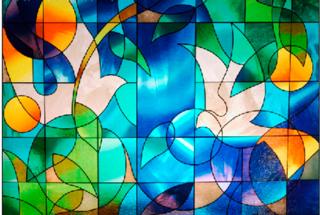 e reason, I remember well the mnemonic "Robert of York gained battle in vain" that helped me to remember the seven colours of the rainbow – red, orange, yellow, green, blue, indigo and violet.
Just as the rainbow reveals the inner life of visible light, stained glass may be said to reveal the inner life of the invisible God. Only in the presence of light does the stained glass glow in truth and meaning. Almost like the grace of God that enlightens our mind, heart and soul.
My focus on the streaming warm light through the chapel glass ended abruptly when the sacristan entered to prepare for Mass. On came the chapel lights, jarring in their artificiality. Their bright shrillness overshadowed the soft emanations of the stained glass. It was like turning off the stained glass. All that remained were coloured pieces of glass that had lost their spark of life. Their heartbeat has ceased.
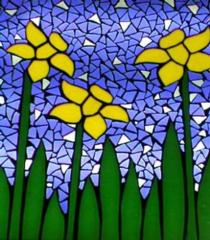 In Leonard Cohen's celebrated song "Anthem" he has a line that goes like this: "There is a crack, a crack in everything. That's how the light gets in."
The glory of the stained glass was manifest only in the early morning darkness of the chapel. The darkness glorified the sunlight as it shone through the stained glass. Once the chapel was brightened by its own light, the glory of the stained glass withered and retreated from sight. The sunlight still shone through but its effect was no longer felt.
Our lives and the life of the world can sometimes feel like that. We may often "feel" God's absence. But, when it comes to the grace of God, feelings have little to tell. The light of God's grace is constant and forever. In fact, there is no such thing as pure nature. Nature is "by nature" spirited nature. All of creation is "en-souled," enlivened by the grace of God.
We may not be aware of God's constant showering of grace. But, that doesn't mean it does not exist. Only the rainbow reveals the hidden beauty of visible light. Only the inner darkness of a small chapel enabled its stained glass to glory in the light of the morning sun. Only the "cracks" of humility and of poverty of spirit enable the glory of God to be revealed and experienced. 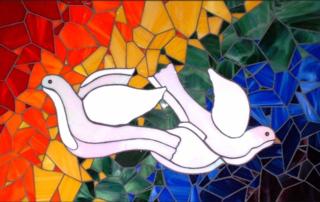
So, the next time you fret over the "absence" of God, think of the inner beauty of light as given by the rainbow. Reflect on stained glass that only works when the inside is dark. And rest in the wisdom of Leonard Cohen who rightly noted that the cracks and failures of our lives permit the abundant grace of God to pour unreservedly into the depths of our soul.

No Comments