



Our On-Going Restoration

Birth and death and birth again – so our universe progresses, and hopefully we Jesuits progress towards greater fullness of life!
The Nepal Jesuits gathered at the Godavari Ashram over the first weekend of May, 2013 to enjoy one another’s company and to learn a little of the Society’s history. Fr. James Thamburaj (MDU) guided us through the Jesuit history of the eighteenth and nineteenth centuries.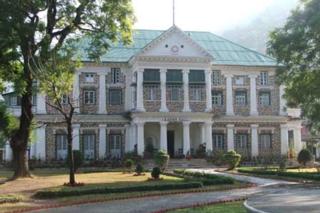
What led to the suppression of 1773? The Jesuit “Schoolmasters of Europe” confronted the new learning of the age of the Enlightenment. Scientific thinking challenged Aristotle’s philosophy. No longer could teachers depend merely on arguments from authority. New political ideas arose, democracy challenging aristocracy. Explorers continued to discover new contents, cultures and religions. Christian Europe was no longer at the world’s “center.”
At home, Christian reformers questioned traditional ways of thinking and acting in the Church. The temptations to riches and honors, led to pride and arrogance. Political leaders found the Society of Jesus too powerful, and seemingly too rich, to have around. When opportunities arose, the more powerful leaders chased the Jesuits out, and finally forced Pope Clement XIV to suppress the order.
Jesuit life ended. Paradoxically, Jesuits’ obedience to God through the Church killed the congregation. The poor, whom Jesuits could no longer serve, complained that their one time saviours had walked out on them. What difficult decisions those were!
 Then Jesuits found hope in Empress Catherine the Great! Her motives were selfish, perhaps, but her wish to continue Jesuit education in her realm gave the Society a toehold on life. Many Jesuit heroes, St. Joseph Pignatelli being the most famous, met the needs of their Brothers in Christ and slowly widened that hold while remaining obedient to Rome.
When Pope Pius VII restored the Society in 1814, Jesuits were ready to spring into action, continuing their traditional ministries with enthusiasm both at home in Europe, as well as in the “New World!” Setbacks continued, first in Spain, and will continue as long as Jesuits are the prophets God calls us to be.
Lessons learned? I suspect each participant carried his personal lessons away from Godavari. I rejoiced at Jesuits’ loyalty to one another and to the Church, a loyalty which gives us confidence to be “challenging discerners,” knowing that others listen carefully, and trusting that the final decision will be God’s will. 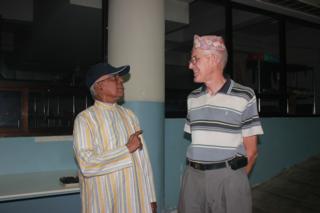
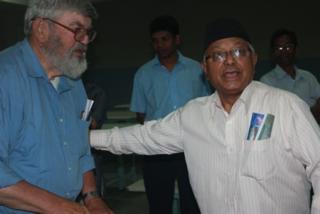
With confidence we could then look at our ministries and community life, and continue to encourage one another as we serve the poor in difficult situations. We took time to relax with one another; to welcome Bishop Anthony F. Sharma, S.J., as he prepares for retirement, having spent over twenty-eight years building Nepal’s Catholic Church; to concelebrate with our newest priest, Mathew Amakkatt, ordained April twenty-second; and to thank God for and with Marty Coyne, now sixty years a Jesuit. He has spent most of those years in Nepal.
I pray that this little “Nepal Jesuit Restoration” will guide us through another year of consoling ministry.

No Comments