



As It is in Heaven and Classroom Empathy

 In As it is in Heaven, directed by Kay Pollak, world-famous middle-aged conductor Daniel Dareus is forced into early retirement due to a weak heart. When he returns to his home village in Sweden he appears quite mysterious because there is no memory of his having lived there. Daniel, at 7 years, was forced to flee his home village with his mother due to bullying. Now back in his hometown, Daniel has to confront his painful childhood, and when he decides to conduct the local church choir, he realizes that its members too live miserable lives due to oppressive memories and suppressed emotions.
By teaching his choir members to look within, find and express their original musical tone, the choir members eventually build a vitalizing community, which facilitates empathetic listening and courageous expression of their wounded or suppressed emotions. Daniel’s success and his growing choir make him well loved in the village, but they also incite the jealousy and fear of the local pastor, who fires Daniel. Dareus eventually succumbs to a heart-attack during his choir’s performance at a competition in Austria. He dies to the harmony of the original tones that he helped his singers to find in themselves.
Gabriella’s agreement to solo the song that Daniel has composed for her is the most moving and beautiful scene in the movie. Daniel’s pity for Gabriella, a severely abused wife, moves him to compose a song for her, which she is to sing at the choir’s annual village performance.
Unsure and fearful of how her irascible husband, Conny, will react if she sings the solo, Gabriella refuses at first. However, she realizes that she sings the song not just for herself but as a unified expression of each choir member’s frustrations; she plucks up the courage and gives a soaring performance to thunderous applause.
The Main Themes
Two of the main themes that relate to education in As it is in Heaven are (1) bullying and (2) culture of empathy based on listening and original expression. The former is exemplified in the very first scene of the movie, which presents Daniel Dareus as a young boy. His solitary yet joyful violin-playing in the local field is disturbed by three bullies from the school, who surprise him with an attack. Daniel is so traumatized by this assault that his mother decides to move with Daniel to another town. 
The best scene that exemplifies the theme of an empathetic culture has already been mentioned above as the “most moving and beautiful scene”. Singing in a choir serves as an apt metaphor for original expression. In Daniel’s choir, singers are not bound by musical sheets. Rather, they listen to the person next to them and then make their own sound, which is an original expression and reaction to the musical note of the person next to them. The result is euphonic harmony. The empathetic culture that I suggest that teachers inculcate in their classrooms is based on the art of empathetic listening and original expression.
Thinking about the Dominant Issue
The issue that has the most relevance to our work as teachers is a culture of caring and empathy. I will define an “empathetic community” because one needs a vitalizing community to be empathetic just as one needs empathy to build a strong and life-giving community. An empathetic community is one in which members are automatically willing to attempt to understand life and its complexities from another person’s perspective. 
To quote David Levine, in a caring community, “students not only learn academic, social and other life skills, but are encouraged to apply those skills by helping, supporting, and honoring others.”[1] Empathetic communities help students not only to learn about empathy and link it to their various subjects but also to practically test and apply their learning in a safe classroom environment; this will serve them well when they become future members of other communities. The purpose of education is not just to get jobs but also to make people more caring and compassionate.
Empathetic community is related to the first two principles of Catholic Social Teaching, namely, Human Dignity, and Community and the Common Good. Empathetic listening involves understanding every person, with particular life experiences, as having a particular perspective of the world around them. Empathetic people see all human beings as worthy of being understood in light of a God-given, and therefore sacred, uniqueness. Humans need, moreover, not only dignity but also society. Having empathy in a community recognizes this fact. A person develops her/his identity in community, an identity which ought to be respected by that community. The person in community enjoys rights but also respects the community’s laws of respecting people. 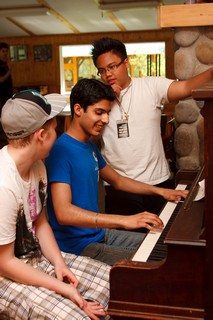
Empathetic community is related to all of the OCT’s Ethical Standards because empathy involves all of them. To be truly empathetic, one has to care for others, to respect them, which involves recognizing them as people of integrity and self-worth. Also, members of empathetic communities have to trust that other members will also listen respectfully to them, when they share their thoughts and feelings.
Empathetic community also relates to (1) special education (2) classroom management (3) diversity and equity. Firstly, in an empathetic community, the stronger members help the weaker ones because they sympathize with, and are concerned about, the well-being of the weaker ones. In the classroom community, the weaker student could be the one with dyslexia or some other disability.
Secondly, encouraging empathy is also a good class management strategy because students, who are more involved in a class and feel comfortable being in the classroom community, are less likely to disrupt the class. Also, students will empathize with the teacher’s efforts and co-operate more with the teacher. 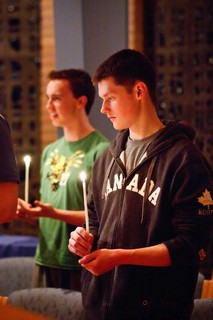
Thirdly, students will respect each other’s diversity, which they attempt to understand, by appreciating, rather than judging, other’s diversity and helping each other. Thus, students work with the teacher to build a more equitable class in which everyone plays a role in recognizing and meeting each-other’s needs.
[1] David A. Levine, Building Classroom Communities: Strategies for Developing a Culture of Caring (Indiana: National Education Services Inc., 2003) 13.

No Comments