



One Novice’s Long Experiment (Part Two) – The Kenyan Elections
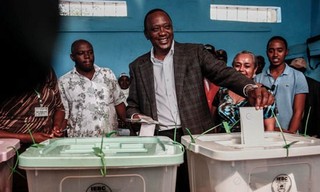
This has been an exciting time to be in Kenya. Since my arrival in Nairobi over 2 months ago, there has been little else discussed other than the election run-up and recent results in the country’s media or during work-time coffee breaks (or rather tea breaks as it were – Kenya was British Colony after all!!). Even the resignation of Pope Benedict and the election of Pope Francis caused only brief departures from the intense interest and media coverage.
It has been impossible to escape the energy and excitement that this important election has generated. From the constant campaigning in the streets – which typically consisted of a dozen or so people hanging out of a pick-up truck with a microphone and loudspeaker, sporting their “boy’s” T-shirt and colours and soliciting anyone who was in earshot – to the two, 3-hour long televised debates; everyone has been engaged and has an opinion.
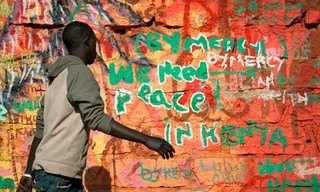
A critical factor contributing to the high interest and concern surrounding this election was the fear of history repeating itself. Following the last general election in December 2007, a political, economic and humanitarian crisis erupted when electoral manipulation was alleged and the election outcome questioned causing targeted ethic violence to explode across many parts of the country with estimates of 1500 people being killed and up to 250,000 displaced. This tragic period is still a fresh wound on the psyche of the Kenyan people, one that they never want to see repeated.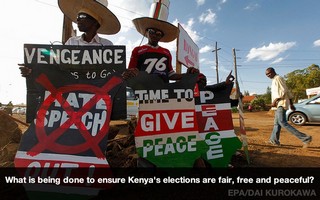
Like many political systems, the Kenyan one seems rather complicated. The typical challenges we seen in North America like media bias, liberal vs. conservative polarization and the financial wealth and capabilities of the main contenders vs. the underdogs are further complicated because of coalitions and alliances, candidates facing charges of crimes against humanity at the International Criminal Court (ICC), a brand new constitution and the realities of a fledgling democracy. But the truly complicating element in the Kenyan political system is the division caused by the various ethnic communities or tribes. No discussion or analysis would be complete without addressing the implications of tribalism. History shows that Kenyans have always voted along tribal lines; this election was no different.
 During the March 4th elections, Kenyans selected their fourth president since gaining their independence from the United Kingdom in 1963. The incumbent, Mwai Kibaki, was not eligible to contest as he was constitutionally barred having served the maximum two terms. This was the first presidential election in Kenya since their newly minted constitution was ratified following the 2008 crisis. In it, provisions are made for a potential second round run-off between the first and the second presidential candidates if no one achieves a simple majority in the first round.
This second round of voting was not needed as the Deputy Prime Minister, Uhuru Kenyatta, was elected president with just greater than 50% of the total vote after 5 days of vote-counting and great patience and restraint being demonstrated by the entire country. The current Prime Minister, Raila Odinga, who finished 800,000 votes behind Kenyatta, is contesting the results at the Supreme Court of Kenya.
What are some of the outcomes of this election? The greatest success is the fact that the process has been peaceful. Only 5 years after one of the worst periods of unrest in Kenyan history and yet there were very few issues related to ethnic discord throughout the entire election period. Another example of peaceful progress was the legal challenge filed this past weekend by the defeated presidential contender, Raila Odinga. At what might have instigated strong reactions from both camps resulted in only minor disruptions, localized to a few blocks surrounding the Supreme Court in Nairobi. This legal filing is the first major test of the country's new constitution and another example of democracy in action. We pray that peace continue to be the greatest desire of all Kenyans.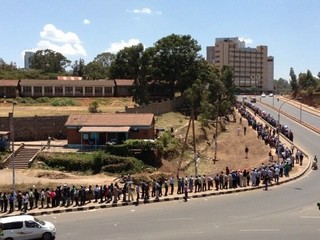
Secondly, the speculation by many that this election was won at the time of the voter registration back in December 2012 was pretty much validated by the results. Kenyatta’s winning Jubilee Coalition is the result of a strategic alliance between leaders of two dominate tribes – the Kikuyus and Kalenjins (ironically, these are two of the tribes that had violent disputes during the 2008 crisis). With more than 43% of the voting population “represented” tribally by this alliance, Kenyatta had the fewest votes to capture outside of his tribal boundaries.
This tribal based approach to voting has greatly limited political progress and negatively impacted most Kenyans. It is well recognized that there must be a concerted effort to help educate the public regarding the implication of voting for poor candidates solely because of familial and historical ties and obligations. And while some progress was made during this election to change this mindset, continued efforts are needed to ensure that all people truly understand and support the country’s needs and select candidates that can achieve these goals.
A 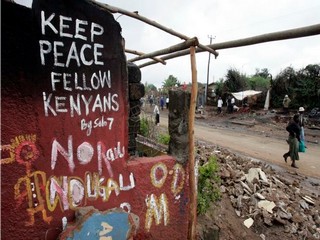 third outcome is the strong candidacy of several interesting and intelligent presidential prospects that give hope for the next election. The political dynasties represented by the election frontrunners and career politicians, Kenyatta and Odinga, have never been as challenged as in this election despite the election outcomes. Individuals such as Peter Kenneth and Martha Karua, both lawyers and business people, were the first choices of many people with whom I spoke but because of their underdog status and because they were seen in many ways as “new” contenders (even though they are both very experienced with very successful track records), they did not get peoples votes. Regardless, these true leaders did give a sense of encouragement that the Kenyan democracy is slowly progressing and has so much potential for the future
Most of the Kenyans with whom I discuss the election are not surprised by the results but are still somewhat disappointed – even those that voted for Kenyatta. They don’t see the outcome as much of a step forward as rather a further entrenchment in the status quo. Uniformly, they recognize the only way to achieve real change will come from raising class consciousness and understanding the detrimental impact of tribalism, ending the domination of the current political powers and stopping the rampant corruption that is intertwined in many aspects of Kenyan society. These are seen as imperatives to building a better Kenya.
Despite the rather predictable results, there were many positive outcomes from this election. Most importantly, they were peaceful. There was also outstanding public interest and voter turnout, bolstered by several democratic processes like the televised debates that helped to educate the people. These experiences create a sense of hope for the future, that change is around the corner… when tribalism, class bias, regional marginalization, gender discrimination, and political corruption will be overcome and the poor and middle class Kenyans of all ethnic backgrounds will unite to effectively articulate and demand the need for efficient and just public services.
The future of Kenya, like so many other countries, cannot be left in the hands of the political elite and the wealthy which comprises less than 1% of the population. It depends on building dignity and equality for all its people. Let’s see and pray for what another 5 years will bring.

No Comments