Of all the exotic places I might have done my final year of Jesuit formation (Tertianship), I was sent to Guelph right after I finished my theological studies. I arrived at the end of July, 1970, with Charlie Pottie, Peter LeBlanc, Len LeClaire, and a Slovak Jesuit. John English was the director of the program. It went till Christmas, and then we were missioned to various apostolates, I to Loyola High School in Montreal, to be Chaplain and to head the Religion Department. Gordon Rixon was one of the senior students who frequented the chaplain’s office to bat the breeze.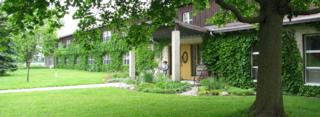
Our Tertianship included familiarizing ourselves with the Constitutions of the Society of Jesus, which had just recently been translated into English by George Ganss, and he came up from St. Louis to lead us in a study of them. He was an interesting and lively scholar, Director of the Institute of Jesuit Sources at that time.
John Swain was retired and had also just recently begun living at Guelph. He had been tertian master in Japan, before Pedro Arrupe, and then Assistant to Superior General John Baptist Jansens in Rome. It was he who gave us talks about the governance of the Society of Jesus. These began as very dry and boring, until we persuaded him to tell us about his own personal experiences in Rome.
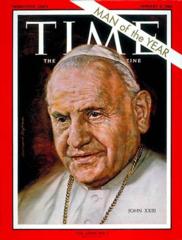 He told us that one of his tasks as Assistant to the General Superior had been to visit the pope twice a year and update him on what was happening with Jesuits around the world. He told us that Pope John XXIII, who had such a strong image in the world press as a liberal and open church leader, was actually very conservative in his opinions. He also didn’t listen to anything Swain had to say, but did all the talking.
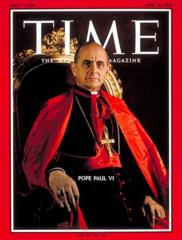 Pope John’s successor, Paul the VI, on the other hand, was seen by the press as vacillating and conservative, and had the misfortune to be the one to promulgate Humanae Vitae, which brought about a huge controversy in the Church and led to an exodus of theologians, among them Charles Davis. Yet Swain found Pope Paul to be very liberal in his opinions and an attentive and thoughtful listener.
When we consider the public image of Pope Emeritus Benedict XVI and Pope Francis, we can see that the press has a strong preference for persons who are extroverted rather than introverted, and for those who are able to surprise and delight. Of course, the press also surveys the world for what might make banner headlines and sell newspapers and bring in advertizing. Through what lens or lenses are we to read the newspapers and scan the other media (if we choose to read or scan at all)?