Praying and the problem of distractions seem to go together. We begin to pray by raising the mind to God, but often our attention on God does not last very long. The other element, raising the heart, is more constant provided we do not deliberately turn to doing something else.
 What is a distraction? It is the withdrawal of attention from something upon which the mind is concentrating or supposed to be concentrating. Ability to concentrate varies with individuals. Tiredness, noise, worries, uncomfortable situation are a few contributing causes for attention failing. We can say that many distractions are involuntary. However, whether voluntary or involuntary, distractions take away from the fruit of prayer which is spiritual nourishment.
If one is involved in mental prayer, then a voluntary distraction would destroy the attitude of praying. But in vocal prayer, a voluntary distraction, unless the intention to pray is given up, would not stop the praying although there could be some sinfulness due to irreverence.
The topic is beginning to be complicated. It is time to look at vocal prayer. A prayer is vocal when words are used which presuppose an internal act of the mind about a praying relationship with God. The words used can be spontaneous as an
 expression of the heart. But most often when we refer to vocal prayer we mean reciting a fixed formula like the Hail Mary, Our Father, litanies, psalms, hymns, the rosary, the Liturgy of the Hours (breviary), the text of the Mass, and other set prayers.
The attention required for vocal prayer can be directed to the words themselves with the purpose of pronouncing them properly and orderly. Attention, too, can be given to the sense of the words with a concentrating on the meaning of what is said. And one can attend to God or the favor requested or to the one, like Mary, whose intercession is sought.
By attending to God we mean a broad range of subjects that are related to God like the life of Christ depicted in the Gospels. When reciting the rosary, for example, it is recommended that we reflect on the mystery of the particular decade what is being recited or on the life of Christ in general or on a scriptural text that helps our praying of the rosary. But for many the attention could be a simple awareness of praying to our Blessed Mother.
This subject of attention is so personal that it is not possible to describe all the variations. The great mystic, St. Teresa of Avila, had no imagination so she could not picture God or any of the saints. She began her prayer by always having a crucifix or a statue of Our Lord at the Pillar where He was scourged, because these objects brought home to her the presence of God and focused her attention.
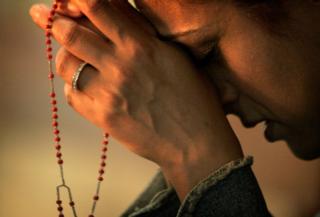 To achieve such attention in even a short vocal prayer is not always accomplished. We must keep ringing back our attention to the praying. This need for continual checking and reigning in of imagination, ideas, thoughts, is somewhat similar to the effort needed to walk a dog who finds endless sources of interest that hinder progress along a sidewalk.
An expert in the subject of prayer, the late Father Edward Leen, C.S.Sp., had these comforting words about our effort at vocal prayer: “If the whole action is directed towards God, if we realize that the formulae we use are in themselves eminently pleasing to Him, and if from the beginning we form the intention of acquitting ourselves well of the duty we are undertaking, the whole function is meritorious and pleasing to God whom we honour. Any subsequent distraction or want of attention, as long as it is indeliberate, does not destroy the initial intention. This intention extends its influence over the whole multitude of acts which constitute the service.” 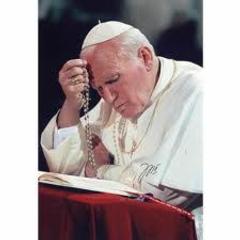
Notice that he pointed out a very important element of forming “the intention of acquitting ourselves well…” A great help to prayer is beginning properly like a sprinter getting a great jump out of the starting blocks. When we set abo ut praying it would be good to keep in mind what the Roman poet Horace said about doing anything, "Well begun is half done."
To make a good beginning at praying, one has to turn away from other matters and concentrate on the raising of the mind and heart to God. It is not automatic like turning on alight switch. A composure is required. The basic problem of distractions can be kept under control to a great extent by an initial composure before we begin to pray.