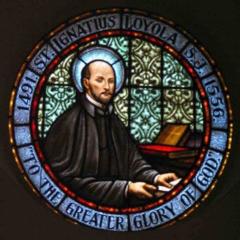
 As Fr. Joseph Tetlow S.J.—among others—has pointed out, the Examen spiritual exercise has come through hard times. While a number of authors over the years have tried to revive and enhance the exercise, no single approach has proven satisfactory in bringing it back to the important place it was meant to have according to the mind of St. Ignatius.
While doing graduate studies in Christian ethics I was fortunate to be exposed to a Biblical theology course entitled God's Universal Covenant. It struck me at the time that there were similarities between the Examen and some aspects of the “covenant formulary.”
By way of a brief review, this formulary encompasses promise, consummation, infidelity, and renewal culminating in the promise of a new covenant. We, of course, enter the scene post Resurrection and post Baptism as sharers in the new covenant established by Christ.
Concretely, the covenant formula always begins with an account of the history of God's saving actions on behalf of his people. These historical benefits are retold in any "covenant lawsuit" that Yahweh might bring against Israel.
 Thus the first point of the Examen in which we recall with thanksgiving the many gifts God is continually bestowing on us is similar to the opening phase of the covenant formula. The intent of the first point is to evoke a sense of gratitude for the loving kindness of God in our regard. It also heightens our sense of sin as ingratitude, as failure to respond, to such a loving God.
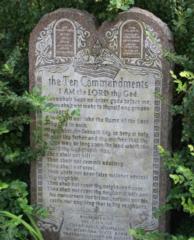
In fact, every covenant has its stipulations that must be followed if human beings are to fulfil their side of the covenant. The ten commandments should really be seen in this covenant context and not as rules and regulations on their own.
Thus those who might be put off by the Examen of conscience approach might be helped not only by adding a "review of consciousness" dimension to the exercise, but also by recalling the various covenant contexts of our lives.
This is particularly true when we place this exercise in a new covenant context. This new covenant is rooted in the gift of the Holy Spirit "poured forth in our hearts." (Rom 5.5) The first gift to those who believe–as the fourth canon expresses it.
 This being the case, in addition to basic commandments, we have promptings of the Holy Spirit to be responsive to, and answerable for. Therefore, the review of consciousness, discernment model of Examen is entirely appropriate, but I believe better grounded in a comprehensive covenant context.
Having reviewed God's covenant benefits and examined our response to God's action in our lives, no doubt–like Israel–we will declare our guilt and admit our sins–often of omission.
Like Israel, we too are emboldened to ask for pardon from our creator and Lord, and to pray for a restoration and renewal of the covenant. These last two phases of the Examen are akin to the Jewish prayer for restoration or "Todah."
In fact, as Steven Coffey points out:
This attitude reaches its culmination in the Contemplation to attain Divine Love. Indeed, the fifth point reveals the Examen as a Daily repetition of the Suscipe:

Take, O Lord, and receive all my liberty, my memory, my understanding, and my entire will, all that I have and possess. Thou hast given all to me; to thee, O Lord, I return it. All is thine, dispose of it according to thy will. Give me thy love and thy grace, for this is enough for me { Sp. Ex. #234}
What better covenant prayer could we make?
In this reflection I have outlined very briefly some connections between the covenant formulary and the Ignatian Examen. I leave it to experts in scripture and spirituality to explore and flesh out these links. Perhaps this foundation could provide another impetus for the renewal of an important spiritual exercise.