When they arrived, in a state of unimaginable distress, each woman was asked to reach into a bag and pull out one of the balls it contained. The lucky ones drew a white ball. This meant her baby would be examined right away and had a good chance of being accepted. A red ball gave her a second chance, should there be any room after the all the white-ball babies had been examined. She could wait, maybe there was still a chance. If she drew a black ball she had to take her baby away. A child’s future decided by chance.
If her baby was accepted, the mother was asked to “affix on each child some particular writing, or other distinguishing mark or token, so that the children may be known thereafter if necessary.” Some attached a key, a cameo seal, a knife handle, an ornamental button, a smoothed stone, a small padlock. Those who could write sometimes left cards. One reads “This In Remembrance of E B Novemb[er] : 2nd 1756 SB.” 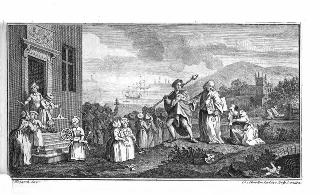
By the end of its first day of operation, 25th March 1741, London’s Foundling Hospital was already full.
It had taken organizer twenty years to get this far, gaining enough support that their project might have a future. In the non-social-safety-net of the 18th century the Hospital addressed an urgent need. Infants and children were abandoned by desperate parents unable to cope. Local parishes were overwhelmed by the needy and the country’s Poor Law provisions were tissue-paper thin.
So whose project was this? It begins with a devout Anglican, Captain Thomas Coram, who made his fortune at sea with his ships. He built them and he traded with them. In 1693, at the age of 25, he moved his business from England to Boston and made even more money. He also gave a lot of it away to charitable causes. He returned to England in 1721 and was shocked by what he witnessed.
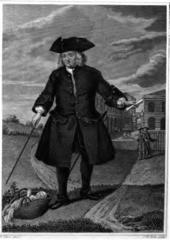 He frequently saw infants exposed and deserted in the public streets; and as there was but one step in his active mind from the knowledge of an evil to a desire for remedying it, he immediately set about inquiring into the probable causes for so outrageous a departure from humanity and natural affection.
(John Brownlow in his 1865 biography of Coram.)
That inquiry led Coram’s to build an orphanage. He needed not only rich but also influential friends. The nobility was his first target – especially “ladies of quality” in his words. A royal charter followed. Then he turned to artists for help.
He began in temporary quarters but soon needed a permanent home. He used creative fundraising techniques that we recognize today. His Hospital would have a Court Room to display portraits of the benefactors. It quickly became a prestigious gallery for rich patrons and their friends. They paid to enter. These benefactors commissioned artists – and one in particular – to paint them so they could also be placed proudly and prominently on display. See and be seen. The artist of choice was one of the most successful engravers and painters of the day, William Hogarth. Coram’s was a winning formula: art, vanity, and philanthropy. And more babies arrived daily.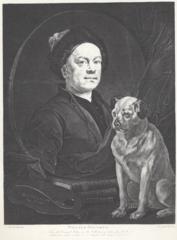
Then, in 1749, Handel enters the picture. Coram was no longer in charge (rumours of illegalities – another story for someone else) and the Hospital began a shaky transition.
The Foundling Hospital originally rested on the slender foundation of private benefactions. At the time when this institution was yet in its infancy; when all men seemed to be convinced of its utility; when nothing was at all problematical but the possibility of supporting it; – Handel formed the noble resolution to lend his assistance for its benefit.
(John Mainwaring, Handel’s first biographer, 1760)
This is how he assisted: On May 27, 1749, he organized a performance with seats for 1,300 and tickets that cost of half a guinea each. They heard his Music for the Royal Fireworks, excerpts from the oratorio Solomon, and the premiere of a new work, the anthem Blessed are They that Considereth the Poor. It sold out. After the musicians’ fees were paid, the remaining money went to the Hospital.
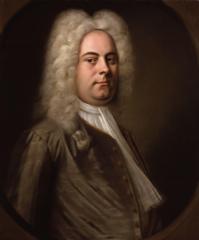 The next year Handel organized a benefit performance of an earlier work, his 1741 oratorio Messiah. It also sold out. Like Hogarth, Handel was invited to join the Hospital’s board of governors. He did, and a lucrative tradition of annual performances of Messiah in the Hospital’s chapel began, raising over £10,000 in the ten years remaining in Handel’s life. He gave the Foundling Hospital exclusive rights for these annual performances of Messiah and in 1759 he left it the work’s manuscript in his will.
His biographer, Mainwairing captures the essence of the Handel effect on would-be philanthropists and benefactors through the magic of his name, and the universal character of his sacred drama. "By these, vast numbers of the nobility and gentry were drawn to the hospital; and many, who, at the first, had been contented with barely approving the design, were afterwards warmly engaged in promoting it. In consequence of this resort, the attention of the nation was also drawn more forcibly to what was indeed the natural object of it. So that it may truly be affirmed, that one of the noblest and most extensive charities that was planned by the wisdom, or projected by the piety of men, in some degree owes its continuance, as well as prosperity, to the patronage of Handel."
It’s an interesting footnote (for someone else to explore) that three key players in the Foundling Hospital story: the entrepreneur Thomas Coram, the painter William Hogarth, and the composer George Frideric Handel were themselves childless.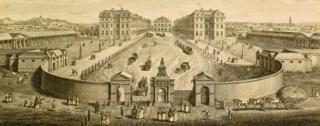
I began with foundlings, so let’s move now to one baby boy in particular, one who was not left by a distraught mother with a token at a Foundling Hospital. He is the subject of one of the restrained yet celebratory choruses in Messiah, “For Unto Us a Child is Born.” Here is a live performance recorded in 2006 by the London Symphony Orchestra and the 34-member choir Tenebrae, conducted by Sir Colin Davis, who died earlier this year. See how Davis gently draws out that unmistakable, joy-filled, rhythmic Handel “swing” in this 5-minute piece.
http://www.youtube.com/watch?v=MS3vpAWW2Zc
+++++++++++++++++++++++++++++++++++++++++++++++++++++
For an online tour of the Foundling Museum:
http://www.foundlingmuseum.org.uk/collections/the-foundling-hospital-collection/
+++++++++++++++++++++++++++++++++++++++++++++++++++++++++++++++++++++++++
For a short video history of the Foundling Hospital on BBC World Service.
(Note: you have to sit through a 30-second ad before the item begins):
http://news.bbc.co.uk/2/hi/programmes/world_news_today/9300055.stm